Fishbone Cactus Care & Identification Guide
The Fishbone Cactus, or Ric Rac Cactus, is a spectacular epiphytic forest cactus native to the jungles of Mexico. Famous for its trailing, flat, deeply lobed zig-zagging stems that perfectly mimic a fish skeleton, it is a magnificent, pet-friendly hanging plant. It is widely celebrated by botanists for its distinct environmental adaptability and structural appeal.





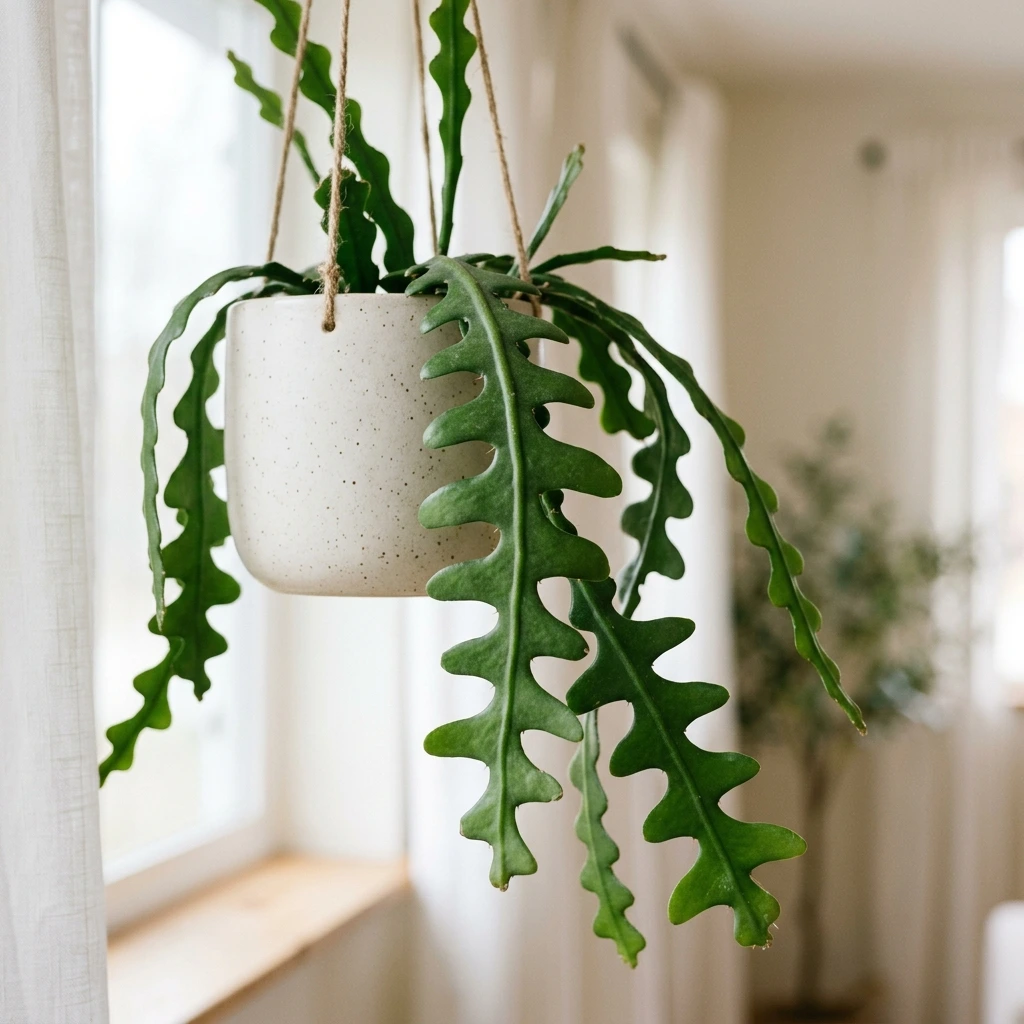
How to Identify Fishbone Cactus
A highly unique epiphytic forest cactus with flat, deeply lobed, zig-zagging green stems that resemble a fish skeleton.
-
✔
Key Visual Features: Pendulous, flattened, fleshy stems with deep alternate, rounded lobes that form a perfect wave pattern, lacking true leaves.
-
✔
Color Variations: Rich, glossy emerald green stems; produces spectacular, large, fragrant pale yellow to white flowers.
-
✔
Common Confusions: Confused with Selenicereus anthonyanus (Anthony's Rick Rack Cactus), but Fishbone Cactus has smoother stems with rounded lobes rather than sharply pointed lobes, and grows slower.
Complete Care & Cultivation Guide
Follow our detailed scientific care guide to keep your Fishbone Cactus thriving and gorgeous all year round.
Common Diseases & Treatment
Stem Melt & Rot
Symptoms: Fleshy zig-zag stems turn translucent, yellow, and mushy near the soil base.
Dry Brown Scabs (Inconsistent humidity)
Symptoms: Rough, corky brown dry patches develop along the wavy edges of the stems.
Frequently Asked Questions
Does the Fishbone Cactus produce flowers?
Yes! In autumn, a mature Fishbone Cactus can produce massive, spectacular pale yellow to white flowers. They bloom at night, release an intense sweet fragrance, and last only for a single night!
Is the Fishbone Cactus an indoor plant or a desert cactus?
It is a jungle epiphytic cactus that grows on trees in the wild! It prefers warm, humid, shaded environments and slightly more organic, moisture-retaining soil than dry desert cacti.
How do I propagate Fishbone Cactus?
Cut a healthy zig-zag stem segment (6 inches long), let the cut end dry for 3 days to form a callus, and place it in moist potting soil or orchid bark. Roots will grow in 3-4 weeks.
Is the Fishbone Cactus safe for dogs and cats?
Yes! Disocactus anguliger is 100% non-toxic and completely pet-friendly, making it an excellent hanging basket choice for pet owners.