Nerve Plant Care & Identification Guide
The Nerve Plant is a gorgeous, low-growing tropical evergreen native to the lush rain forests of Peru. Highly beloved for its distinctively veined foliage, it forms a dense, colorful carpet of deep-green leaves intricately laced with a vivid, lace-like web of pink, red, or white veins. It is a highly popular choice for terrariums and bottle gardens due to its high humidity requirement. It is widely celebrated by botanists for its distinct environmental adaptability and structural appeal.





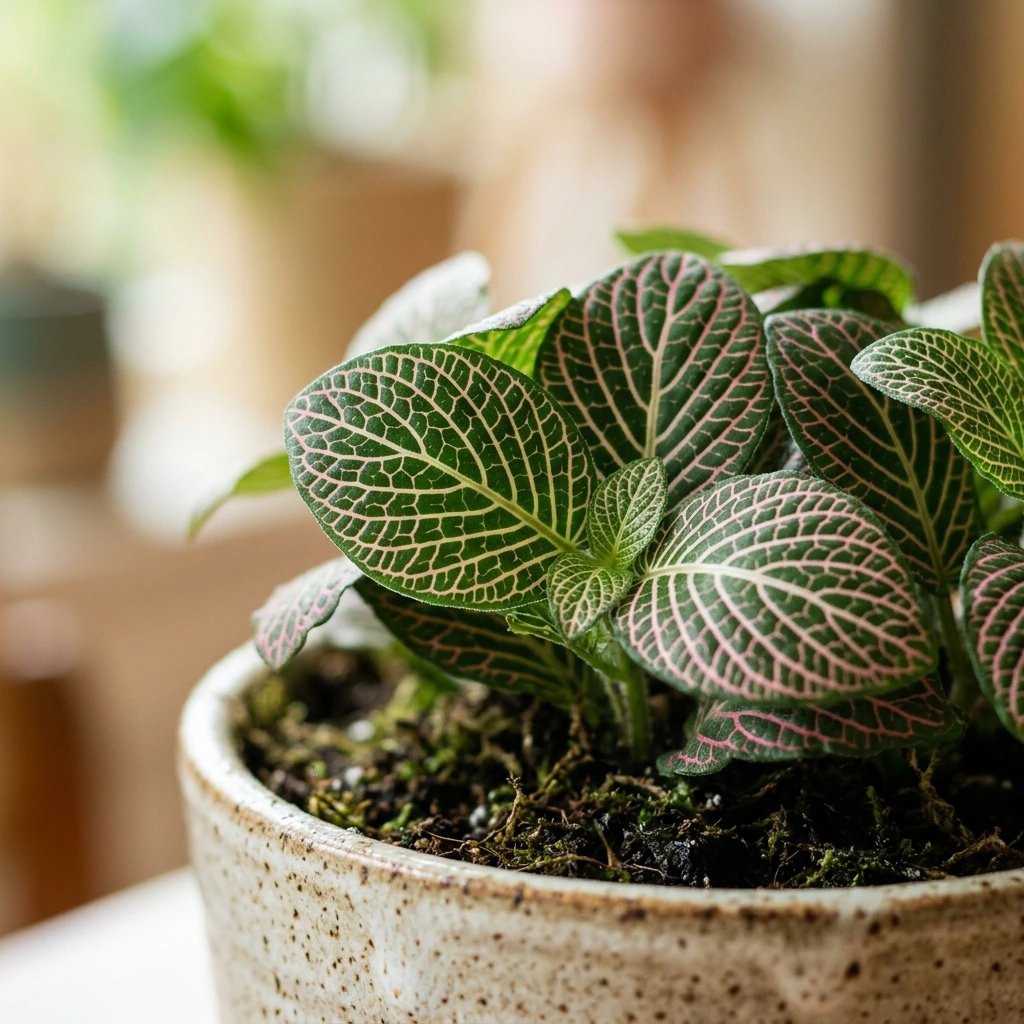
How to Identify Nerve Plant
A low-growing tropical creeping herb with dark green leaves adorned by a striking mosaic of red, pink, or white veins.
-
✔
Key Visual Features: Prostrate growth habit; opposite, oval leaves covered in a delicate, contrasting network of fine veins.
-
✔
Color Variations: Olive-green or dark forest-green leaves with vivid white, rose-red, or bubblegum-pink veins.
-
✔
Common Confusions: Often confused with Polka Dot Plant (Hypoestes), but Nerve Plant has a structured network of veins, whereas Polka Dot Plant has random speckled spots.
Complete Care & Cultivation Guide
Follow our detailed scientific care guide to keep your Nerve Plant thriving and gorgeous all year round.
Common Diseases & Treatment
Wet Root Rot
Symptoms: Leaves turn yellow, limp, mushy, and eventually drop off; soil smells sour.
Leaf Shrivelling (Humidity Shock)
Symptoms: Leaves become crispy, curled, and dry at the edges, even if the soil is damp.
Frequently Asked Questions
Why is my Nerve Plant completely flat and wilted?
It is 'fainting' due to dehydration! Fittonia is highly dramatic when thirsty. Give it a thorough soak, and it will revive and stand upright within 1-2 hours.
Can Nerve Plant live in a closed terrarium?
Yes! In fact, Fittonia thrives in closed terrariums because they replicate its native tropical rainforest environment, providing the constant high humidity (above 60%) and consistent moisture it craves.
Why are the leaves of my Nerve Plant turning yellow?
This is usually a sign of overwatering or poor drainage. Fittonia loves moisture, but its roots will quickly rot if left in standing water. Ensure the pot has drainage holes and let the topsoil dry slightly before watering again.
Is the Nerve Plant toxic to pets?
No, Fittonia albivenis is completely non-toxic to cats and dogs. It is one of the safest and most colorful plants you can grow in a pet-friendly home.