Parlor Palm Care & Identification Guide
The Parlor Palm is one of the world's most popular indoor palms, native to the dense rainforests of southern Mexico and Guatemala. Celebrated since Victorian times for its architectural elegance and resilience, it features dense clusters of slender, bamboo-like green canes bearing soft, feathery, deep-green fronds. It grows extremely slowly but is highly adaptable to low light and low humidity. It is widely celebrated by botanists for its distinct environmental adaptability and structural appeal.





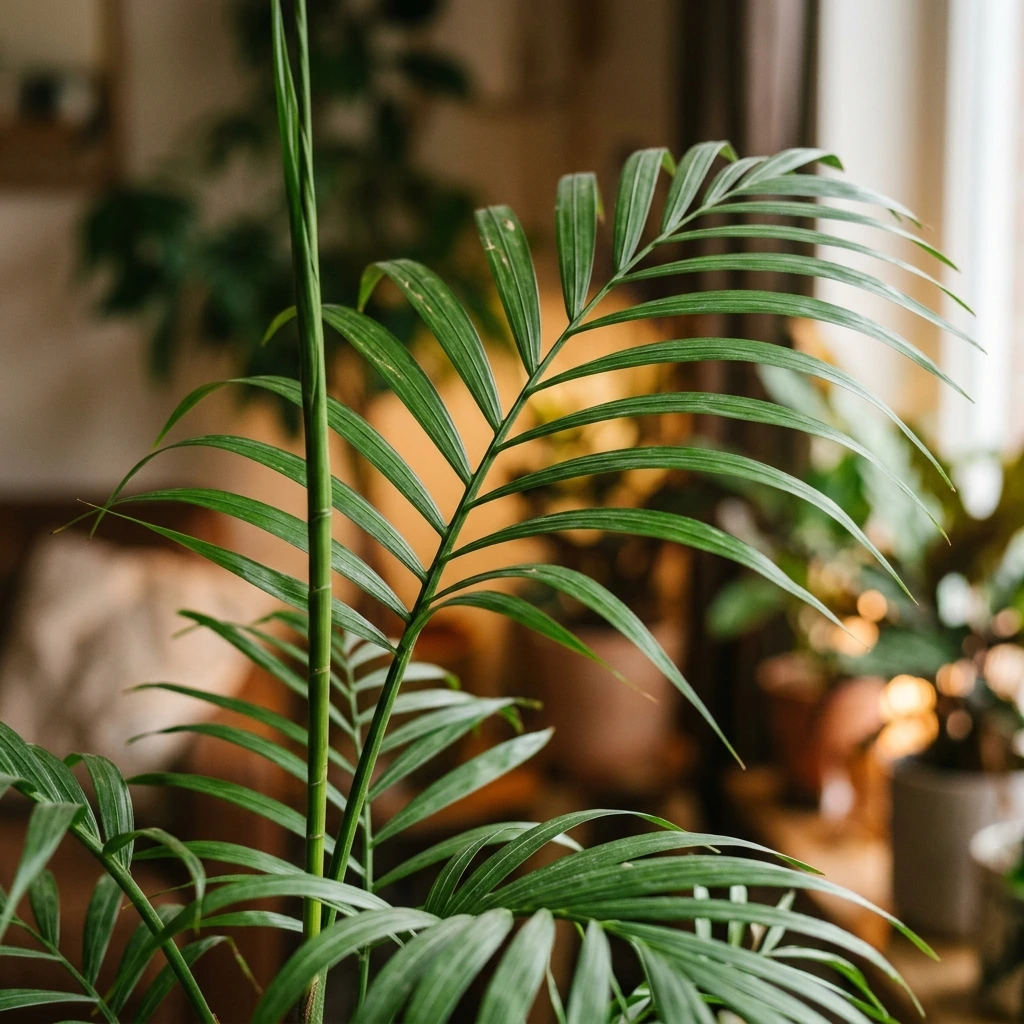
How to Identify Parlor Palm
A compact, slow-growing indoor palm featuring clumps of delicate, feathery green fronds on slender green stems.
-
✔
Key Visual Features: Slender, ringed bamboo-like canes; fine, arched pinnate fronds with narrow lanceolate leaflets.
-
✔
Color Variations: Rich emerald-green to light-green fronds; produces small, pea-sized yellow flower clusters under high light.
-
✔
Common Confusions: Often confused with juvenile Areca Palms or Kentia Palms, but Parlor Palm is much smaller, has thinner, softer fronds, and lacks the orange/yellow stems of the Areca.
Complete Care & Cultivation Guide
Follow our detailed scientific care guide to keep your Parlor Palm thriving and gorgeous all year round.
Common Diseases & Treatment
Spider Mite Infestation
Symptoms: Fine webbing under leaves, pale yellow stippling on leaflets, and overall dusty appearance.
Root Rot
Symptoms: Tips of leaflets turn brown and mushy, followed by yellowing fronds and soft, black roots.
Frequently Asked Questions
Why are the tips of my Parlor Palm leaves turning brown?
Brown leaf tips are usually caused by dry air, underwatering, or mineral buildup from tap water. Parlor palms are sensitive to fluoride and chlorine. Use filtered water or rainwater, and increase humidity using a room humidifier.
Can Parlor Palm grow in a windowless room?
While it is highly tolerant of low light, it cannot survive in absolute darkness. It will thrive under office fluorescent lights or near an east-facing window. If growth completely stops and leaves pale, move it to a slightly brighter spot.
How often should I fertilize my Parlor Palm?
Because it is a very slow grower, it requires very little feeding. Feed it only twice a year—once in spring and once in summer—with a balanced palm fertilizer diluted to half-strength.
Is the Parlor Palm safe for cats?
Yes, Chamaedorea elegans is completely non-toxic and pet-safe. Cats love to swat at its feathery, low-hanging fronds, making it a perfectly safe plant for active pet households.