Ponytail Palm Care & Identification Guide
The Ponytail Palm, or Elephant's Foot, is a highly unique, slow-growing treelike succulent native to eastern Mexico. Famous for its massive bulbous trunk base that stores water and a fountain of thin, curly, strap-like leaves cascading from the top, it is non-toxic and incredibly hardy. It is widely celebrated by botanists for its distinct environmental adaptability and structural appeal.





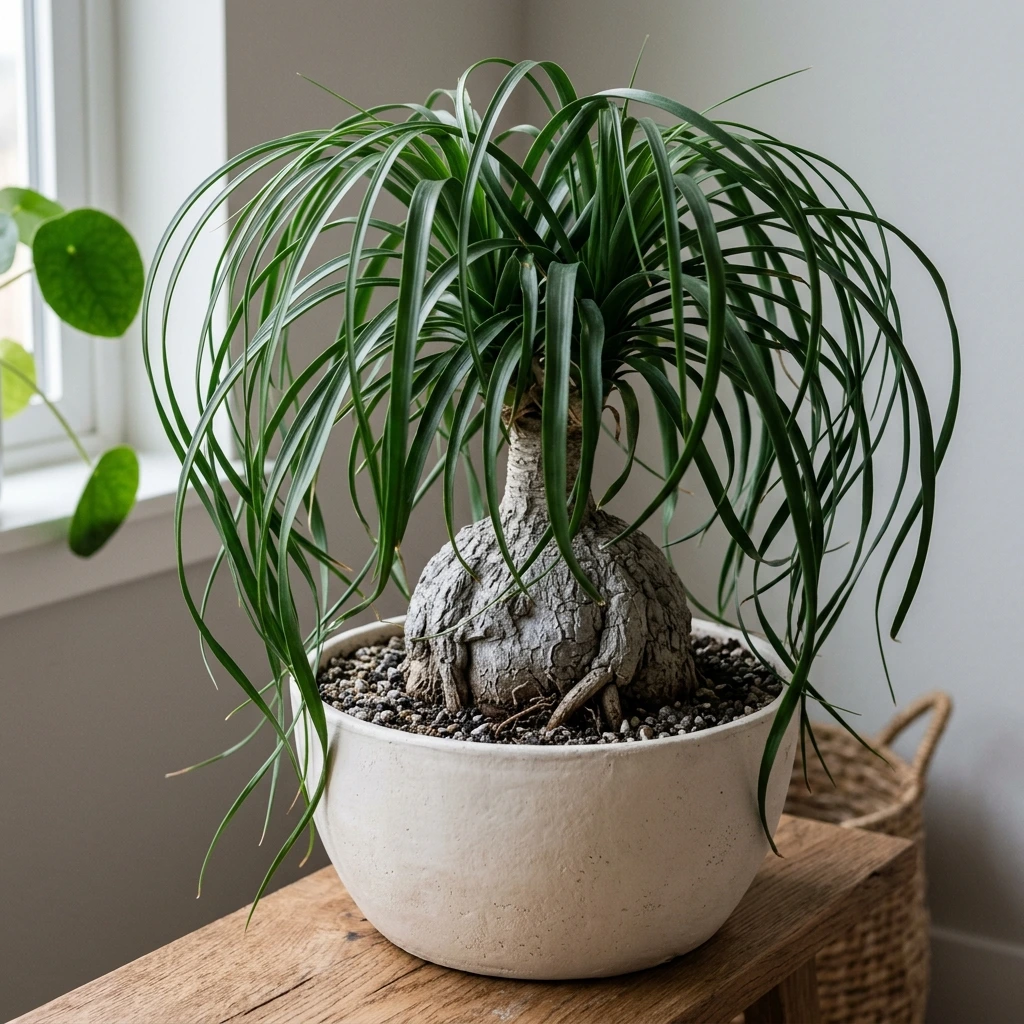
How to Identify Ponytail Palm
A spectacular, slow-growing treelike succulent with a huge bulbous trunk base and a fountain of thin, curly leaves.
-
✔
Key Visual Features: A highly swollen, gray, textured trunk base (caudex) resembling an elephant's foot, tapering into a single stem topped with a crown of cascading leaves.
-
✔
Color Variations: Textured gray-brown trunk with bright grass-green leaves.
-
✔
Common Confusions: Distinctive trunk, but sometimes confused with Yucca or Dracaena, easily recognized by the extremely bulbous, round trunk base.
Complete Care & Cultivation Guide
Follow our detailed scientific care guide to keep your Ponytail Palm thriving and gorgeous all year round.
Common Diseases & Treatment
Caudex Softening (Overwatering)
Symptoms: The swollen bulbous base becomes soft, spongy, and the bark peels off; leaves yellow and droop.
Brown Leaf Tips (Dry air)
Symptoms: Long, curly leaves develop dry, straw-colored brown tips.
Frequently Asked Questions
Is the Ponytail Palm a real palm tree?
No! Despite its name and palm-like appearance, it is actually a succulent belonging to the Asparagus family! It is closely related to Agave and stores water in its trunk base.
Why does my Ponytail Palm have a huge bulbous trunk?
That bulbous stem base is called a caudex! In the wild Mexican deserts, it acts as a massive reservoir, storing water to help the plant survive extreme droughts lasting for months.
How often should I water my Ponytail Palm?
Water only when the entire pot of soil has dried out completely, usually every 3 to 4 weeks. Squeeze the caudex—if it is firm, the plant has plenty of water. When in doubt, don't water!
Is the Ponytail Palm safe for cats?
Yes! Beaucarnea recurvata is 100% non-toxic and highly pet-safe. However, cats love to play with and chew on its long, grass-like leaves, which may cause minor plant damage.