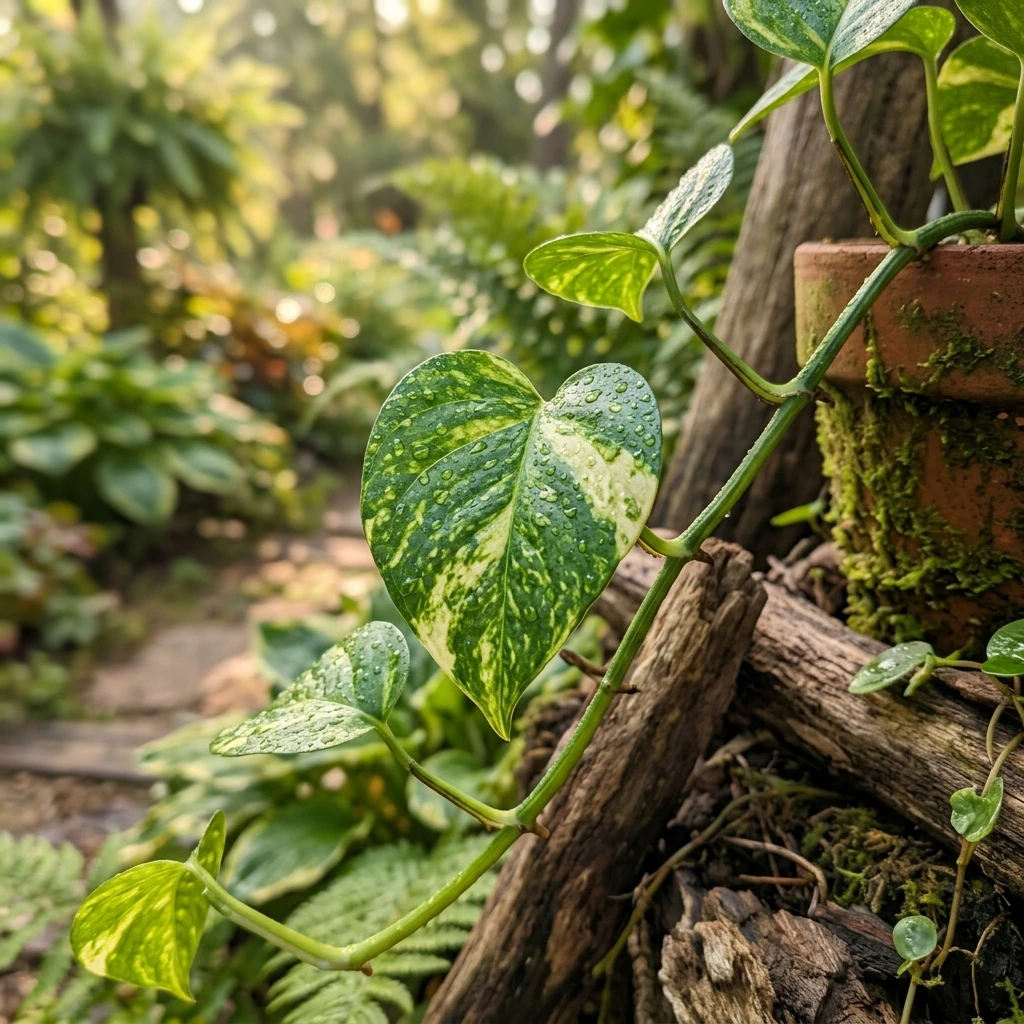
Epipremnum aureum

Pothos Care & Identification Guide

Epipremnum aureum, universally loved as Pothos or Devil's Ivy, is the ultimate low-maintenance indoor trailing vine. Native to the tropical French Polynesian islands, this vigorous evergreen climber displays smooth, glossy, heart-shaped green leaves splashed with golden-yellow or creamy-white variegation. Featuring rapid growth and high adaptability, it can trail gracefully from hanging baskets or climb robustly up moss poles, making it the perfect plant for busy owners and dark offices.


Sunlight Icon
Sunlight Bright Indirect
Watering Icon
Watering Moderate to
Soil Mix Icon
Soil Mix Well-aerated, rich
Temperature Icon
Temperature 15°C - 29°C
Toxicity Warning Icon
Toxicity Toxic to Pets
Botanical macro photography of Pothos (Epipremnum aureum) - Plant AI care database

How to Identify Pothos

A fast-growing evergreen climbing vine with smooth, heart-shaped leaves that can trail downward or climb upward using aerial roots.

  • Key Visual Features: Heart-shaped waxy leaves arranged alternately on thick trailing stems with small aerial nodes.
  • Color Variations: Bright green, often splashed with golden-yellow, white, or cream streaks ('Golden Pothos', 'Marble Queen').
  • Common Confusions: Frequently confused with Heartleaf Philodendron, but Pothos leaves are thicker, have a matte texture, and lack the protective papery sheaths (cataphylls) at leaf nodes.
💡 Plant AI Tip: Not sure? Take a photo with Plant AI to identify your houseplants instantly.

Complete Care & Cultivation Guide

Follow our detailed scientific care guide to keep your Pothos thriving and gorgeous all year round.

Pothos plants prefer their soil to dry out slightly between waterings. Water thoroughly only when the top 2 inches of the potting mix feels completely dry. Typically, this means watering every 7 to 10 days in summer and every 14 days in winter. If the heart-shaped leaves begin to wilt slightly, it is a sign that the plant is thirsty. Yellowing leaves are a classic warning sign of overwatering.
Regular pruning is the key to maintaining a lush, bushy, full Pothos plant. Long, leggy, sparse trailing vines can be trimmed back at any time. Use sterilized sharp scissors to cut stems just below a node. This stimulates dormant buds near the base to branch out, resulting in dense foliage. You can root the pruned cuttings easily in water to expand your collection.
Pothos plants are light feeders that do not require heavy fertilization. Feed them once a month during their active spring and summer growing season using a balanced liquid organic houseplant fertilizer diluted to half strength. Do not fertilize in winter. If leaf variegation begins to fade, it may be a sign of inadequate nutrients or light.
Pothos plants thrive in bright, indirect sunlight, but are exceptionally low-light tolerant, making them popular for windowless offices. Variegated varieties (like 'Marble Queen' or 'Golden') need bright, filtered light to maintain their splashy colors. Avoid direct, harsh afternoon sun, which will bleach and burn the foliage.
Plant Pothos in a loose, rich, well-aerated general potting mix with a neutral to slightly acidic pH of 6.0 to 6.8. A perfect soil recipe consists of 50% organic peat moss, 30% perlite to ensure rapid water drainage, and 20% sterilized compost or vermiculite. Avoid heavy, muddy garden soils that trap water and rot roots.
Propagate Pothos cuttings easily in clean water. Snip a healthy stem cutting that has at least 3 leaves and 2 nodes. Strip the lowest leaf to expose the node, and submerge the stem in a glass of clean room-temperature water, keeping leaves above the water. Place in bright indirect light. Roots will emerge in 2 weeks. Change the water weekly.
Pothos plants love warm indoor temperatures between 15°C and 29°C (59°F to 84°F). They are highly sensitive to sudden cold drops. Keep them protected from cold drafts, drafty windows, and heaters. Ensure room temperatures never drop below 10°C (50°F), as cold exposure will cause leaves to turn black and drop off.
Choose a container that has bottom drainage holes to prevent root rot. Pothos grow beautifully in hanging baskets, tall pedestals, or standard pots equipped with a sturdy moss climbing pole. Repot every 1 to 2 years in spring when roots start circling the bottom drainage holes or growing out of the pot top.
Pothos are relatively pest-free, but can occasionally attract mealybugs or spider mites in dry, poorly ventilated indoor areas. Wipe the waxy leaves with insecticidal soap or organic neem oil solution once a week for 3 weeks to clear pests, and mist the plant occasionally to boost local humidity.
The most common disease is Pythium root rot caused by constantly soggy, waterlogged soil. Stems near the soil line will turn mushy, black, and decay. Prevent this entirely by allowing the soil to dry out between waterings. If rot occurs, cut off healthy vines to propagate and discard the rotted root ball.
Pothos is one of the easiest plants to grow in water indefinitely! If you want to keep Pothos in water, add a few drops of liquid fertilizer every month, keep the glass container clean, and change the water weekly. It makes a beautiful, soil-free natural decoration for kitchen counters, shelves, and small tables.

Is your Pothos leaves turning yellow, dry or brown?

Keep your indoor garden vibrant. Take a photo with Plant AI to diagnose pests and leaf spot diseases instantly.

Diagnose My Plant

Common Diseases & Treatment

Root Rot (Rhizoctonia)

Symptoms: Leaves turn yellow and drop off; stems become soft and brown near the soil line, and growth stunts.

Action: Let the potting soil dry out completely. Cut away mushy stems and repot in fresh, well-draining soil.

Bacterial Wilt

Symptoms: Leaves wilt rapidly without turning yellow; black veins may appear on the stems when cut open.

Action: Discard infected plants immediately. Keep tools sterilized and avoid letting plants sit in standing water.

Frequently Asked Questions

Why is my Pothos losing its leaf variegation?

Loss of variegation (turning completely green) is a direct response to low light. The plant produces more chlorophyll to maximize energy absorption. Move it to a brighter spot with indirect light.

How do I make my Pothos look fuller and bushier?

Regularly prune the long trailing vines. This stimulates dormant buds near the base to branch out. You can also plant the pruned cuttings back into the same pot.

Can Pothos grow directly in water?

Yes. Pothos cuttings easily develop water roots and can live indefinitely in a vase of clean water, provided you change the water weekly and add a drop of liquid fertilizer.

What do yellow leaves on a Pothos mean?

Yellow leaves are most commonly a sign of overwatering. Ensure the container has good drainage holes and let the soil dry out slightly more between waterings.

No more dying plants. Grow healthy greens today!

Get Started for Free