Venus Flytrap Care & Identification Guide
The Venus Flytrap is the most famous carnivorous plant in the world, native exclusively to the specialized bog wetlands of North and South Carolina. It features highly modified leaves that form snap-traps lined with trigger hairs. When an insect touches these hairs twice, the trap snaps shut in milliseconds, secreting enzymes to digest the prey. An exotic and fascinating plant, it requires very specific care to thrive. It is widely celebrated by botanists for its distinct environmental adaptability and structural appeal.





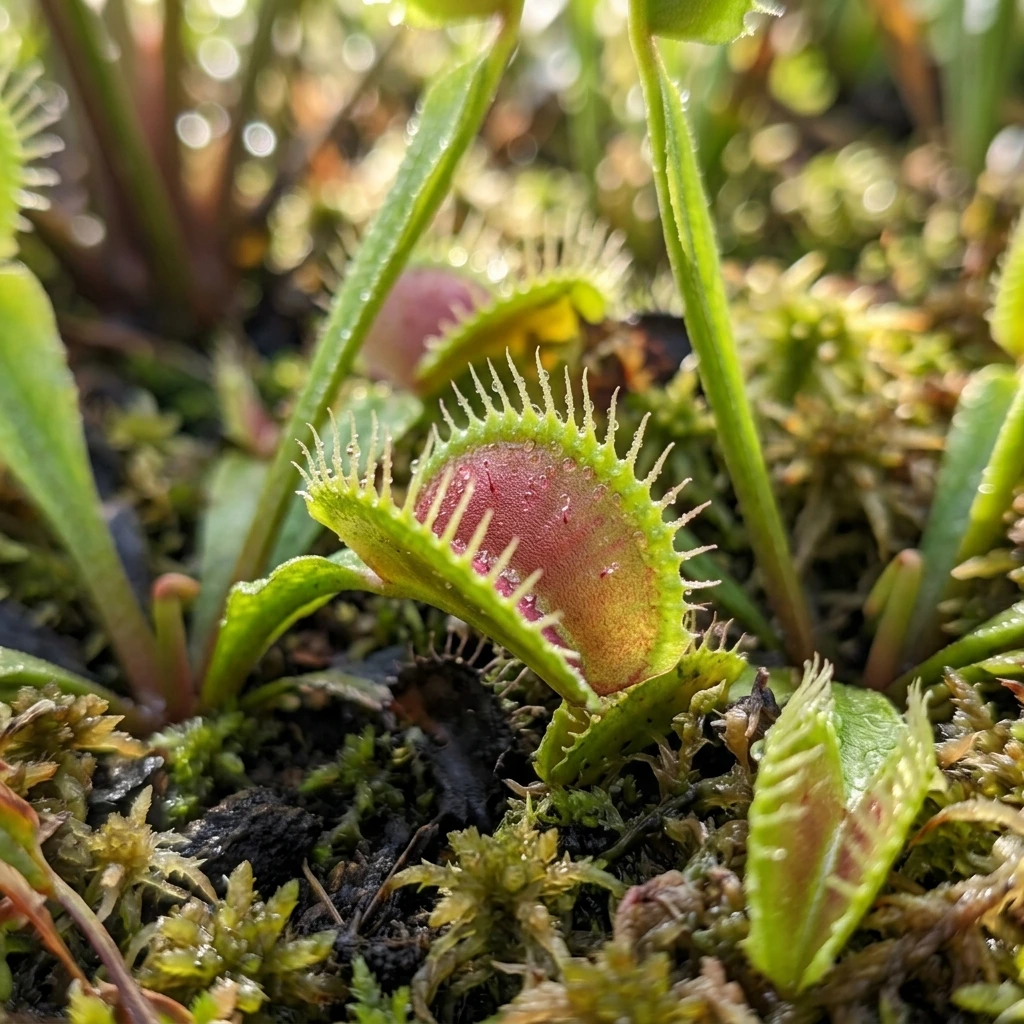
How to Identify Venus Flytrap
A famous carnivorous herb featuring low-growing rosettes of leaves modified into hinged, jaw-like snap traps.
-
✔
Key Visual Features: Low-growing rosette habit; leaves ending in a hinged trap with interlocking marginal teeth (cilia); reddish interior of active traps.
-
✔
Color Variations: Bright lime-green leaf blades; trap interiors are often blushed with vibrant rose-red or pink; green marginal spikes.
-
✔
Common Confusions: Completely unique; cannot be confused with any other common houseplant variety due to its signature jaw-like traps.
Complete Care & Cultivation Guide
Follow our detailed scientific care guide to keep your Venus Flytrap thriving and gorgeous all year round.
Common Diseases & Treatment
Mineral Burn
Symptoms: Traps and leaf bases turn black rapidly; new growth emerges stunted or deformed; roots rot.
Mould/Fungal Rot
Symptoms: Grey fuzzy mould appears on dead traps or at the center crown of the plant.
Frequently Asked Questions
Can I feed my Venus Flytrap hamburger meat?
Absolutely not! Feeding it human food, dead insects, or anything other than live bugs will cause the trap to rot and die. The trap requires the mechanical stimulation of a live, wriggling bug to complete digestion.
Why are my Venus Flytrap traps turning black?
An individual trap can only snap shut 3-5 times in its lifespan before it naturally turns black and dies. This is normal. Simply trim off dead traps. However, if multiple traps turn black, it may indicate mineral burn or low light.
Does the Venus Flytrap need winter dormancy?
Yes! Venus Flytraps are temperate plants. In winter, they must go dormant for 3-4 months at cold temperatures (4°C - 10°C). During this time, they stop growing and drop many traps. Keep soil damp but not soggy.
Is the Venus Flytrap toxic to cats and dogs?
No, the Venus Flytrap is non-toxic to pets. However, curious pets can trigger and damage the traps, causing severe stress to the plant. Keep it in a protected terrarium or shelf.