Yucca Care & Identification Guide
The Spineless Yucca is a striking, architectural foliage plant native to Central America and Mexico. Characterized by its robust, woody cane-like trunk topped with dense rosettes of long, strap-shaped, deep-green leathery leaves, it brings a bold desert aesthetic to indoor spaces while requiring minimal maintenance. It is widely celebrated by botanists for its distinct environmental adaptability and structural appeal.





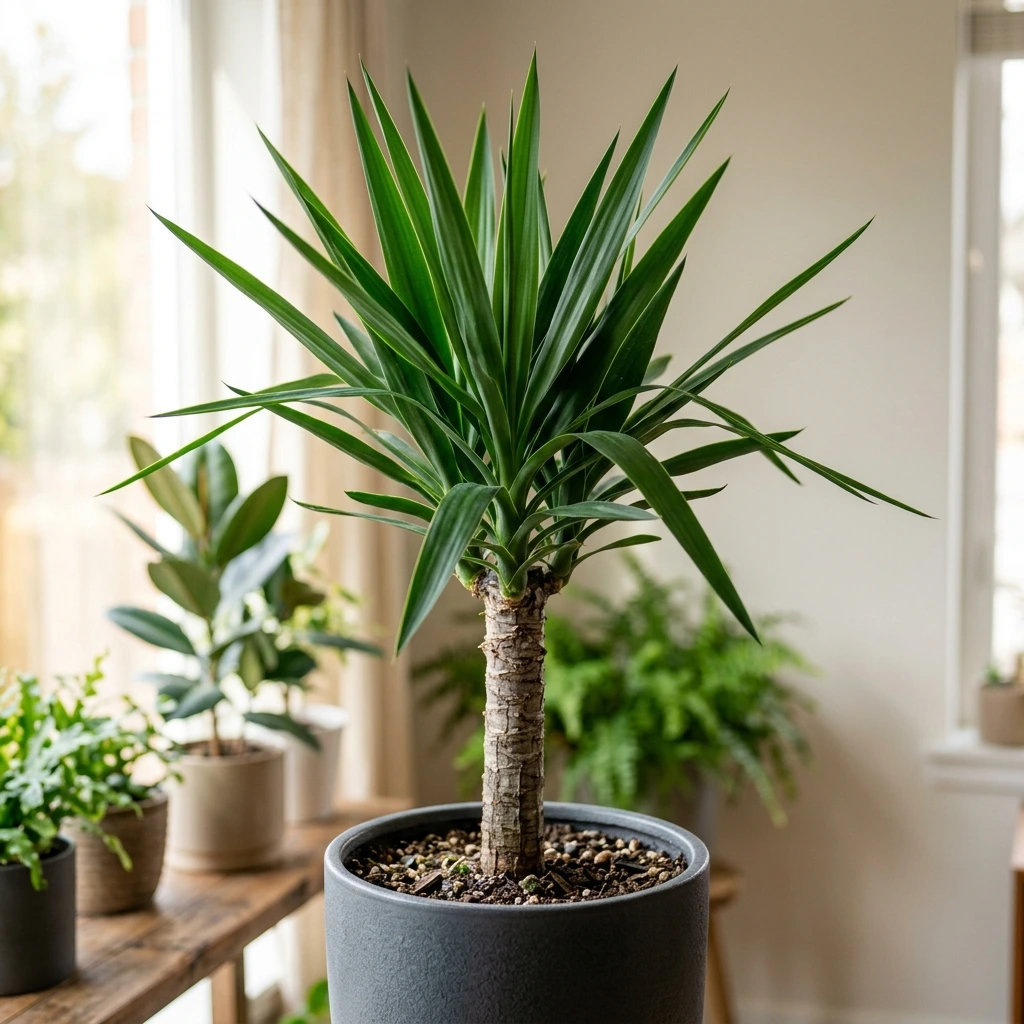
How to Identify Yucca
A tall, architectural tree-like plant with thick, woody cane trunks topped by rosettes of long, sword-like green leaves.
-
✔
Key Visual Features: Rosettes of rigid, sword-shaped leathery leaves growing atop sturdy, upright woody stems resembling tree trunks.
-
✔
Color Variations: Deep emerald-green foliage with a smooth, leathery surface; woody canes are grayish-brown.
-
✔
Common Confusions: Often confused with Dracaena (Dragon Tree), but Yucca leaves are much wider, stiffer, and have rough, finely serrated edges that can cut skin.
Complete Care & Cultivation Guide
Follow our detailed scientific care guide to keep your Yucca thriving and gorgeous all year round.
Common Diseases & Treatment
Root Rot (Phytophthora)
Symptoms: Cane base turns soft and mushy; leaves turn yellow, wilt, and drop.
Brown Leaf Spots (Coniothyrium)
Symptoms: Circular gray-brown spots with dark borders appear on older lower leaves.
Frequently Asked Questions
Why is my Yucca cane turning soft at the base?
A soft, spongy cane base is a definitive sign of severe root rot, caused by persistent overwatering or waterlogged soil. You must act quickly by cutting away the healthy top parts of the cane to propagate them, as the rotted base cannot be saved.
Why are the lower leaves of my Yucca turning yellow and dying?
As the Yucca grows, it naturally sheds its lowest, oldest leaves to form its woody, tree-like cane trunk. This is completely normal unless many leaves are turning yellow simultaneously, which would point to overwatering or lack of sufficient light.
Is the indoor Yucca plant toxic to pets?
Yes, Yucca leaves and trunks contain steroidal saponins, which are highly toxic to cats and dogs. Ingestion can lead to drooling, vomiting, diarrhea, dilated pupils, and coordinate issues. Keep this plant out of reach of curious pets.
How do I propagate an indoor Yucca plant?
Yucca is easily propagated using cane cuttings or offsets ('pups'). Cut a healthy section of the cane, let the cut end callus over for a few days, and plant it in a gritty, damp potting mix. Keep it warm and in bright light until roots establish.