ZZ Plant Care & Identification Guide
The ZZ Plant is the undisputed champion of low-light tolerance and neglect. Featuring shiny, jade-green leaflets that look like polished wax, it grows from potato-like underground rhizomes that store water, making it native to drought-prone Eastern Africa. It is widely celebrated by botanists for its distinct environmental adaptability and structural appeal.





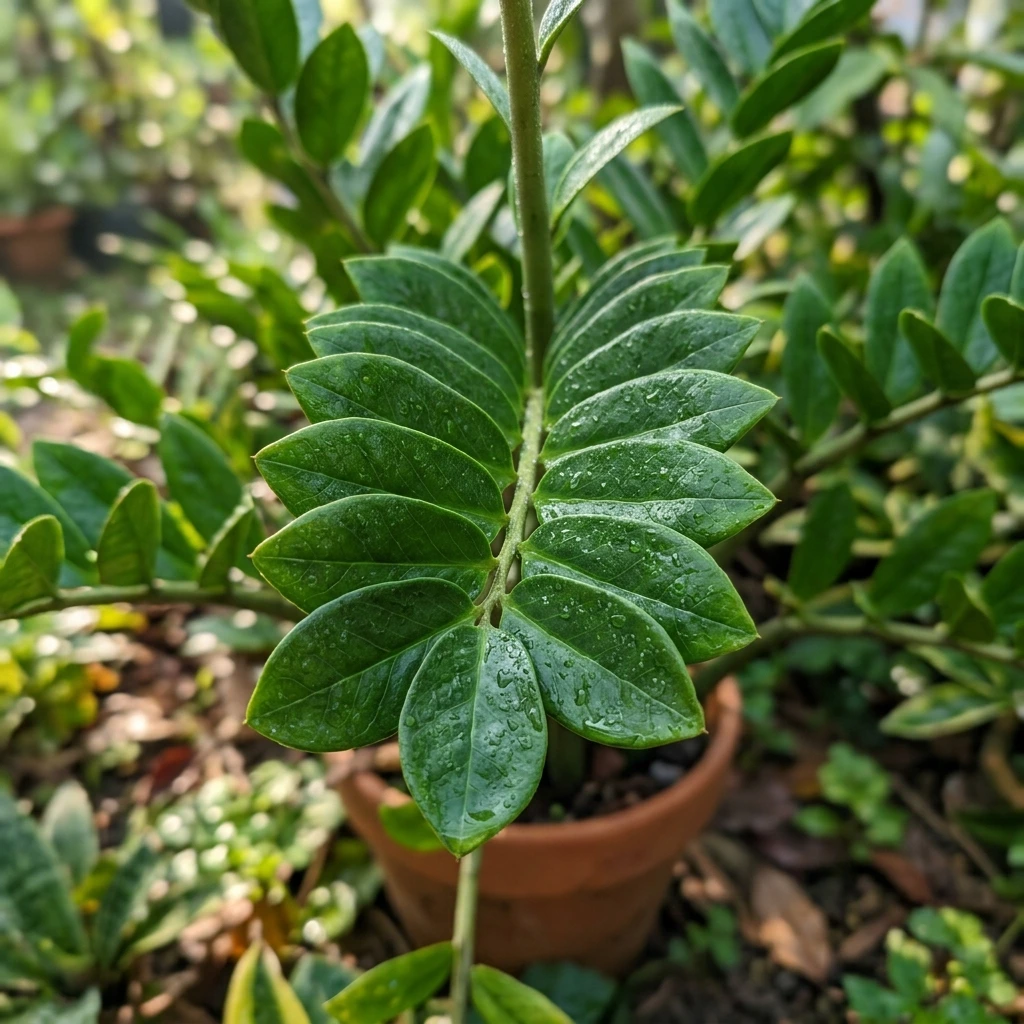
How to Identify ZZ Plant
An elegant, upright plant with thick, fleshy stems covered in pairs of highly glossy, emerald-green, teardrop-shaped leaflets.
-
✔
Key Visual Features: Thick, arching stems with glossy, leather-like leaves growing from fleshy potato-like underground tubers.
-
✔
Color Variations: Glossy dark forest green; new growth emerges as a bright lime green before darkening.
-
✔
Common Confusions: Sometimes confused with Zamia palms (Cardboard Palm) due to leaflet arrangement, but distinguished by its smooth, waxy green stems and shiny leaf surfaces.
Complete Care & Cultivation Guide
Follow our detailed scientific care guide to keep your ZZ Plant thriving and gorgeous all year round.
Common Diseases & Treatment
Rhizome Rot (Overwatering)
Symptoms: Stems turn yellow, soft, and wrinkled; the soil stays wet for weeks and underground rhizomes rot.
Fungal Leaf Spot
Symptoms: Brown or black circular lesions appear on the glossy leaflets, slowly spreading and drying out the tissue.
Frequently Asked Questions
How often should I water my ZZ Plant?
Water every 3 to 5 weeks depending on light. When in doubt, it is always safer to underwater than overwater. If the soil has any moisture, do not water!
Why are my ZZ Plant stems turning yellow and drooping?
This is a classic sign of overwatering. The underground rhizomes are likely rotting, preventing water transport. Stop watering immediately and check the roots.
How fast do ZZ Plants grow?
ZZ Plants are slow-growing indoor specimens. They will produce a few new, bright-green leaf spikes in spring and summer, which slowly unfurl and darken over several weeks.
Does the ZZ Plant need fertilizer?
Not much. Apply a balanced liquid organic houseplant fertilizer diluted to quarter strength once or twice during the active spring and summer growing season.