Amethyst Deceiver Foraging & Identification Guide
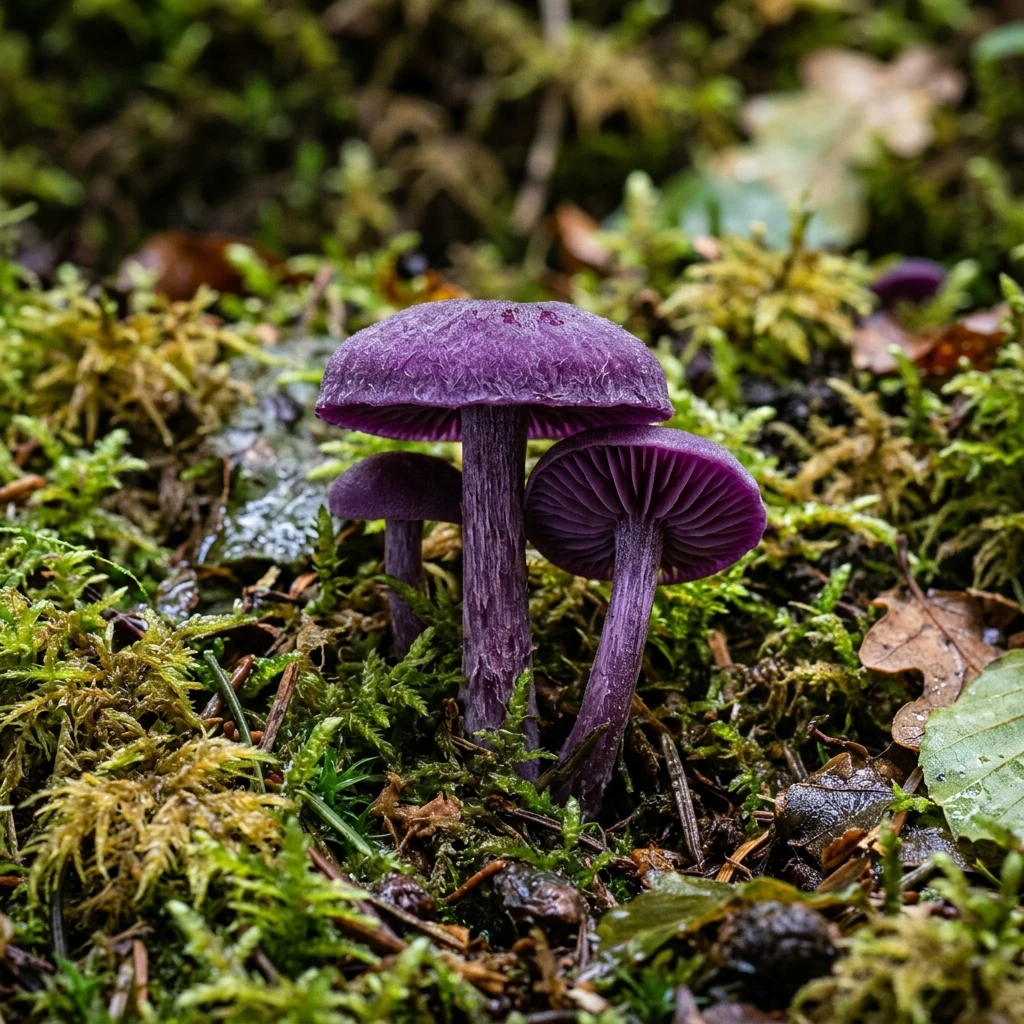
The Amethyst Deceiver (Laccaria amethystina) is a small, strikingly beautiful wild mushroom native to damp hardwood and conifer forests across Europe and North America, forming mycorrhizal bonds with oak and beech. Named 'Deceiver' because its brilliant, deep violet-purple pigment is highly hygrophanous—fading drastically to a pale, dull grayish-tan as it dries out—it easily tricks unprepared foragers. Featuring thick, widely spaced violet gills and a white spore print, it is a highly celebrated subject of wild mushroom identification and a fascinating addition to the woodland ecosystem.





How to Identify Amethyst Deceiver
The Amethyst Deceiver (Laccaria amethystina) is a small, strikingly beautiful wild mushroom native to damp hardwood and conifer forests across Europe and North America, forming mycorrhizal bonds with oak and beech. Named 'Deceiver' because its brilliant, deep violet-purple pigment is highly hygrophanous—fading drastically to a pale, dull grayish-tan as it dries out—it easily tricks unprepared foragers. Featuring thick, widely spaced violet gills and a white spore print, it is a highly celebrated subject of wild mushroom identification and a fascinating addition to the woodland ecosystem.
-
✔
Key Visual Features: A small, slender mushroom with a convex to flat, deep violet-purple cap that often becomes wavy or ruffled at the edges with age. The stem is tough, fibrous, and the same color as the cap, covered in faint white downy hairs at the base.
-
✔
Spore Print & Gills/Pores: Gills are very thick, widely spaced (distant), and deep purple, often becoming dusted with white powder as spores mature. The spore print is pure white.
-
✔
Common Confusions: Extreme caution is required! It can be easily confused with the highly toxic Lilac Fibrecap (Inocybe geophylla var. lilacina) and poisonous Purple Cortinarius species. Those toxic look-alikes have brown gills and a rusty-brown spore print, making a white spore print absolutely mandatory for identification.
Detailed Mycology Profile & Foraging Guide
Follow our detailed scientific field guide and environmental parameters to identify and study Amethyst Deceiver safely.
Common Look-alikes & Foraging Danger
Hygrophanous Color Loss
Symptoms: The brilliant amethyst-purple cap turns a dull, pale grayish-white or buff color.
Brown Gills & Spores
Symptoms: Gills are brown or clay-colored, and the stem shows rusty-brown spore dust.
Frequently Asked Questions
Why is it called the 'Deceiver'?
It is named the 'Deceiver' because its brilliant purple color fades dramatically to a dull grayish-white as it dries out, making it look like a completely different, plain woodland mushroom.
Are the stems of the Amethyst Deceiver edible?
No. The stems are extremely tough, fibrous, and stringy. Foragers discard the stems and only cook the delicate purple caps.
How do you distinguish it from the Lilac Fibrecap?
The toxic Lilac Fibrecap has clay-brown gills and a brown spore print, while the Amethyst Deceiver has deep purple gills and a pure white spore print. The Fibrecap also has a strong, unpleasant musty-earthy odor.
Does the purple color stay after cooking?
The purple color fades slightly during cooking, turning a duller violet-gray. To preserve its vibrant purple color, it is best pickled in clear vinegar or sautéed very briefly.