Artist's Conk Foraging & Identification Guide
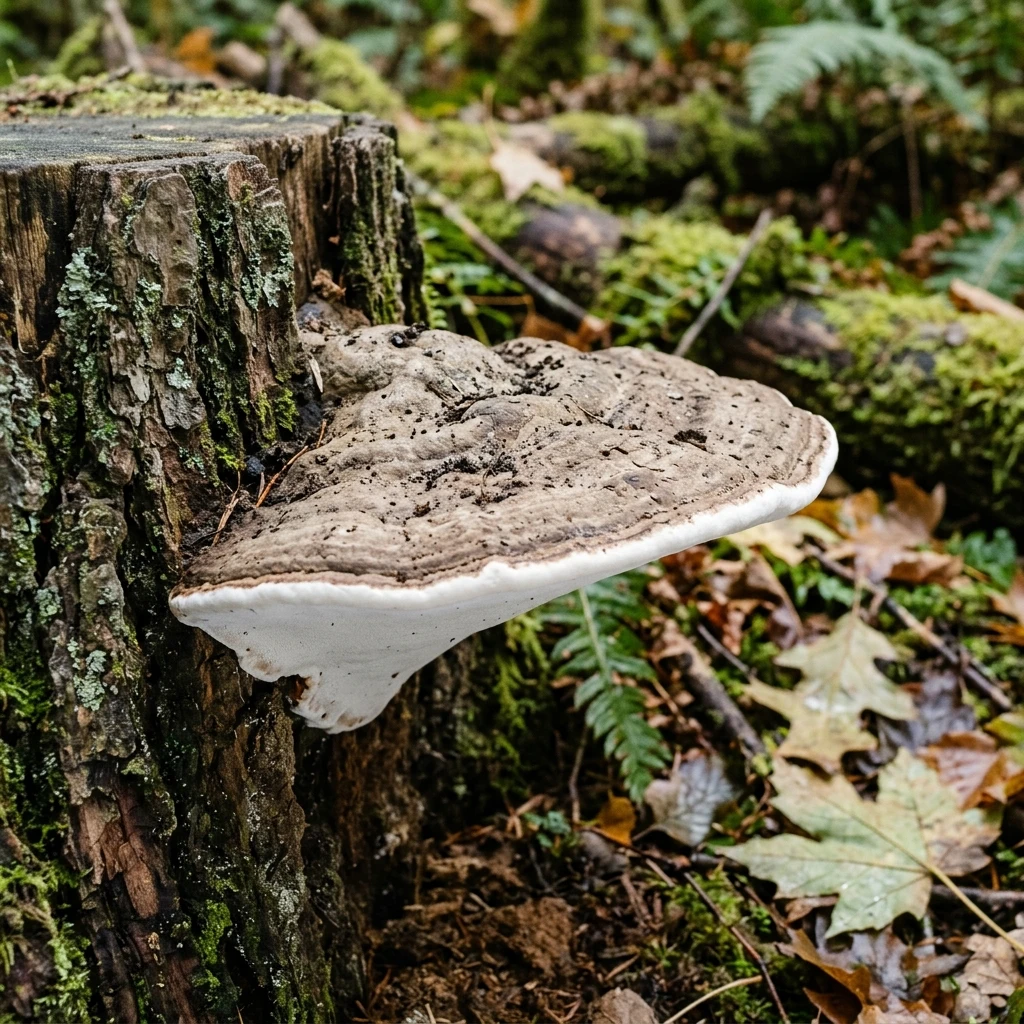
The Artist's Conk (Ganoderma applanatum) is a massive, woody, perennial bracket fungus famously known as the canvas of the forest. Native to hardwood woodlands worldwide, it acts as both a saprobe and a weak parasite, rapidly breaking down dead logs and heartwood. With a hard, cocoa-brown crusted upper surface and a pure white underside composed of millions of microscopic pores, it possesses a magical trait: any scratch on its white pores instantly bruises to a permanent dark brown, allowing foragers to carve intricate, lasting artwork.





How to Identify Artist's Conk
The Artist's Conk (Ganoderma applanatum) is a massive, woody, perennial bracket fungus famously known as the canvas of the forest. Native to hardwood woodlands worldwide, it acts as both a saprobe and a weak parasite, rapidly breaking down dead logs and heartwood. With a hard, cocoa-brown crusted upper surface and a pure white underside composed of millions of microscopic pores, it possesses a magical trait: any scratch on its white pores instantly bruises to a permanent dark brown, allowing foragers to carve intricate, lasting artwork.
-
✔
Key Visual Features: A very large, flat, shelf-like bracket (up to 60cm wide) that grows directly out of dead or dying hardwood trees without a stem. The top surface is extremely hard, woody, often furrowed, and matte grayish-brown to cocoa-brown.
-
✔
Spore Print & Gills/Pores: Lacks gills. The underside is covered in microscopic, pure white pores that immediately bruise dark brown when scratched or bruised. It produces an incredibly prolific rust-brown spore print that often coats the surrounding bark and the top of the mushroom itself.
-
✔
Common Confusions: Often confused with the Red-Banded Polypore (Fomitopsis pinicola), which has a glossy, reddish-orange band near the edge. It is also mistaken for Reishi (Ganoderma lucidum), but true Reishi has a highly polished, shiny, lacquered red surface and a distinct stem.
Detailed Mycology Profile & Foraging Guide
Follow our detailed scientific field guide and environmental parameters to identify and study Artist's Conk safely.
Common Look-alikes & Foraging Danger
Accidental Staining
Symptoms: Large, ugly dark brown smudge marks appearing on the fresh white pore underside.
Soggy Rotting
Symptoms: The woody bracket turns soft, spongy, and leaks brown moisture at the attachment base.
Frequently Asked Questions
Why is it called 'Artist's Conk'?
The pure white underside pores are highly sensitive to touch. Scratching them with a small stick or stylus breaks the microscopic pore tissues, instantly creating a permanent, dark brown line, allowing forest artists to draw intricate drawings.
What are the medicinal benefits of Artist's Conk?
It is heavily studied for boosting immune response, supporting liver detoxification, regulating blood sugar, and exhibiting strong anti-tumor and antibacterial properties.
How do you preserve a drawing on this mushroom?
Simply place the carved mushroom in a warm, dry, and ventilated room out of direct sunlight. Allow it to dehydrate slowly. Once completely dry, the drawing is locked in permanently.
How do you prepare Artist's Conk for tea?
Slice fresh brackets into small chunks immediately after harvest (they turn hard as stone when dried). Simmer 15 grams of Chunks in 1 liter of boiling water for 1 to 2 hours, then strain.