Bamboo Pith Foraging & Identification Guide
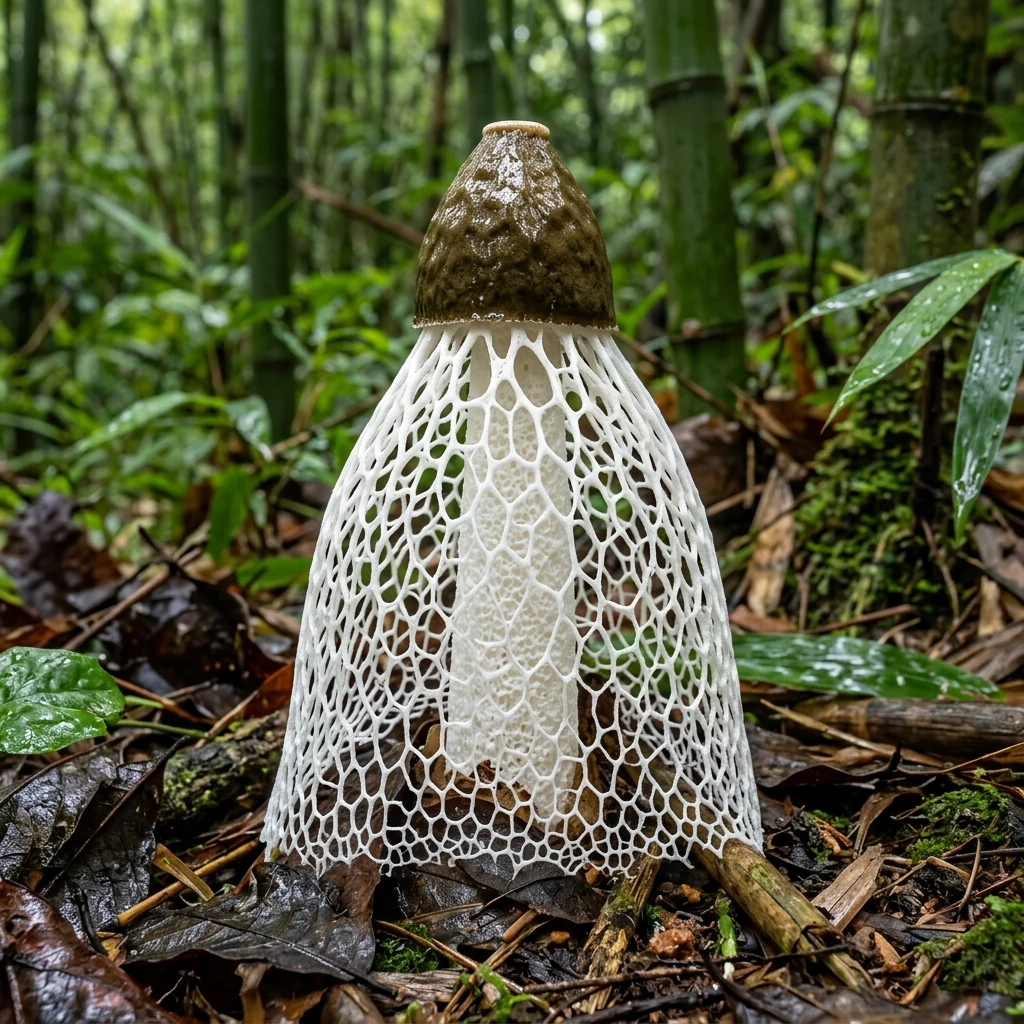
The Bamboo Pith (Phallus indusiatus), also known as the Bridal Veil Stinkhorn or Long Net Stinkhorn, is an incredibly spectacular and choice edible mushroom native to tropical and subtropical bamboo forests worldwide. Emerging from a gelatinous 'egg', it rapidly shoots up a tall white stalk crowned with a dark, olive-brown spore-slime cap. Most remarkably, it drops a delicate, snow-white, lacy net (the indusium) that hangs like a bridal gown to the forest floor. Revered in ancient Chinese medicinal texts and modern haute cuisine, it offers a delightful, crispy-tender texture and a subtle, savory umami flavor once the foul-smelling cap is removed.





How to Identify Bamboo Pith
The Bamboo Pith (Phallus indusiatus), also known as the Bridal Veil Stinkhorn or Long Net Stinkhorn, is an incredibly spectacular and choice edible mushroom native to tropical and subtropical bamboo forests worldwide. Emerging from a gelatinous 'egg', it rapidly shoots up a tall white stalk crowned with a dark, olive-brown spore-slime cap. Most remarkably, it drops a delicate, snow-white, lacy net (the indusium) that hangs like a bridal gown to the forest floor. Revered in ancient Chinese medicinal texts and modern haute cuisine, it offers a delightful, crispy-tender texture and a subtle, savory umami flavor once the foul-smelling cap is removed.
-
✔
Key Visual Features: Begins as a white, gelatinous, egg-like sac. When mature, it features a tall (up to 25cm), hollow, spongy white stalk. A spectacular, delicate, white, lace-like net (indusium) hangs down from beneath the cap like a skirt.
-
✔
Spore Print & Gills/Pores: Lacks gills or pores. The conical cap is covered in a dark olive-brown, slimy, foul-smelling spore mass (gleba) designed to attract flies for spore dispersal.
-
✔
Common Confusions: Can be confused with other Stinkhorns, such as the common Stinkhorn (Phallus impudicus), which completely lacks the beautiful lace skirt. It can also be confused with Yellow Net Stinkhorns, which have yellow or orange veils and are generally considered inedible or mildly toxic.
Detailed Mycology Profile & Foraging Guide
Follow our detailed scientific field guide and environmental parameters to identify and study Bamboo Pith safely.
Common Look-alikes & Foraging Danger
Rapid Collapse (Deliquescence)
Symptoms: The beautiful white lace veil shrivels, turns brown, and collapses into a mushy puddle within hours.
Yellow Net Veil
Symptoms: The net skirt expanding from the cap is bright yellow-orange instead of snow-white.
Frequently Asked Questions
Why does Bamboo Pith smell like rotting meat when wild?
The dark-brown slimy cap is covered in a sticky spore-bearing gel (gleba) that emits a strong carrion-like odor. This attracts flies and beetles, which eat the slime and disperse the spores throughout the forest.
How do you prepare wild Bamboo Pith for cooking?
You must carefully wash off the slimy brown cap and cut away the tough, dirty bottom sac (volva). Only cook the hollow white stalk and the delicate white lace skirt, which have a wonderfully crisp, crunchy texture.
Is the yellow net bamboo pith edible?
No. The yellow net stinkhorn (Phallus luteus) is mildly toxic and will cause severe stomach cramps and nausea. Always stick to the strictly snow-white net species.
Why is it dried before selling?
Because fresh Bamboo Pith is highly fragile and collapses within 12 hours of harvest, drying is the only way to preserve it for transport. Dried bamboo pith rehydrates perfectly in warm water within 10 minutes.