Bay Bolete Foraging & Identification Guide
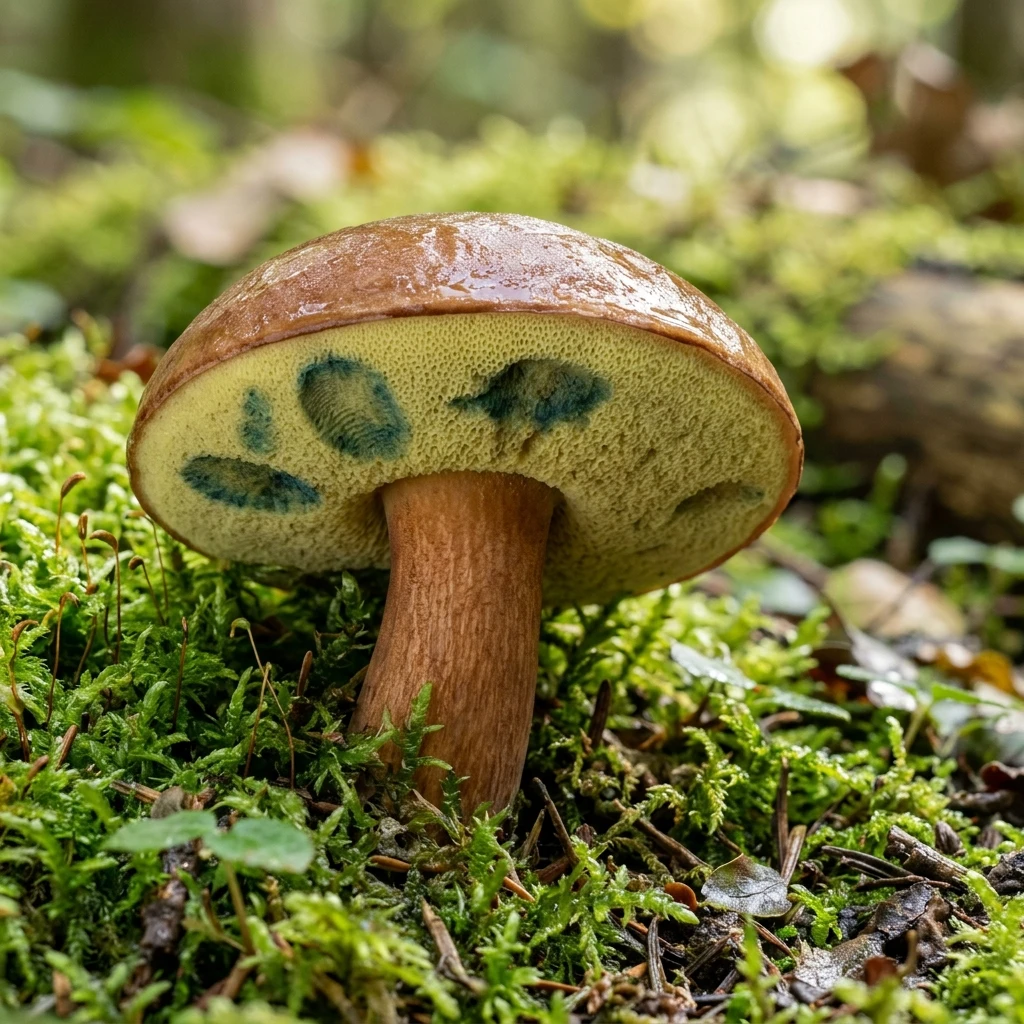
The Bay Bolete (Imleria badia) is an exceptionally popular and choice edible mushroom native to coniferous and mixed forests across Europe and North America. Widely sought after by foragers, it is named for its beautiful, smooth, slightly sticky cap that perfectly mimics the rich, reddish-brown color of a bay horse. Underneath, its pale yellowish-green pores possess a distinct, tell-tale characteristic: they stain a dull blue-green when bruised or pressed. Often considered nearly equal in culinary quality to the prized Porcini, the Bay Bolete is an excellent, meaty addition to autumn stews and risottos.





How to Identify Bay Bolete
The Bay Bolete (Imleria badia) is an exceptionally popular and choice edible mushroom native to coniferous and mixed forests across Europe and North America. Widely sought after by foragers, it is named for its beautiful, smooth, slightly sticky cap that perfectly mimics the rich, reddish-brown color of a bay horse. Underneath, its pale yellowish-green pores possess a distinct, tell-tale characteristic: they stain a dull blue-green when bruised or pressed. Often considered nearly equal in culinary quality to the prized Porcini, the Bay Bolete is an excellent, meaty addition to autumn stews and risottos.
-
✔
Key Visual Features: Features a smooth, convex, chestnut-brown or bay-brown cap that becomes slightly sticky when wet. The stem is relatively long, cylindrical, paler brown than the cap, and distinctly lacks the raised, white netting (reticulation) found on Porcini stems.
-
✔
Spore Print & Gills/Pores: Lacks gills. The underside is covered in small, circular, pale yellow or greenish-yellow pores. When pressed firmly with a finger, these pores will slowly bruise a dull blue-green color. Spore print is olive-brown.
-
✔
Common Confusions: Frequently confused with the highly prized King Bolete (Porcini/Boletus edulis), but Porcini has white pores that do not bruise blue, and a distinct white net pattern on its stem. It can also be confused with Bitter Boletes, which have a pinkish spore print and an incredibly foul, bitter taste.
Detailed Mycology Profile & Foraging Guide
Follow our detailed scientific field guide and environmental parameters to identify and study Bay Bolete safely.
Common Look-alikes & Foraging Danger
Slimy Cap Cuticle (Heavy Rain)
Symptoms: The chestnut-brown cap becomes extremely sticky, slimy, and slippery after heavy autumn downpours.
Stem Tunneling
Symptoms: The base of the smooth stem feels soft and shows small brown tunnels from insect larvae.
Frequently Asked Questions
Why is it called 'Bay Bolete'?
It is named 'Bay Bolete' because its rich, warm chestnut-brown cap color resembles the classic reddish-brown coat color of a bay horse.
Is the Bay Bolete a good substitute for Porcini?
Yes. It has a very similar, sweet, nutty, and woody flavor, and its flesh remains firm when cooked. It is widely considered one of the best and most abundant edible autumn mushrooms.
Does the Bay Bolete turn blue instantly?
No. When cut or pressed, its yellow-green pores stain blue-green slowly and moderately, rather than the violent, instant deep indigo-blue seen in toxic red-pored boletes.
Can you eat the stem of the Bay Bolete?
Yes, provided the stem is young and firm. Unlike some mushrooms with woody stems, the stem of a young Bay Bolete is solid, fleshy, and highly delicious.