Bicolored Bolete Foraging & Identification Guide
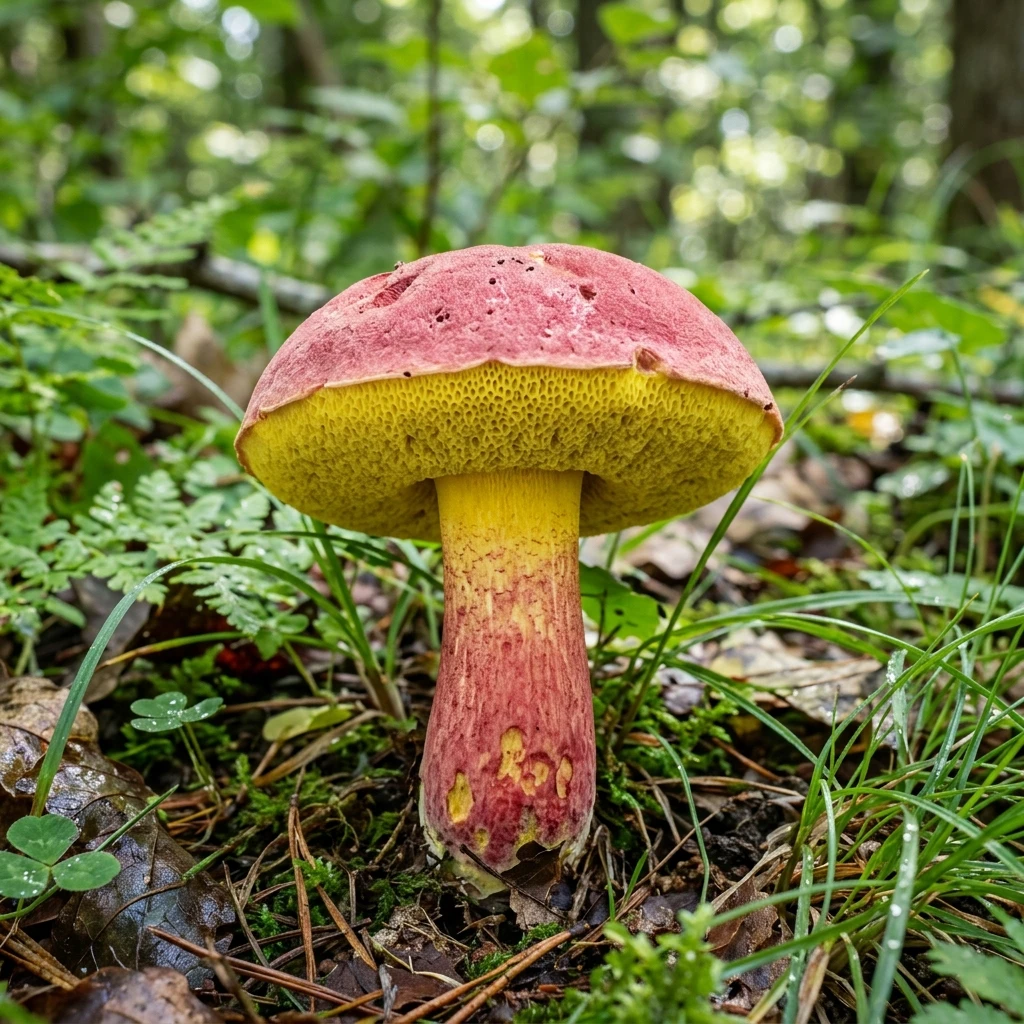
The Bicolored Bolete (Baorangia bicolor) is a striking and highly sought-after edible mushroom native to broadleaf deciduous forests across Eastern North America and parts of Asia, particularly under oak trees. Celebrated for its vivid, contrasting colors, it sports a beautiful rose-pink to brick-red cap, a bright yellow pore surface, and a dual-colored stem that shifts from yellow at the apex to red at the base. While it is an excellent and meaty culinary choice for experienced foragers, it requires strict attention to detail to avoid several highly toxic red-capped, blue-staining bolete look-alikes.





How to Identify Bicolored Bolete
The Bicolored Bolete (Baorangia bicolor) is a striking and highly sought-after edible mushroom native to broadleaf deciduous forests across Eastern North America and parts of Asia, particularly under oak trees. Celebrated for its vivid, contrasting colors, it sports a beautiful rose-pink to brick-red cap, a bright yellow pore surface, and a dual-colored stem that shifts from yellow at the apex to red at the base. While it is an excellent and meaty culinary choice for experienced foragers, it requires strict attention to detail to avoid several highly toxic red-capped, blue-staining bolete look-alikes.
-
✔
Key Visual Features: A medium to large bolete with a convex, dry, matte cap that ranges from apple-red to rose-pink to brick-red. The thick stem is strictly 'bicolored': bright yellow near the cap and transitioning to reddish or completely red at the base.
-
✔
Spore Print & Gills/Pores: Lacks gills. The underside consists of bright, lemon-yellow pores that age to an olive-yellow. A critical diagnostic feature is its blue staining reaction: the pores bruise blue VERY slowly and faintly, or sometimes not at all. The yellow cap flesh also stains blue extremely slowly or not at all. Spore print is olive-brown.
-
✔
Common Confusions: Extreme caution is required! It is frequently confused with the toxic Boletus sensibilis, which looks nearly identical but stains a very dark, intense blue instantly upon being touched or cut. It can also be confused with the poisonous Boletus huronensis. Always verify a very slow, faint, or absent blue staining reaction.
Detailed Mycology Profile & Foraging Guide
Follow our detailed scientific field guide and environmental parameters to identify and study Bicolored Bolete safely.
Common Look-alikes & Foraging Danger
Instant Deep Blueing
Symptoms: Slicing the yellow flesh turns it a brilliant, deep indigo-blue instantly in 1 second.
Stem Softening (Larvae)
Symptoms: The solid red-yellow stem feels soft, spongy, and shows tiny pinholes with white larvae inside.
Frequently Asked Questions
Why is it called 'Bicolored Bolete'?
It is named 'Bicolored Bolete' because of its highly distinctive, two-colored appearance: its cap is brilliant rose-pink to red, while its pores and upper stem are bright sulfur-yellow, creating a striking contrast.
Is the Bicolored Bolete safe to eat raw?
No. Like many boletes, it should never be eaten raw. Undercooked specimens can cause mild gastrointestinal upset in sensitive individuals. Always sauté or cook it thoroughly.
How do you distinguish it from the toxic Boletus sensibilis?
The toxic Boletus sensibilis is a deadly look-alike that stains a brilliant, deep indigo-blue instantly (in 1 second) when touched or cut. The edible Bicolored Bolete stains very slowly, faintly, and weakly blue-green over several minutes.
Does it grow in fairy rings?
No. It grows as a mycorrhizal partner with Oak tree roots, so it fruits in scattered groups or small patches spread across the shaded soil where oak root systems extend.