Black Bolete Foraging & Identification Guide
The Black Bolete (Boletus aereus), also known as the Queen Bolete or Bronze Bolete, is an exceptionally highly prized, choice wild edible mushroom native to broadleaf forests across Southern Europe and the Mediterranean basin. Growing in mycorrhizal association with oak, chestnut, and beech trees, it is renowned for its stunning, velvety, deep bronze to near-black cap and massive, bulbous stem. Boasting dense, firm white flesh that never stains blue when cut, and offering an incredibly rich, concentrated nutty umami flavor, it represents a peak delicacy in gourmet Mediterranean cuisine, often considered superior even to the King Bolete.





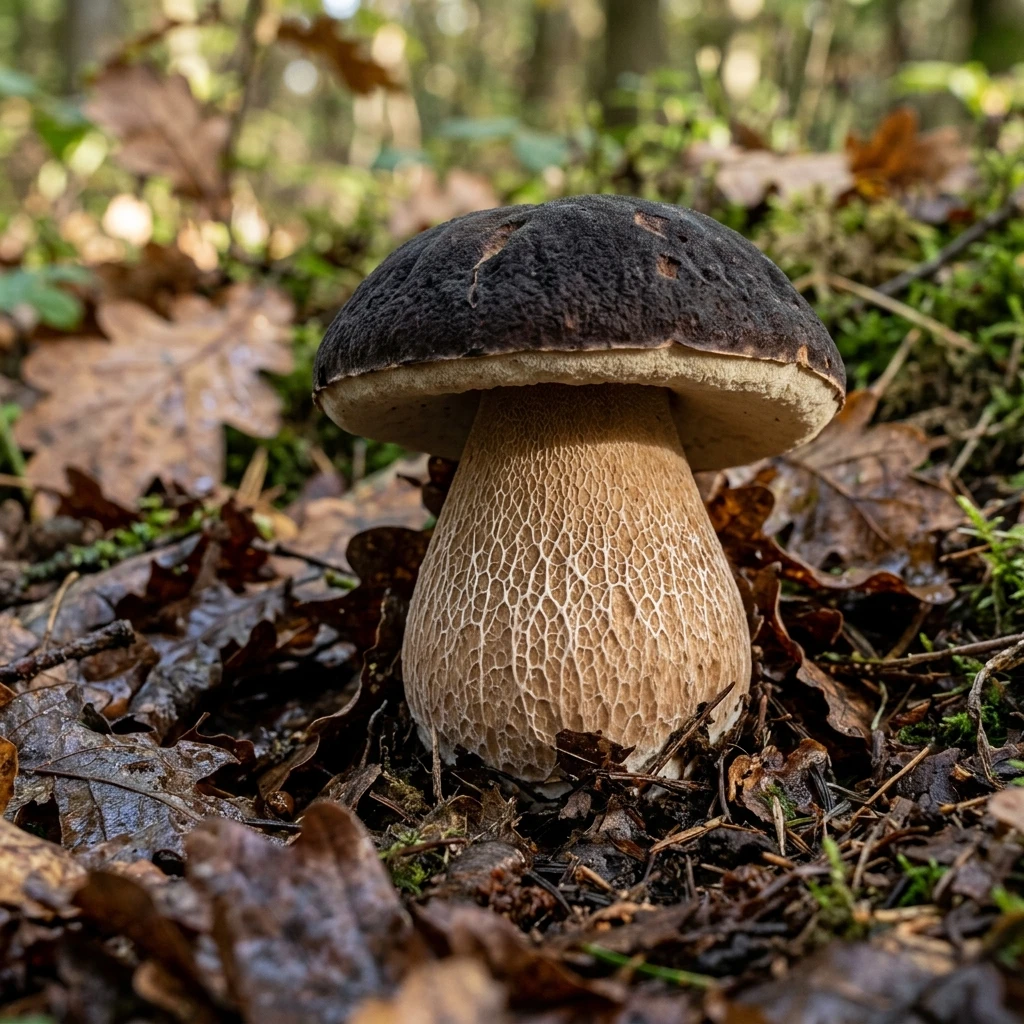
How to Identify Black Bolete
The Black Bolete (Boletus aereus), also known as the Queen Bolete or Bronze Bolete, is an exceptionally highly prized, choice wild edible mushroom native to broadleaf forests across Southern Europe and the Mediterranean basin. Growing in mycorrhizal association with oak, chestnut, and beech trees, it is renowned for its stunning, velvety, deep bronze to near-black cap and massive, bulbous stem. Boasting dense, firm white flesh that never stains blue when cut, and offering an incredibly rich, concentrated nutty umami flavor, it represents a peak delicacy in gourmet Mediterranean cuisine, often considered superior even to the King Bolete.
-
✔
Key Visual Features: A large, majestic mushroom featuring a massive, thick, bulbous pale-brown stem covered in a fine, white-to-brownish net-like pattern (reticulation). The cap is dry, finely velvety when young, and very dark—ranging from dark bronze-brown to almost black, often with lighter mottling.
-
✔
Spore Print & Gills/Pores: Lacks gills. The underside consists of dense, tightly packed circular pores that are pure white when young, slowly maturing to a yellowish-green. A critical feature is its white flesh and pores that NEVER stain blue when bruised or cut. Spore print is olive-brown.
-
✔
Common Confusions: Frequently confused with other choice edibles in the Boletus edulis complex, such as the King Bolete or the Summer Bolete (Boletus reticulatus), which have lighter brown caps. Must be carefully distinguished from the toxic Bitter Bolete, which has a distinct dark stem netting, pinkish mature pores, and an intensely bitter taste.
Detailed Mycology Profile & Foraging Guide
Follow our detailed scientific field guide and environmental parameters to identify and study Black Bolete safely.
Common Look-alikes & Foraging Danger
Cap Fading (Sun Bleaching)
Symptoms: The gorgeous black-bronze cap fades to a pale grayish-brown or develops light patches.
Insect Tunneling
Symptoms: Tiny pinholes throughout the thick white stem base, with small white larvae tunneling inside.
Frequently Asked Questions
Why is it called 'Black Bolete'?
It is named 'Black Bolete' because its thick, velvety cap develops a exceptionally dark, rich bronze-brown to almost charcoal-black color, which is much darker than typical brown Porcini mushrooms.
Does the Black Bolete turn blue when cut?
No. The pure white flesh of Boletus aereus remains completely white and never stains blue or changes color when cut, which is a key safety feature to distinguish it from toxic blueing boletes.
How do you tell it apart from the bitter Tylopilus felleus?
The Bitter Bolete (Tylopilus felleus) has a stem covered in very dark-brown coarse reticulation, its pores turn distinct pinkish when mature, and it has an extremely bitter taste. The Black Bolete has fine white stem reticulation, pores that turn olive-yellow, and a sweet, nutty taste.
Which trees does the Black Bolete grow under?
It grows in strict mycorrhizal symbiosis with broadleaf deciduous trees, particularly Oak, Beech, Sweet Chestnut, and Cork Oak in warm, well-drained forest soils.