Black Truffle Foraging & Identification Guide
The Black Truffle (Tuber melanosporum), also known as the Périgord Truffle or 'Black Diamond', is a highly coveted subterranean fungus native to the oak and hazel woodlands of Southern Europe. Maturing in the dead of winter, this legendary mycorrhizal treasure is prized globally for its extraordinarily complex, musky, chocolatey, and earthy aroma. Hidden inches beneath the soil and traditionally hunted with trained dogs or pigs, it is widely celebrated in haute cuisine for its robust flavor and its unique ability to withstand light cooking, unlike its delicate white truffle counterpart.




How to Identify Black Truffle
The Black Truffle (Tuber melanosporum), also known as the Périgord Truffle or 'Black Diamond', is a highly coveted subterranean fungus native to the oak and hazel woodlands of Southern Europe. Maturing in the dead of winter, this legendary mycorrhizal treasure is prized globally for its extraordinarily complex, musky, chocolatey, and earthy aroma. Hidden inches beneath the soil and traditionally hunted with trained dogs or pigs, it is widely celebrated in haute cuisine for its robust flavor and its unique ability to withstand light cooking, unlike its delicate white truffle counterpart.
-
✔
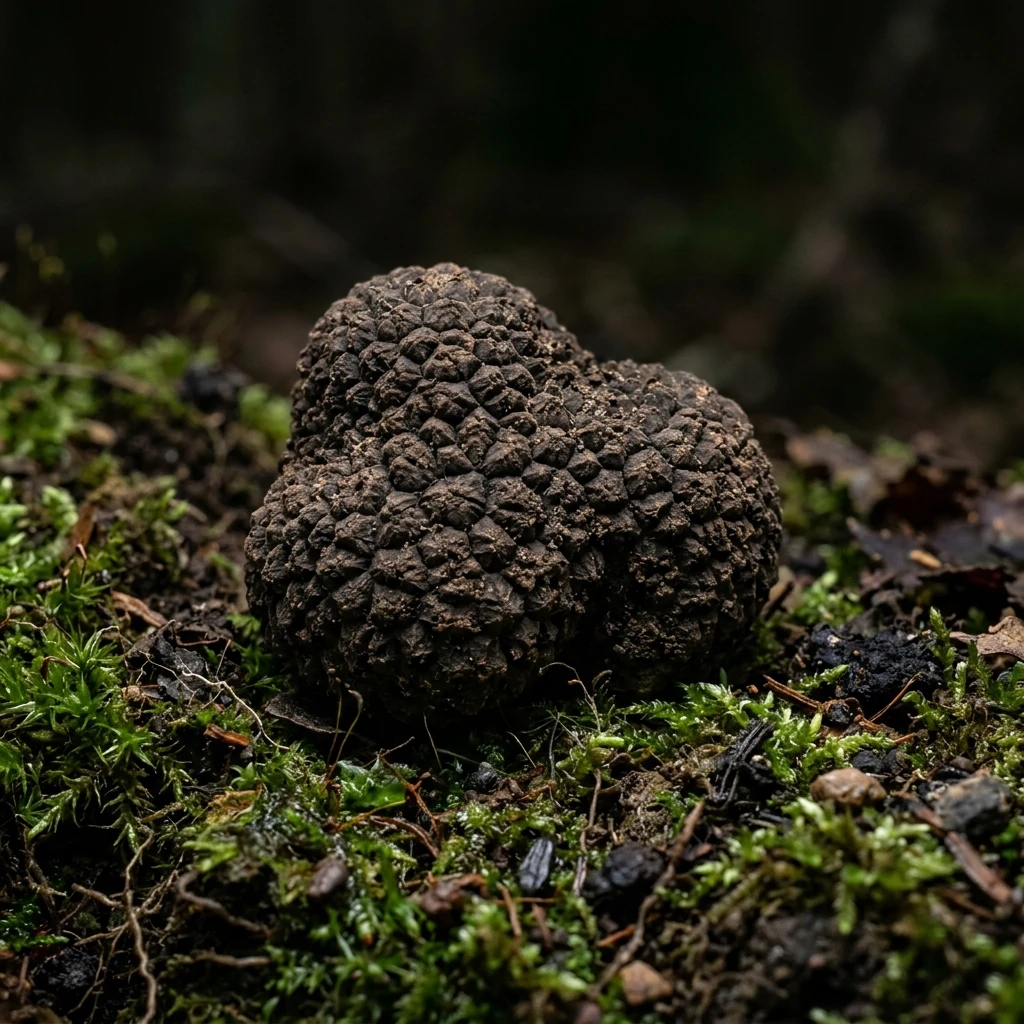
Key Visual Features: A subterranean, highly irregular, potato-shaped tuber. The exterior skin (peridium) is very dark brown to black and covered in distinct, hard, diamond-shaped or pyramidal warts.
-
✔
Spore Print & Gills/Pores: Subterranean fungi have no gills, pores, or typical spore prints. The interior flesh (gleba), when cut in half, is dark purplish-black to chocolate-brown and marbled with a complex, branching network of fine white veins. The aroma is intensely pungent, earthy, and musky.
-
✔
Common Confusions: Often confused with the Summer Truffle (Tuber aestivum) or Burgundy Truffle (Tuber uncinatum), which are less valuable. Those truffles typically have a paler, beige or light brown interior when cut, rather than the dark purplish-black marbled interior of the true Périgord Black Truffle. Also heavily counterfeited with the cheap, flavorless Chinese Truffle (Tuber indicum), which lacks the intense aroma and distinct white veining.
Detailed Mycology Profile & Foraging Guide
Follow our detailed scientific field guide and environmental parameters to identify and study Black Truffle safely.
Common Look-alikes & Foraging Danger
Volva Mold
Symptoms: White mold fuzz growing in the crevices between the warty pyramids.
Soggy Decomposition
Symptoms: Truffle turns soft, spongy, and leaks black, foul-smelling liquid.
Frequently Asked Questions
Can Black Truffles be cultivated?
Yes! Unlike white truffles, black truffles have been successfully cultivated on 'truffiere' farms by planting oak and hazelnut saplings pre-inoculated with Tuber melanosporum spores.
What does a Black Truffle taste like?
It has an intensely umami, earthy flavor with complex notes of cocoa, red wine, damp forest soil, and a deep mushroomy finish.
Why do black truffles stain things blue or red?
They do not stain. If your truffle stains hands or paper blue or red, it is likely a fake, artificially dyed specimen or a different wild species.
How do you store Black Truffles for the long term?
The best way is to grate or slice them, blend into high-quality unsalted butter, and freeze the truffle butter in small rolls. Alternatively, freeze individual truffles wrapped in vacuum foil.