Cauliflower Fungus Foraging & Identification Guide
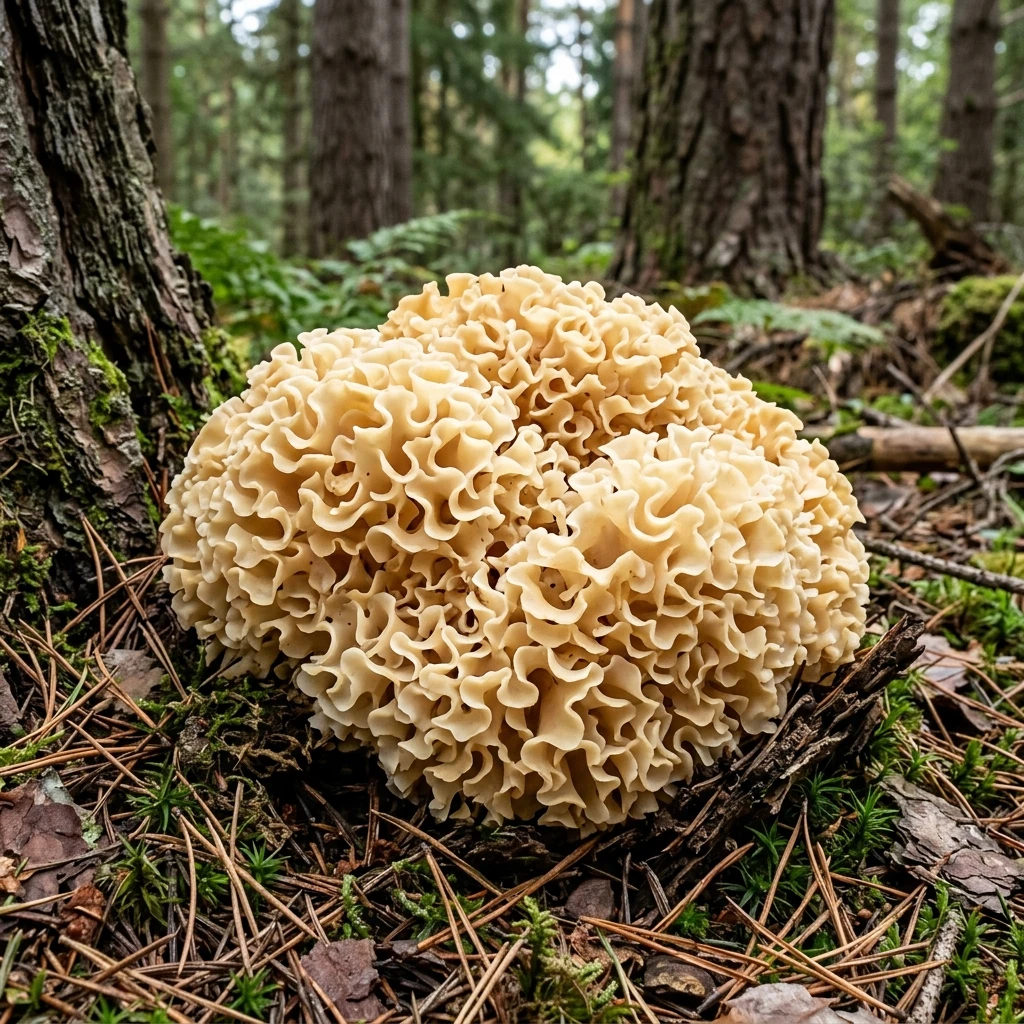
The Cauliflower Fungus (Sparassis crispa), also known as the Wood Cauliflower or Brain Fungus, is a choice, highly prized wild edible mushroom native to temperate coniferous forests across Europe and North America. Growing as a weak parasite at the base of mature pine trees, it is a magnificent and unmistakable sight, appearing as a massive, circular, creamy-yellow ball composed of thousands of tightly packed, wavy, leaf-like lobes resembling a giant cauliflower, a brain, or a natural sea sponge. It is highly celebrated by gourmet chefs for its exceptional crispy, crunchy texture that holds up well in soups, and its rich, earthy, nutty flavor.





How to Identify Cauliflower Fungus
The Cauliflower Fungus (Sparassis crispa), also known as the Wood Cauliflower or Brain Fungus, is a choice, highly prized wild edible mushroom native to temperate coniferous forests across Europe and North America. Growing as a weak parasite at the base of mature pine trees, it is a magnificent and unmistakable sight, appearing as a massive, circular, creamy-yellow ball composed of thousands of tightly packed, wavy, leaf-like lobes resembling a giant cauliflower, a brain, or a natural sea sponge. It is highly celebrated by gourmet chefs for its exceptional crispy, crunchy texture that holds up well in soups, and its rich, earthy, nutty flavor.
-
✔
Key Visual Features: Forms a very large, round to oval, fleshy mass that can grow up to 60 cm (24 inches) across and weigh several kilograms. The structure consists of a dense central core that branches out into countless flattened, wavy, curly, ribbon-like lobes (fronds). The color is creamy-white to pale yellowish-tan, darkening to brown at the edges as it ages.
-
✔
Spore Print & Gills/Pores: Lacks gills, pores, and teeth. The spore-bearing surface is spread smoothly across both sides of the wavy, leaf-like lobes. The flesh is white, tough but brittle, with a pleasant, sweet, and nutty odor. Spore print is pale yellowish to white.
-
✔
Common Confusions: Extremely distinctive and practically impossible to confuse with dangerous species due to its massive size, unique 'brain/cauliflower' shape, and growth habit at the base of conifers. It can only be confused with other edible Sparassis species (like Sparassis spathulata), which have broader, less curly fronds and grow on hardwoods.
Detailed Mycology Profile & Foraging Guide
Follow our detailed scientific field guide and environmental parameters to identify and study Cauliflower Fungus safely.
Common Look-alikes & Foraging Danger
Lobes Browning (Aging)
Symptoms: The edges of the wavy lobes turn dark brown, dry, brittle, and develop a bitter smell.
Hidden Dirt & Soil
Symptoms: Dense forest soil, pine needles, and beetles are deeply trapped inside the curly ribbon-like folds.
Frequently Asked Questions
What does Cauliflower Fungus taste like?
It has a wonderful, delicate, sweet, and nutty flavor. Its greatest feature is its texture: even after extensive cooking, it remains incredibly crispy, crunchy, and elastic, making it a favorite for soups and stir-fries.
Are there any toxic look-alikes?
No. Its unique shape, resembling a giant bath sponge or cauliflower growing strictly at the base of conifer trees, makes it completely unmistakable and very safe for beginner foragers.
How do you clean all the dirt from the folds?
Because of its curly folds, it traps dirt easily. The best method is to soak the whole mushroom in warm salted water for 10 to 15 minutes. The salt will encourage insects to crawl out and dirt to settle, then rinse thoroughly.
Does it grow on the same tree every year?
Yes. The underground mycelium infects the pine roots and stays alive for years. If you harvest it carefully by cutting it above the rooting base, it will frequently grow back in the exact same spot next autumn.