Common Puffball Foraging & Identification Guide
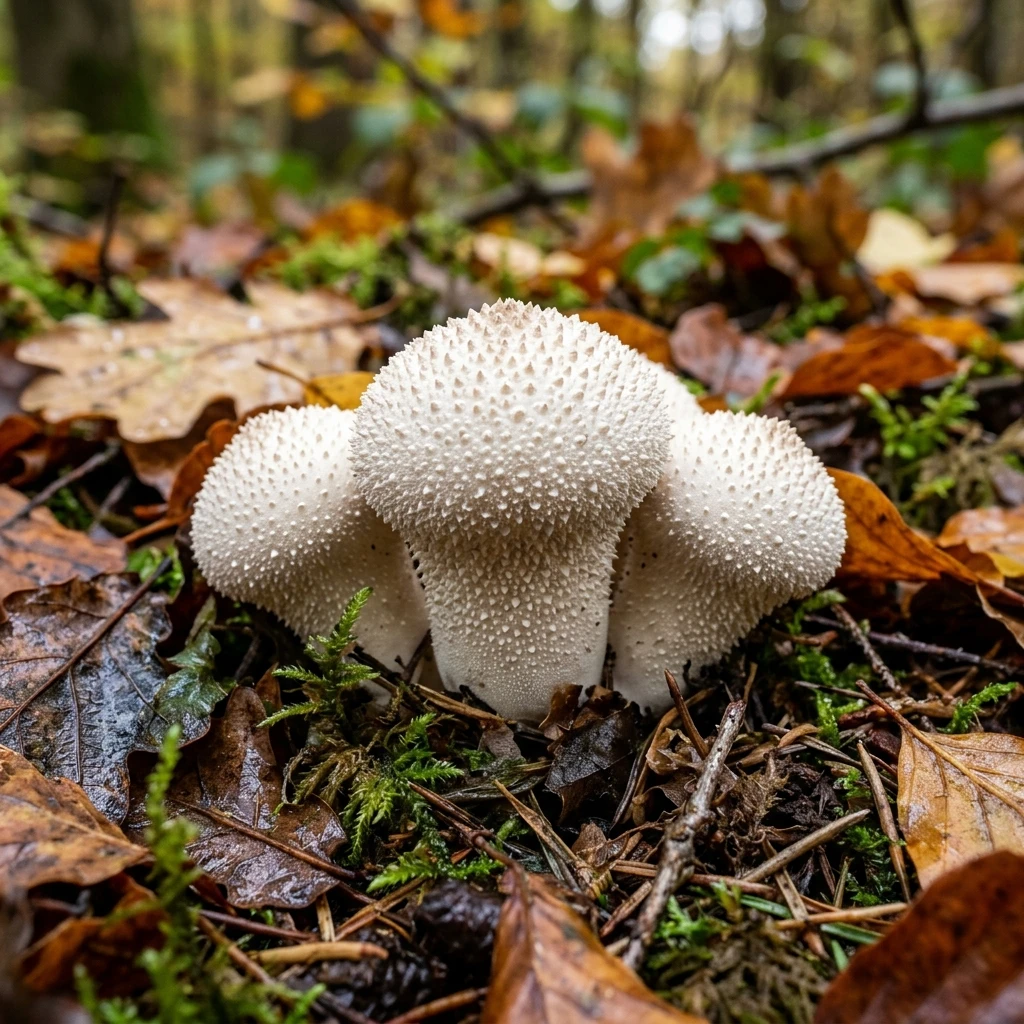
The Common Puffball (Lycoperdon perlatum), also known as the Gem-Studded Puffball, is a highly popular, widely distributed, and easily recognizable wild edible mushroom native to forests and grassy meadows across North America and Europe. Featuring a unique, reverse-pear-shaped to spherical white body, it lacks a traditional cap, stem, and gills, and is instead covered in tiny, fragile, gem-like warty spines. Highly delicious and tender when young and pure white inside, it represents a critical safety subject in mycology due to the necessity of slicing it in half to distinguish it from a highly fatal look-alike.





How to Identify Common Puffball
The Common Puffball (Lycoperdon perlatum), also known as the Gem-Studded Puffball, is a highly popular, widely distributed, and easily recognizable wild edible mushroom native to forests and grassy meadows across North America and Europe. Featuring a unique, reverse-pear-shaped to spherical white body, it lacks a traditional cap, stem, and gills, and is instead covered in tiny, fragile, gem-like warty spines. Highly delicious and tender when young and pure white inside, it represents a critical safety subject in mycology due to the necessity of slicing it in half to distinguish it from a highly fatal look-alike.
-
✔
Key Visual Features: A small to medium-sized mushroom shaped like a pear or an inverted lightbulb. The exterior is initially pure white to off-white and is covered in tiny, conical, 'gem-studded' spines or warts. These warts easily rub off when touched, leaving a faint network or scar pattern on the surface.
-
✔
Spore Print & Gills/Pores: Lacks gills, pores, and teeth entirely. The interior flesh (gleba) is solid, marshmallow-like, and pure white when young and edible. As it matures, the inside turns mushy and yellowish-green, finally becoming a dry mass of powdery brown spores that puff out of a hole in the top. Spore print is olive-brown.
-
✔
Common Confusions: CRITICAL: Must ALWAYS be sliced in half top-to-bottom. A young puffball must be pure, solid white inside with no outline of a developing mushroom. If you see the faint outline of gills and a stem inside, it is an 'egg' stage of a deadly Destroying Angel or Death Cap (Amanita species). It can also be confused with the poisonous Earthball (Scleroderma species), but Earthballs are tough, rubbery, and dark purple/black inside even when young.
Detailed Mycology Profile & Foraging Guide
Follow our detailed scientific field guide and environmental parameters to identify and study Common Puffball safely.
Common Look-alikes & Foraging Danger
Yellow Interior (Maturation)
Symptoms: Slicing the puffball reveals a yellow, greenish, or spongy olive-brown interior.
Insect Tunneling
Symptoms: Small brown tunnels or tiny worms boring through the white solid interior flesh.
Frequently Asked Questions
How do you distinguish a Puffball from a deadly Amanita egg?
You must slice the mushroom vertically from top to bottom. A true Puffball is completely solid, uniform white inside like cream cheese. A deadly Amanita egg will reveal the distinct outline of a miniature mushroom cap, gills, and stem resting inside.
Are all puffballs edible?
Most true puffballs are edible when young and pure white inside. However, you must avoid the toxic Pigskin Poison Puffball (Scleroderma citrinum), which has a tough, thick yellowish outer skin and a dark purple-black interior.
Why do puffballs 'puff'?
When mature, the puffball's skin dries and forms a paper-like sac with a central hole. When raindrops or animals strike the sac, it compresses, shooting a cloud of dry, dust-like spores out of the hole into the wind.
Can you eat the outer skin of the Gem-Studded Puffball?
Yes, but some people find the tiny warty spines to have a slightly gritty texture. You can easily rub them off with your fingers or a damp cloth before cooking, leaving a smooth white surface.