Cordyceps Foraging & Identification Guide
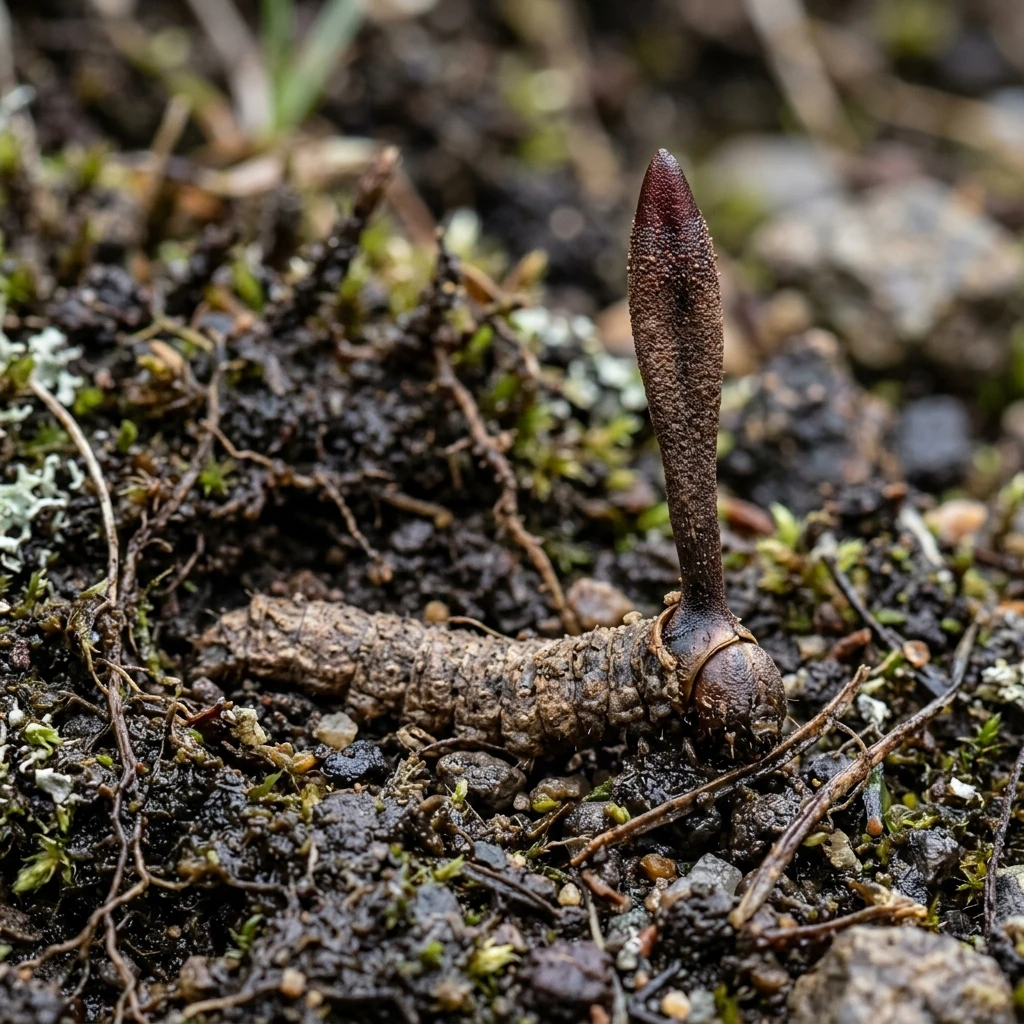
Cordyceps (Ophiocordyceps sinensis), also known as the Chinese Caterpillar Fungus or Yartsa Gunbu, is a highly prized and legendary parasitic medicinal fungus native exclusively to the high-altitude alpine meadows of the Tibetan Plateau and the Himalayas. Operating as a specialized entomopathogenic parasite, it infects ghost moth caterpillars underground, completely consuming and mummifying the host larvae before sprouting a slender, dark brown, blade-like fruiting body (stroma) through the soil in spring. Widely celebrated in traditional Asian medicine as the ultimate physical energy, stamina, and longevity tonic, it represents one of the most expensive natural materials on Earth, often fetching higher prices than gold.





How to Identify Cordyceps
Cordyceps (Ophiocordyceps sinensis), also known as the Chinese Caterpillar Fungus or Yartsa Gunbu, is a highly prized and legendary parasitic medicinal fungus native exclusively to the high-altitude alpine meadows of the Tibetan Plateau and the Himalayas. Operating as a specialized entomopathogenic parasite, it infects ghost moth caterpillars underground, completely consuming and mummifying the host larvae before sprouting a slender, dark brown, blade-like fruiting body (stroma) through the soil in spring. Widely celebrated in traditional Asian medicine as the ultimate physical energy, stamina, and longevity tonic, it represents one of the most expensive natural materials on Earth, often fetching higher prices than gold.
-
✔
Key Visual Features: The harvested product is always two parts: a yellowish-brown, mummified caterpillar body (the host) with intact legs and head, and a slender, dark brown to blackish club-like stroma (fruiting body) growing directly out of the caterpillar's head. The stroma is typically 2 to 8 cm long, slightly thicker in the middle, and pointed at the tip.
-
✔
Spore Print & Gills/Pores: Lacks gills, pores, and a cap. The spore-bearing surface (perithecia) covers the upper, thicker portion of the dark club, appearing as tiny, pimple-like dots under a hand lens. The flesh of the stroma is tough, whitish inside, with a sweet, musky, mushroom-like aroma.
-
✔
Common Confusions: True wild Ophiocordyceps sinensis is heavily counterfeited. Fake specimens are often made of molded flour, lead wire, or other twigs glued to insect bodies. It may also be substituted with cultivated Cordyceps militaris, which is bright orange, grows in clusters, and is cultivated on grain rather than insects (though it shares similar medicinal benefits and is a legitimate alternative).
Detailed Mycology Profile & Foraging Guide
Follow our detailed scientific field guide and environmental parameters to identify and study Cordyceps safely.
Common Look-alikes & Foraging Danger
Moisture Rotting
Symptoms: The hard caterpillar base turns soft, black, and grows white mold under damp conditions.
Sellers Adulteration
Symptoms: Unusual heaviness; metal wire or twigs found inside the caterpillar body when broken.
Frequently Asked Questions
Why is Cordyceps called 'Dong Chong Xia Cao'?
The name translates literally to 'Winter Worm, Summer Grass'. Fungal spores infect the caterpillar in winter (acting as a worm), and in summer a blade-like shoot grows out of its head (resembling grass).
What does Cordyceps taste like?
It has a highly unique, slightly sweet, savory, and nutty flavor with a deep earthy finish. Simmered in broths, it contributes a highly pleasant, rich umami depth.
How does Cordyceps boost athletic performance?
Cordyceps stimulates the production of ATP (adenosine triphosphate) in cells, which increases oxygen absorption and utilization, dramatically improving cardiovascular endurance and reducing fatigue.
How should dried Cordyceps be stored?
Store in a tightly sealed glass jar in a cool, dark place. Adding a food-grade silica gel pack helps absorb any residual moisture and prevents mold decay.