Ganba Fungus Foraging & Identification Guide
The Ganba Fungus (Thelephora ganbajun), native exclusively to the pine forests of Yunnan Province in southwestern China, is one of the most prestigious, expensive, and legendary wild culinary delicacies in the world. Growing in a symbiotic mycorrhizal association with Yunnan Pine trees, this unique fungus does not resemble a traditional mushroom, but rather a clustered, highly intricate coral-like or rosette-like structure of dark gray-black, leathery branches. It is globally celebrated by gourmets for its intense, complex, and deeply savory aroma, reminiscent of dried beef (Ganba) and rich pine wood.





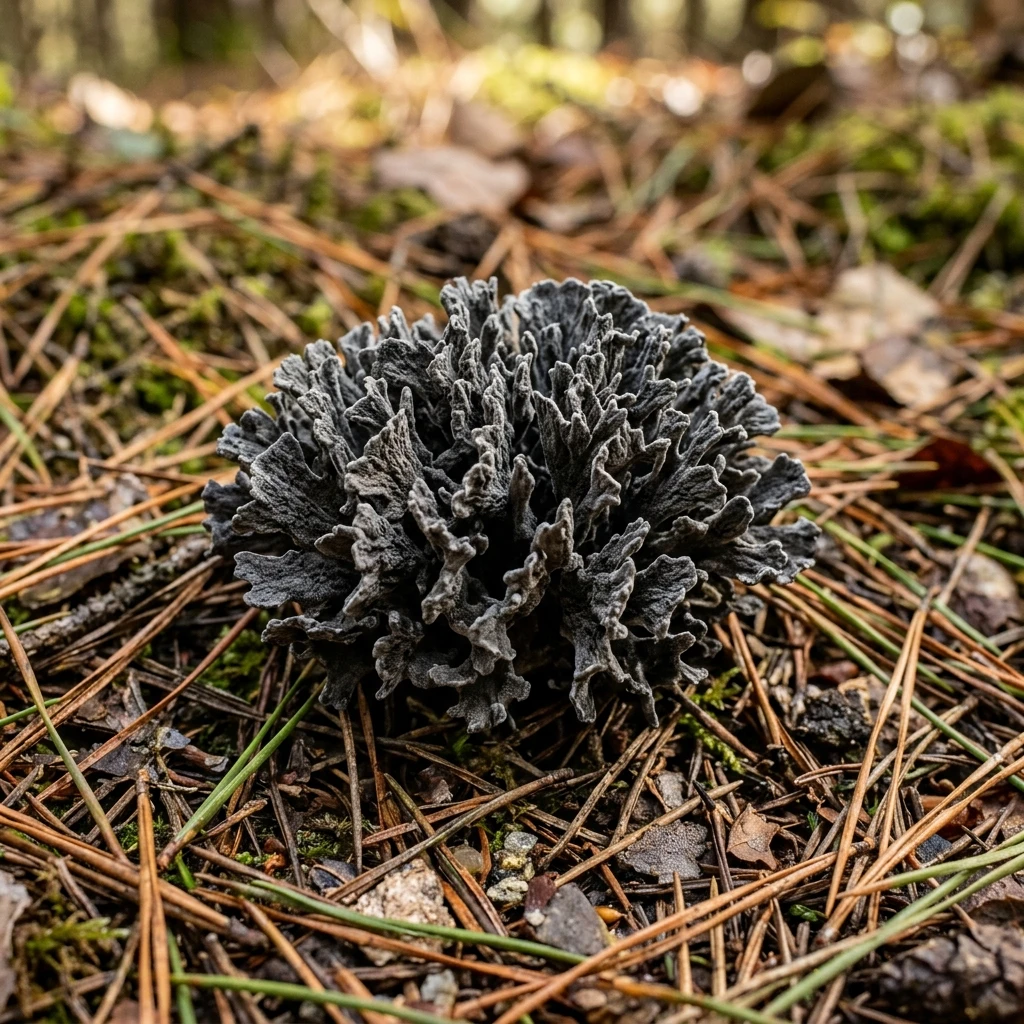
How to Identify Ganba Fungus
The Ganba Fungus (Thelephora ganbajun), native exclusively to the pine forests of Yunnan Province in southwestern China, is one of the most prestigious, expensive, and legendary wild culinary delicacies in the world. Growing in a symbiotic mycorrhizal association with Yunnan Pine trees, this unique fungus does not resemble a traditional mushroom, but rather a clustered, highly intricate coral-like or rosette-like structure of dark gray-black, leathery branches. It is globally celebrated by gourmets for its intense, complex, and deeply savory aroma, reminiscent of dried beef (Ganba) and rich pine wood.
-
✔
Key Visual Features: Highly clustered, ash-gray to charcoal-black, leathery, branching, coral-like or cabbage-like rosettes. The edges of the fronds often have a whitish or paler margin when young and actively growing. It lacks a true stem, instead attaching to the ground via a central rooted mass.
-
✔
Spore Print & Gills/Pores: No Gills or Pores. The spore-bearing surface is smooth or slightly wrinkled, located on the underside of the leathery fronds. It yields a brownish spore print.
-
✔
Common Confusions: Highly distinct in appearance and smell, making it difficult to confuse with toxic species. Other Thelephora species exist but lack the size, complex cabbage-like rosettes, and the distinct rich dried beef aroma of the true Ganba Fungus.
Detailed Mycology Profile & Foraging Guide
Follow our detailed scientific field guide and environmental parameters to identify and study Ganba Fungus safely.
Common Look-alikes & Foraging Danger
Brittle Drying (Over-maturity)
Symptoms: The entire gray-black rosette turns extremely dry, hard, brittle, and crumbles when touched, losing its rich aroma.
Insect Infestation
Symptoms: Tiny white larvae tunnels appear inside the tough fibrous base of the branch cluster.
Frequently Asked Questions
Why is it called 'Ganba Fungus'?
It is named after 'Ganba' (a traditional Yunnan dried beef jerky) because its flavor profile and aroma are uncannily identical to savory, cured beef jerky, combined with a sweet pine resin fragrance.
Can Ganba Fungus be cultivated?
No. Despite decades of scientific research, the Ganba Fungus has never been successfully cultivated. It requires a highly complex, live symbiotic relationship with the roots of living Yunnan Pine trees to survive and fruit.
How do you clean the sand out of it?
Tear the large coral-like cluster into thin, individual needle-like strips. Submerge them in cool water, gently agitate to let sand sink to the bottom, and repeat this process 3 to 4 times until the water is completely clean.
Is the Ganba Fungus expensive?
Yes, it is highly prized and very expensive. Due to its short seasonal window, strict geographic limitations, and exquisite flavor, high-quality wild Ganba Fungus is considered a luxury ingredient, often fetching premium prices.