Bitter Oyster Foraging & Identification Guide
The Bitter Oyster (Panellus stipticus), also known as the Glowing Panellus, is a tough, wood-decaying, and bioluminescent wild bracket fungus native to temperate forests throughout North America, Europe, and Asia. Growing in dense, overlapping shelflike clusters on decaying deciduous hardwood logs, it is a fascinating species. While Eastern North American strains are famously bioluminescent, emitting a soft, ghostly green glow from their gills at night, European and Pacific Northwestern strains typically do not glow. As its name implies, it has an intensely bitter and astringent taste and is considered inedible.





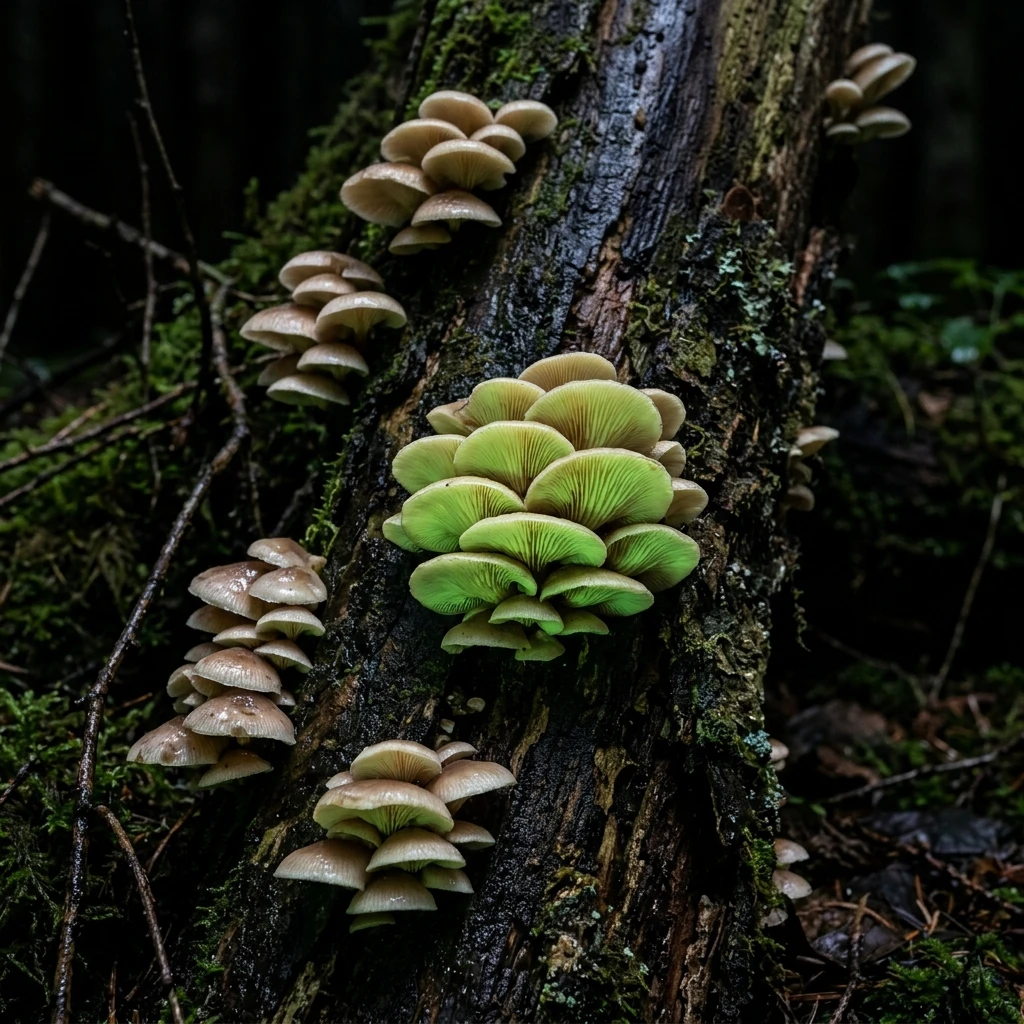
How to Identify Bitter Oyster
The Bitter Oyster (Panellus stipticus), also known as the Glowing Panellus, is a tough, wood-decaying, and bioluminescent wild bracket fungus native to temperate forests throughout North America, Europe, and Asia. Growing in dense, overlapping shelflike clusters on decaying deciduous hardwood logs, it is a fascinating species. While Eastern North American strains are famously bioluminescent, emitting a soft, ghostly green glow from their gills at night, European and Pacific Northwestern strains typically do not glow. As its name implies, it has an intensely bitter and astringent taste and is considered inedible.
-
✔
Key Visual Features: Caps are 1-3 cm across, kidney-shaped to fan-shaped, and usually attached directly to wood by a short, stubby, lateral stem. The cap surface is dry, finely hairy, and colored tan, ochre, or pale cinnamon-brown. They fruit in tight, overlapping tiers.
-
✔
Spore Print & Gills/Pores: Gills: The gills are pale tan to pale brownish, closely spaced, and have distinctive cross-veins (anastomosing) connecting them. In bioluminescent strains, the gills emit a continuous pale green light. Spore Print: White.
-
⚠️
Common Confusions: Can be confused with other small, brown, wood-decaying bracket fungi like Crepidotus species (which have brown spore prints, not white) or the Late Fall Oyster (Sarcomyxa serotina), which is larger and has a different cap color. The bitter taste and bioluminescence (in glowing regions) are strong distinguishing features.
Detailed Mycology Profile & Foraging Guide
Follow our detailed scientific field guide and environmental parameters to identify and study Bitter Oyster safely.
Common Look-alikes & Foraging Danger
Dry Shriveling (Drought)
Symptoms: The tan fan-shaped caps dry up, turn dark brown, curl, and feel rock-hard.
Nocturnal Glow Failure
Symptoms: The gills under the cap are damp but emit zero light in complete darkness.
Frequently Asked Questions
Why is this mushroom called 'Bitter Oyster'?
It is named 'Bitter Oyster' because its kidney-like shape resembles a tiny oyster shell, and its tough flesh has a incredibly bitter, burning, and astringent taste that dries out your mouth.
What are the traditional medicinal uses of this fungus?
Historically, Native Americans and early European settlers dried and powdered this fungus to use as a styptic. When applied to bleeding cuts and wounds, its astringent compounds caused blood vessels to contract, rapidly stopping the bleed.
Does the Bitter Oyster grow back every year?
Yes. It has a perennial underground mycelial network inside the rotting log. It will fruit repeatedly in the same spot, from spring to winter, whenever conditions are sufficiently damp.
How do you tell it apart from a baby Oyster Mushroom?
Bitter Oyster is tiny (1-3 cm), has a warty tan surface, a tough leathery texture, and glows green at night. True edible Oyster Mushrooms are large (5-20 cm), soft and fleshy, white to gray, and have a pleasant, mild anise smell.