Gypsy Mushroom Foraging & Identification Guide
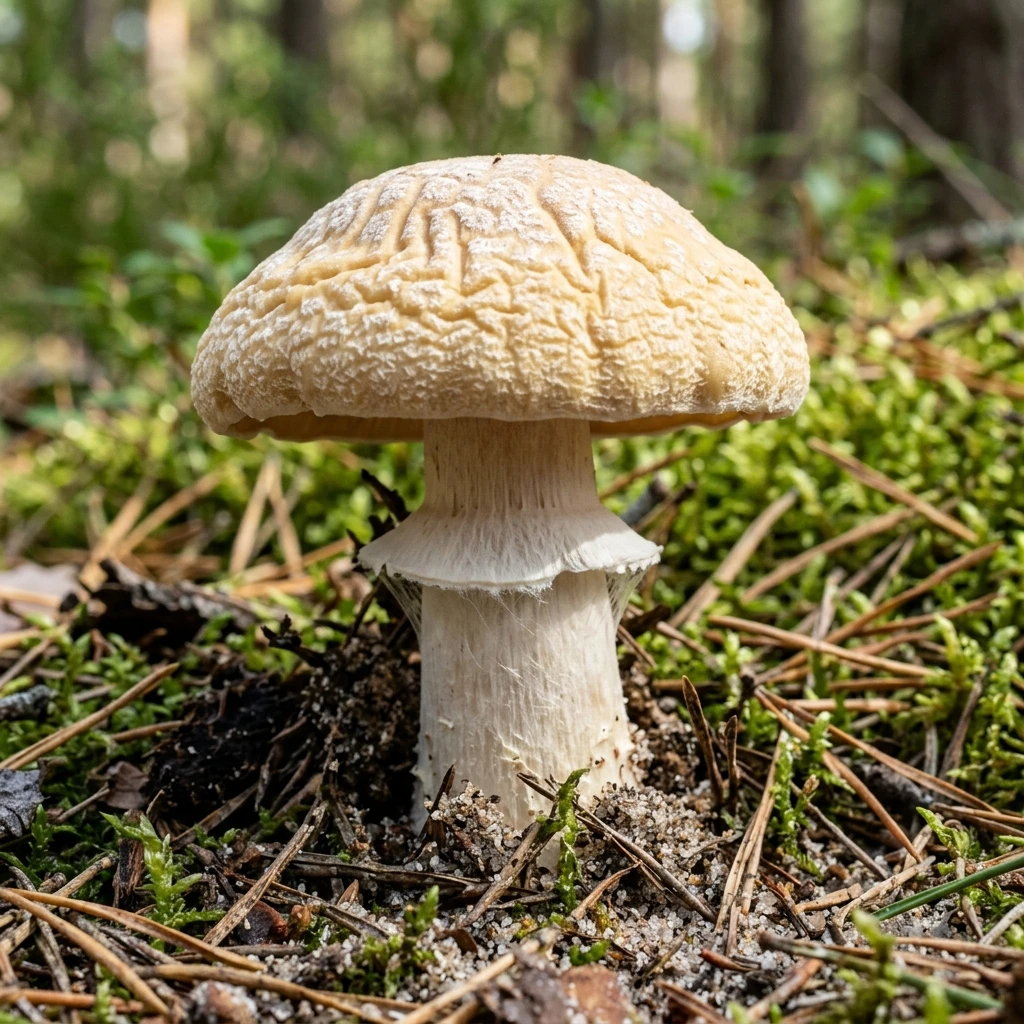
The Gypsy Mushroom (Cortinarius caperatus, formerly Rozites caperata) is a highly popular and choice wild edible mushroom native to coniferous and mixed forests across the Northern Hemisphere. Growing in mycorrhizal symbiosis with pines, spruces, and also with heath plants like blueberries, it represents a premier foraging prize. It is recognizable by its warm, dull ochre-yellow cap often covered with a fine, silvery-white "frosting" or powdery coating, its pale stem with a distinct ring, and its sweet, pleasant flavor.





How to Identify Gypsy Mushroom
The Gypsy Mushroom (Cortinarius caperatus, formerly Rozites caperata) is a highly popular and choice wild edible mushroom native to coniferous and mixed forests across the Northern Hemisphere. Growing in mycorrhizal symbiosis with pines, spruces, and also with heath plants like blueberries, it represents a premier foraging prize. It is recognizable by its warm, dull ochre-yellow cap often covered with a fine, silvery-white "frosting" or powdery coating, its pale stem with a distinct ring, and its sweet, pleasant flavor.
-
✔
Key Visual Features: The cap is bell-shaped to convex, pale ochre to tan-yellow, and typically has a central bump (umbo). The surface often features a silvery, pruinose (frost-like) coating and fine wrinkles. The stem is whitish to pale tan, bearing a prominent, membranous, whitish ring. Above the ring, the stem may have faint striations or fragments of a cortina.
-
✔
Spore Print & Gills/Pores: Gills: Attached to the stem (adnate), initially pale cream or clay-colored, becoming rusty brown as the spores mature. The gill edges are often minutely serrated. Spore Print: Rusty brown.
-
⚠️
Common Confusions: Can be confused with other Cortinarius species (many of which are toxic and have rusty brown spores but lack the prominent membranous ring) or with Inocybe species (which are highly toxic). It may also resemble Pholiota or Gymnopilus species. Accurate identification is critical due to toxic look-alikes.
Detailed Mycology Profile & Foraging Guide
Follow our detailed scientific field guide and environmental parameters to identify and study Gypsy Mushroom safely.
Common Look-alikes & Foraging Danger
Sheen Loss (Rain Wash)
Symptoms: The warm yellow cap loses its fine silvery-white powdery coating, turning smooth and dark ochre after heavy rains.
Stem Gnat Tunneling
Symptoms: The thick robust stem base is riddled with tiny brown tunnels and feels soft.
Frequently Asked Questions
Why is it called the 'Gypsy Mushroom'?
Its common name 'Gypsy' comes from its historically nomadic-like abundance in sandy woodlands, and its warm, ochre-yellow, wrinkled cap which was poetically compared to a sun-weathered gypsy's skin.
How do you tell it apart from toxic Webcaps?
The toxic Webcaps (in the same family Cortinarius) do not have a distinct waxy ring on the stem and lack the unique silvery-white powdery wrinkles on the cap. The Gypsy Mushroom has a very clear, persistent waxy ring and wrinkled cap.
Does it have a sweet taste?
Yes! The Gypsy Mushroom has an exceptionally sweet, mild, and nutty flavor that is highly valued by gourmet chefs. It is considered one of the finest wild mushrooms for simple sautés.
Where does it grow?
It grows strictly on the ground in sandy, acidic soils under Pine trees, very often nestled directly inside wild Blueberry or Huckleberry bushes, with which it shares a symbiotic underground network.