Indigo Milk Cap Foraging & Identification Guide
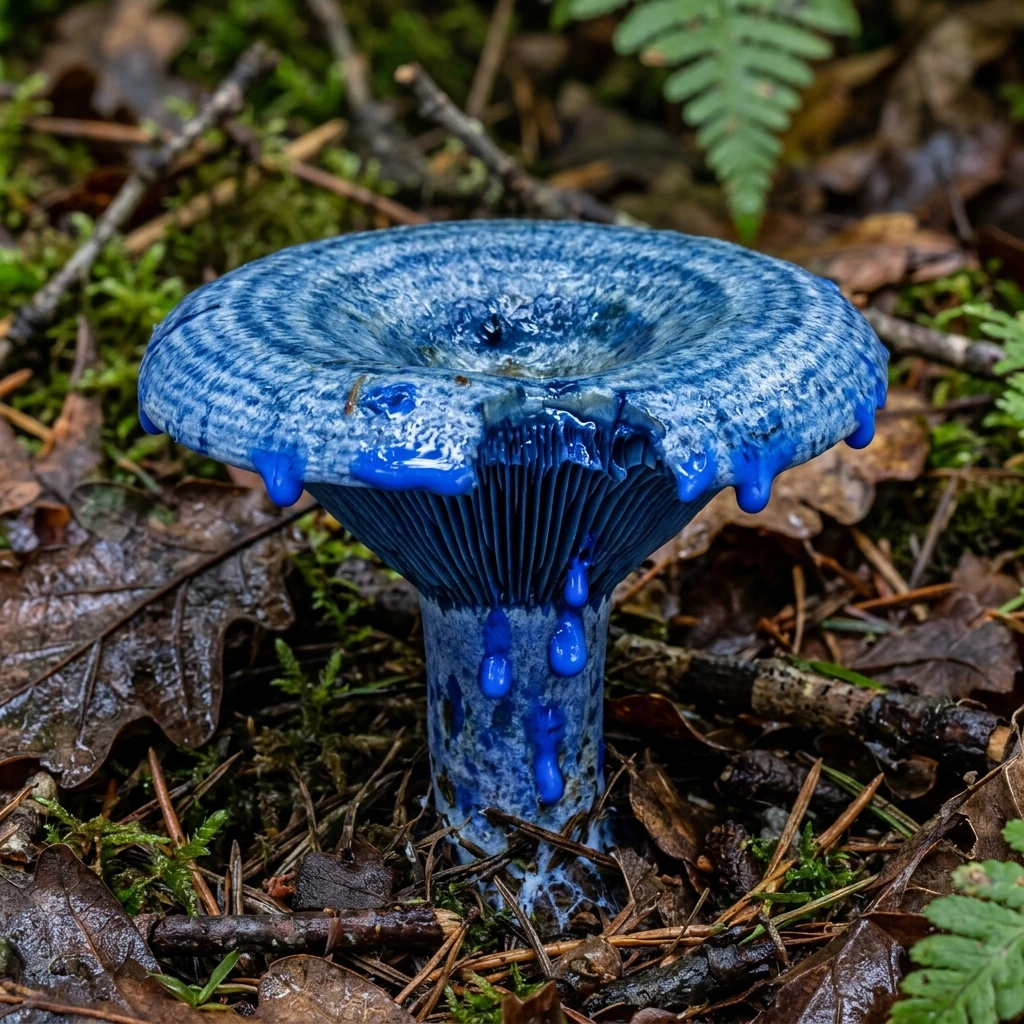
The Indigo Milk Cap is an extraordinarily beautiful, unique, and highly popular wild edible mushroom native to broadleaf oak and pine forests in North and Central America. Famously celebrated for its stunning, brilliant deep-blue color, it is one of the most visually striking fungi in the world. When cut or bruised, its gills bleed an eye-catching, indigo-blue latex or milk that slowly turns green in the air, making it virtually impossible to confuse with any toxic species.





How to Identify Indigo Milk Cap
A beautiful deep-blue cap with concentric ring zones, indigo blue gills bleeding bright blue milk that turns green.
-
✔
Cap: Varies by species.
-
✔
Spore: Critical check.
Detailed Mycology Profile & Foraging Guide
Follow our detailed scientific field guide and environmental parameters to identify and study Indigo Milk Cap safely.
Common Look-alikes & Foraging Danger
Silvery Fading (Aging)
Symptoms: The brilliant indigo-blue cap turns a pale, dull silvery-gray or faded blue color.
Dry Cap (No Latex)
Symptoms: Cutting the blue gills does not produce any visible blue milk.
Frequently Asked Questions
Are there any poisonous blue mushrooms that look similar?
While there are other blue mushrooms, such as certain toxic Cortinarius species, none of them bleed blue milk when cut. The combination of brilliant blue gills and bleeding indigo-blue milk makes the Indigo Milk Cap completely unique and extremely safe to forage.
What does Indigo Milk Cap taste like?
It has a very mild, earthy, slightly nutty flavor and a firm, slightly crunchy texture, similar to the Saffron Milk Cap. It is highly delicious and versatile in cooking.
Does the blue color disappear when cooked?
The blue color fades slightly during cooking, turning a duller blue-green. However, the blue pigment is water-soluble, so cooking it will dye other foods in the pan (like eggs, rice, or onions) a beautiful blue color.
Where is the best place to find Indigo Milk Caps?
They are native to oak and pine forests in North America, Mexico, and East Asia. They fruit abundantly on forest soils in late summer and autumn after heavy, warm rainstorms.