Pleurotus eryngii

King Oyster Foraging & Identification Guide

The King Oyster, or King Trumpet Mushroom, is the largest species in the oyster mushroom genus. Unlike other oyster mushrooms, it features an incredibly thick, meaty white stem and a relatively small, light-brown cap. Heavily cultivated across Asia and Europe, this gourmet mushroom is globally celebrated for its firm, dense texture that mirrors abalone or scallops when sliced and cooked.


Environment Icon
Environment Substrate Cultivated / Hardwood Blocks
Humidity Icon
Humidity High Humidity (85-90%)
Substrate Icon
Substrate / Host Sterilized Hardwood Sawdust Blocks
Size Icon
Size 6cm - 15cm
Category Icon
Category Choice Edible
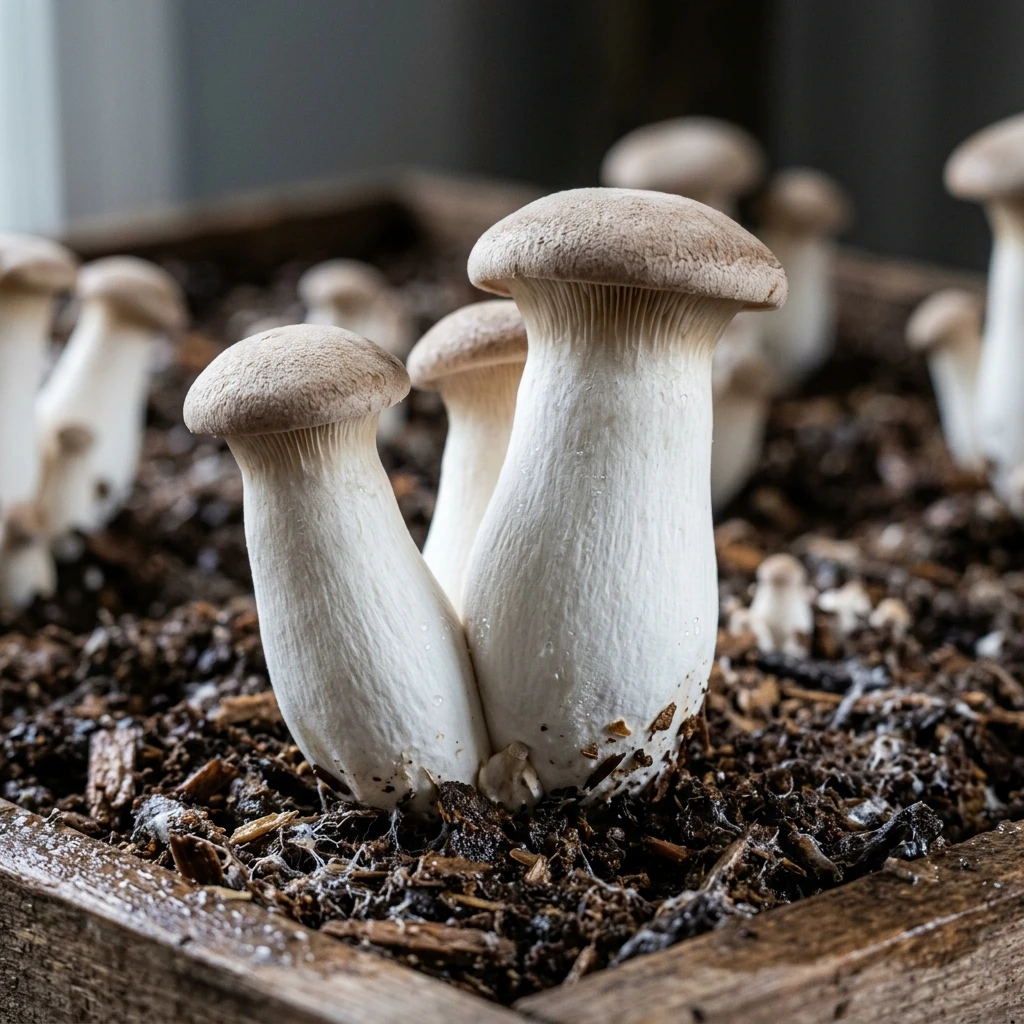
Botanical macro photography of King Oyster (Pleurotus eryngii) - Plant AI care database

How to Identify King Oyster

A large, heavy, trumpet-shaped mushroom characterized by a highly thick, solid white cylindrical stem and a small tan cap.

  • Cap: Varies by species.
  • Spore: Critical check.
💡 Plant AI Tip: Slicing King Oyster stems horizontally into thick discs and searing them in garlic butter creates an outstanding vegetarian alternative to sea scallops.

Detailed Mycology Profile & Foraging Guide

Follow our detailed scientific field guide and environmental parameters to identify and study King Oyster safely.

Grows naturally in southern Europe and North Africa, parasitizing the roots of herbaceous plants. Commercially cultivated in polypropylene bags on sterilized hardwood sawdust blended with rice bran.
Requires high relative humidity (85-90%) during the pinning phase, which is lowered slightly to 80% during cap development to prevent bacterial spotting.
Requires indirect, low ambient light to stimulate cap development and tan pigment. Dark rooms produce pale, misshapen caps.
The cap is 3 to 10 cm, flat to slightly funnel-shaped, tan-brown. Gills are ivory-white, crowded, and attach slightly decurrently to the stem.
Produces a white to light cream spore print. King Oysters are cultivated using grain spawn inoculated into sawdust-filled bottles or bags.
Flesh is pure white, extremely dense, solid, and sweet. The stem is massive, cylindrical, lacking any ring, skirt, or cup at the base.
Harvested by cutting the mushroom cluster cleanly at the base of the bag. Best harvested when the tan cap is still slightly convex and hasn't flattened out.
A choice edible. Highly valued for its firm, crunchy, and chewy texture. When sliced and cooked, it develops a deep savory umami taste resembling shellfish.
Rich in unique polysaccharides, lovastatin, and essential amino acids, promoting metabolic health, lowering cholesterol, and supporting immune defense.
CRITICAL WARNING: Extremely safe. When wild-foraged in Europe, ensure it is growing near Eryngium plants. Avoid gathering old, yellowing specimens showing rot.
Never throw away the thick stem of the King Oyster; it is the most delicious part. Slice it horizontally into thick rounds or shred it lengthwise with a fork to mimic pulled pork.

Is your King Oyster showing signs of rot, decay or discoloration?

Ensure foraging safety and keep your specimens healthy. Take a photo with Plant AI to identify wild mushrooms and get instant toxicity warnings.

Diagnose Specimen Now

Common Look-alikes & Foraging Danger

Bacterial Blotch (Pseudomonas)

Symptoms: Wet, slimy yellow-brown patches appearing on the tan caps, accompanied by a rotting odor.

Action: Remove affected mushrooms immediately. Reduce ambient humidity and avoid misting water directly onto the mushroom caps.

Cap Splitting

Symptoms: The tan caps develop deep cracks and fissures around the edges during growth.

Action: Raise the relative humidity. Cap splitting is caused by dry drafts or rapid, extreme fluctuations in humidity levels.

Frequently Asked Questions

Why is the stem of King Oyster so large?

Unlike other mushrooms where the cap is favored, King Oyster has been selectively bred and cultivated to produce a massive, dense stem that is highly valued for its thick, scallop-like culinary texture.

What does a King Oyster mushroom taste like?

Raw, it has very little flavor. When cooked, it absorbs fats and seasonings beautifully, developing a highly savory, nutty, and sweet umami taste with a satisfying chewy bite.

How do you store King Oyster mushrooms?

Due to their low moisture content, they store exceptionally well. Wrap them loosely in dry paper towels, place them in a paper bag, and store in the refrigerator for up to 2 weeks.

Do you need to peel King Oyster stems?

No. The entire stem is tender and edible. Just trim off the very bottom of the stem if it has residual sawdust or dirt before slicing.

Understand nature safely. Identify mushrooms instantly!

Get Started for Free