Magic Mushroom Foraging & Identification Guide
Psilocybe cubensis is the most famous and widely distributed psychoactive mushroom in the world. Native to subtropical regions, this coprophilous (dung-loving) species thrives on the manure of herbivorous animals. Celebrated for its unique chemical defense mechanism that turns its tissues deep blue when bruised, it contains high concentrations of psilocybin, producing profound mind-altering and visionary experiences.





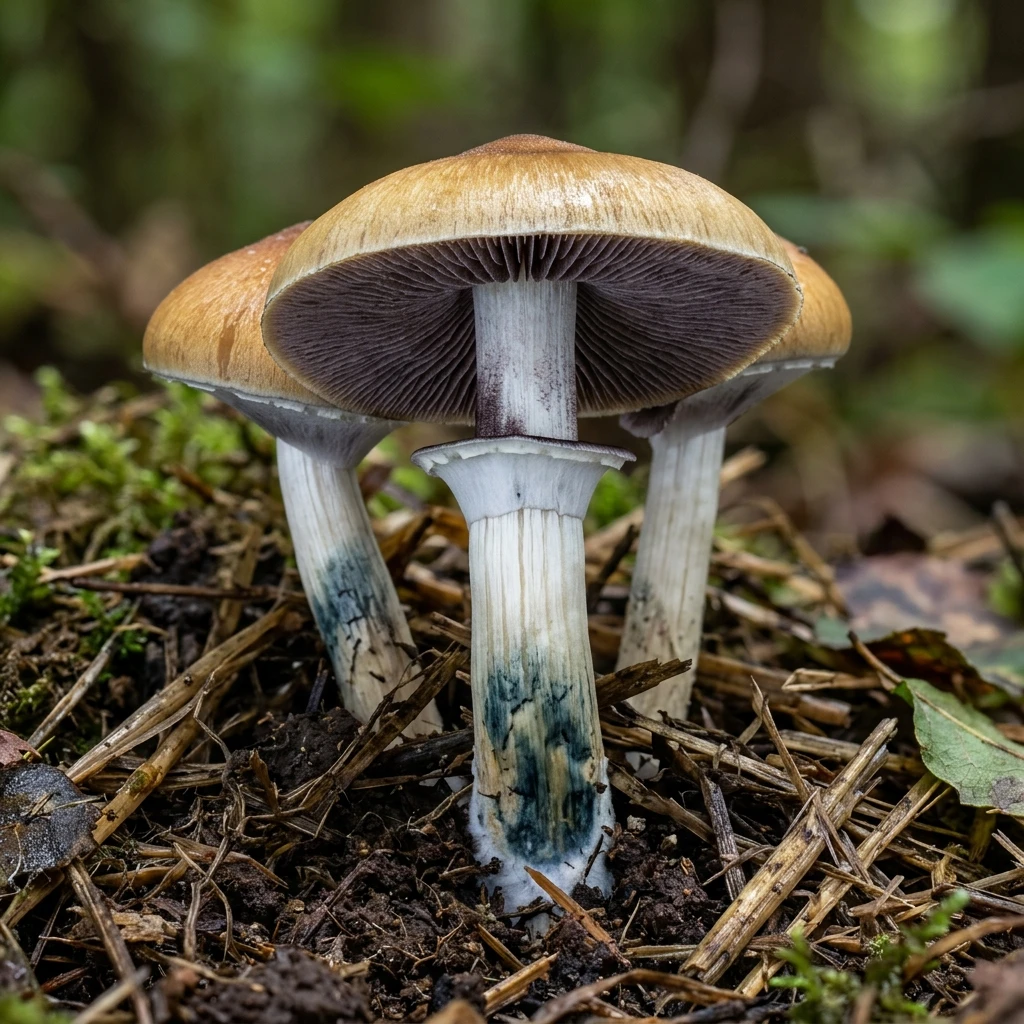
How to Identify Magic Mushroom
A golden-brown cap that stains deep blue when bruised, purplish-gray gills, and a white stem with a persistent ring.
-
✔
Cap: Varies by species.
-
✔
Spore: Critical check.
Detailed Mycology Profile & Foraging Guide
Follow our detailed scientific field guide and environmental parameters to identify and study Magic Mushroom safely.
Common Look-alikes & Foraging Danger
Low Potency
Symptoms: The mushroom stem is bruised or cut but fails to turn blue, or stains only a very faint green.
Cobweb Contamination
Symptoms: Fluffy, greyish-white web-like mold quickly wrapping around the indoor compost bed.
Frequently Asked Questions
Why does this mushroom turn blue?
The blue staining is a chemical reaction. When the fungal cells are damaged, enzymes (laccases and oxidases) oxidize psilocin, forming a blue pigment compound. It is a natural chemical defense mechanism.
What are the therapeutic benefits of Psilocybin?
Modern clinical trials show that controlled psilocybin therapy helps treat treatment-resistant depression, severe anxiety, PTSD, and addiction by temporarily resetting brain neural networks and increasing neuroplasticity.
Is Psilocybe cubensis toxic to liver or kidneys?
No. Unlike poisonous mushrooms, psilocybin is non-toxic to vital organs and does not cause physical damage. However, it can trigger severe panic attacks, anxiety, and psychological distress (a 'bad trip') in unsafe settings.
How do you perform a spore print?
Cut the cap off the stem. Place it gills-down on a sheet of white paper or foil. Cover it with a cup to prevent drafts, and leave it for 6 to 12 hours. A true cubensis will leave a distinct, dark purplish-black print.