Grifola frondosa

Maitake Identification & Cultivation

Maitake, also known as Hen of the Woods or 'Dancing Mushroom', is a massive, highly prized edible and medicinal fungus native to temperate forests. Growing in large, overlapping, fan-shaped clusters at the base of mature oak trees, this polypore is celebrated globally for its rich, earthy flavor, fibrous texture, and powerful health-supporting properties.


Environment Icon
Environment Base of Oak Trees / Decaying Roots
Humidity Icon
Humidity High Humidity (85-90%)
Substrate Icon
Substrate Decaying Oak Wood Roots
Cap Diameter Icon
Cap Diameter 20cm - 60cm cluster
Edibility Icon
Edibility Choice Edible / Medicinal
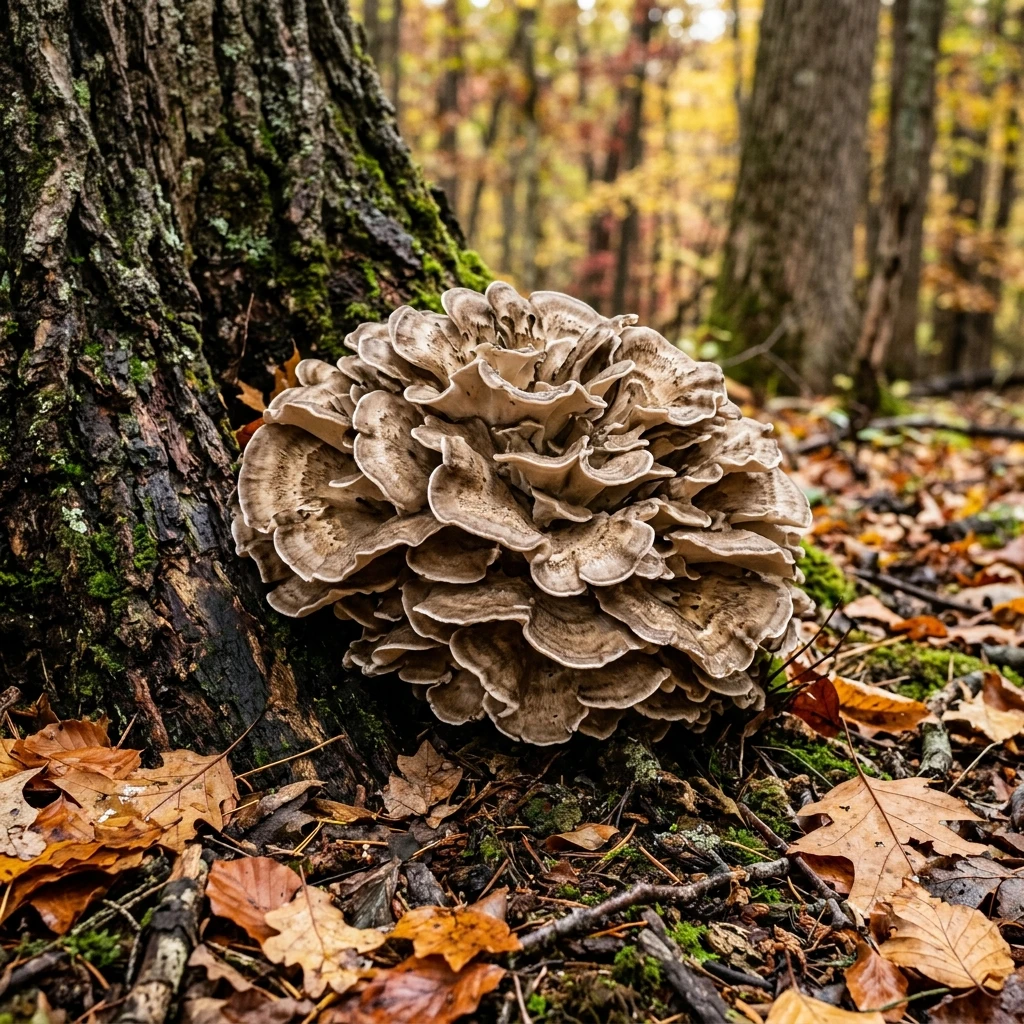
Botanical macro photography of Maitake (Grifola frondosa) - Plant AI care database

How to Identify Maitake

A large, heavy, rosette-like cluster of overlapping greyish-brown fan-shaped caps with white pore undersides.

  • Overlapping Fronds: Massive cluster composed of dozens of overlapping, leaf-like or fan-shaped greyish-brown caps.
  • White Pore Surface: Gills are completely absent. The underside of each cap features a dense white pore layer.
  • Fused Branching Stem: All the fan-shaped caps branch out from a thick, central, white compound stem base.
💡 Foraging Tip: Maitake is highly loyal. If you find one at the base of an oak tree, return to the exact same tree next autumn, as the subterranean mycelium fruits annually.

Complete Scientific Cultivation & Identification

Follow our professional mycological parameters and identification guidelines for safe foraging.

Maitake grows at the base of living or dead mature hardwood trees, particularly old Oaks. It acts as a weak parasite on roots, causing white rot.
Requires high humidity and moderate autumn temperatures to trigger fruiting. Often emerges in late September and October after heavy rainfall.
Thrives in deep shade beneath oak forest canopies. Dappled light helps mature the greyish-brown color of the caps, while the base remains shaded.
No gills. The caps are 2 to 7 cm wide, fan-shaped, grey-brown, arranged in huge rosette clusters up to 20 kg. Underside has tiny white pores.
Produces a pure white spore print. Maitake can be cultivated domestically on sterilized sawdust blocks or outdoor oak logs inoculated with mycelium.
The flesh is white, fibrous, firm, and slightly brittle near the margins. The stem is highly branched, white, tough, and lacks any ring or volva.
Harvest by slicing the thick central white stem at the base of the oak tree using a large knife. Brush off forest leaves, soil, and bugs from the dense rosettes.
A choice edible with a highly savory, woody flavor and excellent fibrous, meaty texture. Best sautéed in olive oil until crispy, roasted, or added to hot pots.
Extremely famous for 'D-fraction' polysaccharides, highly active beta-glucans that stimulate immune cell activity and exhibit powerful anti-diabetic and anti-tumor effects.
CRITICAL WARNING: Highly safe. It has no poisonous look-alikes. It could be confused with the 'Black-Staining Polypore', which is edible but tough and stains black.
Only harvest young, tender Maitake. Old specimens become extremely tough, woody, and bitter. Slice the soft outer fronds for cooking, and use the tough central stem for medicinal tea broths.

Is your Maitake turning tough, molding or infested with insects?

Clean the dense overlapping flaps thoroughly, trim away woody stems, and freeze or dry the tender fronds.

Identify My Mushroom

Common Diseases & Wild Contamination

Insect Infestation

Symptoms: Symptoms: Tiny woodland bugs and centipedes crawling inside the dense, overlapping leaf-like rosettes.

Action: Action: Tear the cluster into small individual fronds and soak in cold water for 10 minutes to flush out woodland insects, then dry thoroughly.

Woody Aging

Symptoms: Symptoms: Fronds become dry, fibrous, extremely tough, and lose their rich umami aroma.

Action: Action: Cut off the tender outer margins of the fronds for culinary dishes. Dehydrate the tough, woody central core and grind into medicinal powder.

Frequently Asked Questions

Why is Maitake called 'Hen of the Woods'?

The mushroom cluster resembles the ruffled feathers of a nesting hen sitting at the base of an oak tree, hence the popular English name.

What are the health benefits of Maitake?

Maitake is a legendary medicinal mushroom. It is heavily studied for its ability to regulate blood glucose, lower cholesterol, support weight management, and boost white blood cell activity.

How do you cultivate Maitake at home?

You can purchase pre-inoculated sawdust blocks. Keep them in a humid, shaded room (humidity > 85%) and mist daily. Fruiting bodies will emerge from sliced openings in the plastic bag.

How do you store a large Maitake cluster?

Tear into smaller clusters, wrap in dry paper towels, and store in a cardboard box or paper bag in the fridge for up to a week. For long-term storage, sauté in butter and freeze.

Understand nature safely. Identify mushrooms instantly!

Get Started for Free