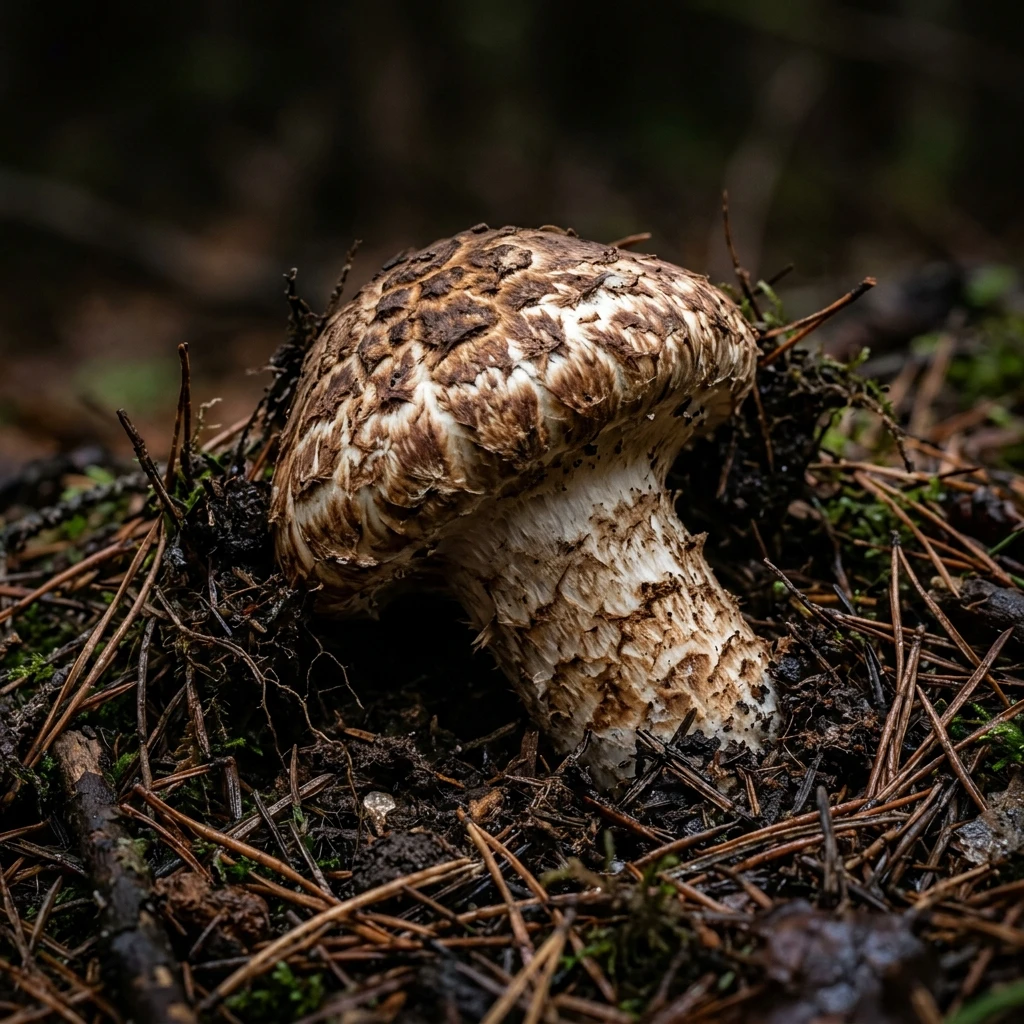
Tricholoma matsutake

Matsutake Identification & Cultivation

Matsutake, or Pine Mushroom, is a highly prized gourmet fungus famous for its intense, spicy-aromatic fragrance resembling a blend of cinnamon and pine. Thriving in pristine, nutrient-poor sandy soils in coniferous forests, this slow-growing mycorrhizal treasure forms complex symbiotic bonds with pine roots, making it an elite delicacy in Japanese culinary tradition.


Environment Icon
Environment Conifer Forests / Pine Woods
Humidity Icon
Humidity Moderate Humidity (70-80%)
Substrate Icon
Substrate Sandy Soil / Pine Root Association
Cap Diameter Icon
Cap Diameter 6cm - 20cm
Edibility Icon
Edibility Choice Edible
Botanical macro photography of Matsutake (Tricholoma matsutake) - Plant AI care database

How to Identify Matsutake

A thick, robust, tan-spotted white mushroom with a firm stem and a distinct, sharp cinnamon-pine aroma.

  • Fibrous Brown Cap: Robust cap covered with broad, brownish-tan scales that crack as it expands.
  • Spicy Pine Aroma: An unmistakable, highly potent spicy fragrance that smells like a mixture of pine, damp soil, and sweet cinnamon.
  • Firm White Stem: The stem is exceptionally thick, solid, and deep-rooting, often covered with a brownish sheath below the ring.
💡 Safety Tip: Matsutake grows partially underground. Gently clear the surrounding pine needles to expose the stem base before extraction.

Complete Scientific Cultivation & Identification

Follow our professional mycological parameters and identification guidelines for safe foraging.

Matsutake grows exclusively in symbiotic mycorrhizal association with pine trees (such as Pinus densiflora). It prefers highly aerated, nutrient-poor sandy soils covered with dry pine needles.
Sprouts in late autumn after a drop in temperature followed by autumn rains. It requires moderate soil moisture but will rot if the sub-canopy soil becomes waterlogged.
Thrives in shaded conifer forests. The mycelium grows deep in the root zone, and fruiting bodies push up through the soil and pine litter under dense shade.
The cap is firm, convex to flat, covered in brown scales. Gills are white, crowded, and attach directly to the stem (adnate), covered by a membrane when young.
Produces a pure white spore print. Matsutake cannot be cultivated commercially because it relies entirely on the complex mycorrhizal relationship with living pine trees.
The flesh is dense, thick, white, and exceptionally firm. The stem has a cottony ring (veil remnant) with a brownish, scaly sheathing below it and a clean white top.
Harvest by inserting a wooden stick or spatula next to the stem base to gently pry the deep-rooting stem out of the sand. Never pull abruptly, as it breaks the root connection.
A choice edible highly valued in Japan. Known for its chewy texture and persistent pine aroma. Typically prepared in clear broths (dobin mushi), grilled over charcoal, or steamed with rice.
Contains high concentrations of beta-glucans, ergosterol (pre-vitamin D), and unique Matsutake alcohols that exhibit powerful immune-supporting and anti-tumor properties.
CRITICAL WARNING: Avoid confusing Matsutake with the highly toxic 'Death Cap' (Amanita phalloides) or the 'Saddle-back' mushroom. Matsutake lacks a cup-like volva at the base and has a unique pine smell.
Avoid washing matsutake with water as it ruins the delicate aroma. Gently scrape off sandy soil with a damp paper towel or a soft brush and peel the tough outer skin of the stem base.

Is your Matsutake losing its aroma or turning soft?

Avoid washing, store wrapped in clean dry paper towels, and consume within 3 days to preserve the premium aromatic fragrance.

Identify My Mushroom

Common Diseases & Wild Contamination

Sand Contamination

Symptoms: Symptoms: Sandy grit embedded deep within the fibrous stem tissues.

Action: Action: Do not wash. Use a small knife to gently shave off the sand-encrusted outer skin of the stem base before preparation.

Worm Bored Cavities

Symptoms: Symptoms: Small brown channels throughout the dense white flesh of the stem.

Action: Action: Slice the mushroom vertically. If worm channels are present, trim away the infested zones. Young unopened specimens (Grade 1) are rarely infested.

Frequently Asked Questions

Why is Matsutake so expensive?

Matsutake is extremely rare because it cannot be cultivated artificially. It only grows in specific, undisturbed pine forests and has experienced severe habitat decline due to pine wilt disease.

What are the quality grades of Matsutake?

Matsutake is graded by maturity. Grade 1 (highest price) consists of young, unopened caps where the veil membrane is completely intact, preserving the maximum aroma. Open caps are graded lower.

How should Matsutake be cooked to preserve its flavor?

Use minimal seasonings. Sautéing in butter, grilling lightly over binchotan charcoal, or steaming in clay pots with rice are the best methods. Avoid heavy sauces that drown out the delicate pine aroma.

How do you store fresh Matsutake?

Wrap individual mushrooms in dry paper towels, place them in an airtight container, and keep them in the refrigerator. Consume within 3 to 5 days, or freeze them sliced for long-term storage.

Understand nature safely. Identify mushrooms instantly!

Get Started for Free