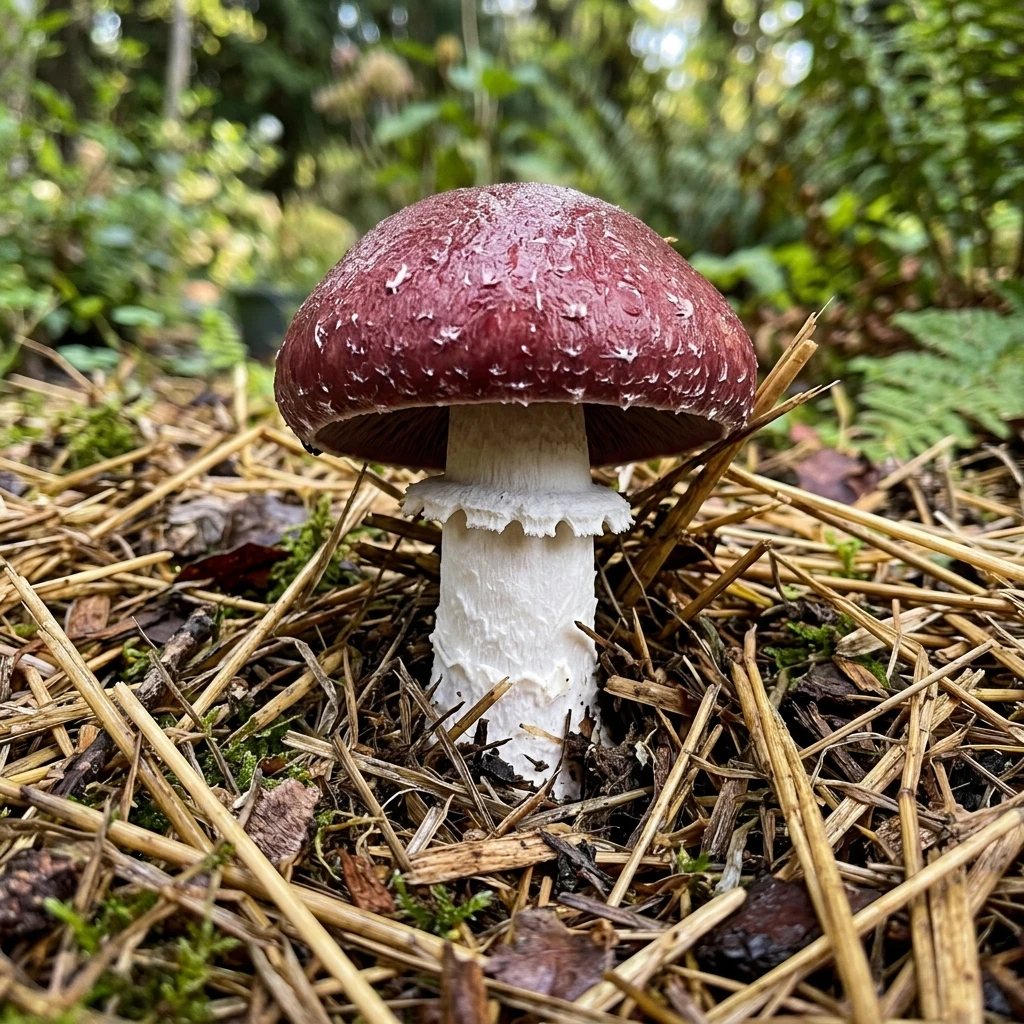
Stropharia rugosoannulata

Wine Cap Identification & Cultivation

The Wine Cap, or Garden Giant, is a robust, highly prized edible fungus native to North America and Europe. Famous for its beautiful deep wine-red cap, thick white stem, and robust star-like ring, this powerful saprophyte is an outstanding choice for outdoor garden cultivation, acting as an active soil builder and companion plant in vegetable beds.


Environment Icon
Environment Gardens / Woodchips & Mulch Beds
Humidity Icon
Humidity Moderate Humidity (70-80%)
Substrate Icon
Substrate Hardwood Woodchips / Straw Mulch
Cap Diameter Icon
Cap Diameter 5cm - 20cm
Edibility Icon
Edibility Choice Edible
Botanical macro photography of Wine Cap (Stropharia rugosoannulata) - Plant AI care database

How to Identify Wine Cap

A large, heavy garden mushroom with a wine-red cap, dark gills, and a thick white stem with a rugged star-like ring.

  • Wine-Red Cap: Large, fleshy cap with a beautiful deep burgundy or wine-red color that fades to tan with age.
  • Dark Grey Gills: Gills start out pale grey-white, turning dark purplish-grey to black as spores mature.
  • Rugged Cogwheel Ring: A thick white stem featuring a prominent, thick, star-shaped or cogwheel-like ring.
💡 Garden Tip: Wine Caps are excellent companion plants. Inoculating woodchip mulch in vegetable beds improves soil health, retains water, and boosts tomato and potato yields.

Complete Scientific Cultivation & Identification

Follow our professional mycological parameters and identification guidelines for safe foraging.

Grows outdoors on woodchip piles, garden mulch, and straw. Highly suited for outdoor permaculture beds and forest gardens.
Relies on natural rainfall and soil moisture. Outdoor beds must be watered regularly during dry summer spells to support mycelial growth.
Thrives in partial shade, such as under the canopy of corn, tomatoes, or forest edges. Direct intense sunlight will bleach the wine-red cap color.
The cap is 5 to 20 cm, fleshy, convex. Gills are crowded, attaching to the stem, maturing from pale grey to deep purplish-black.
Produces a dark purplish-brown to black spore print. Easily propagated by spreading colonized sawdust spawn into fresh hardwood woodchips.
Flesh is thick, white, firm, and does not stain. The stem is solid, white, tapering upwards, with a rugged, star-patterned membranous ring.
Harvest when the cap is still rounded and the wine-red color is vibrant. Cut the stem base cleanly, leaving soil in the garden bed.
A choice edible. Rich, nutty, and slightly potato-like flavor with a firm, crunchy stem. Sauté in olive oil, roast with root vegetables, or add to rich stews.
Contains high concentrations of active polysaccharides and beneficial minerals, showing strong immune-supporting and blood pressure-regulating properties.
CRITICAL WARNING: Beware of poisonous lawn mushrooms growing on soil. Wine Caps are identified by their **wine-red cap**, **purplish spores**, **star-like ring**, and growth on woodchips. Avoid gathering old, bleached tan specimens.
Wine Caps are highly effective at capturing wood decay nutrients. Inoculating woodchip paths around your garden beds creates an abundant, annual mushroom harvest while building premium organic compost.

Are your garden Wine Caps turning tan, dry or infested with worms?

Water outdoor beds during dry spells, harvest early in the morning, and protect from direct sun.

Identify My Mushroom

Common Diseases & Wild Contamination

Sun Bleaching

Symptoms: Symptoms: The deep wine-red cap turns dull yellowish-tan, dry, and develops cracked margins.

Action: Action: Harvest sooner. Wine-red pigment naturally fades to tan under direct sunlight or as the mushroom matures. Provide temporary shade plants.

Slug Damage

Symptoms: Symptoms: Deep, irregular holes chewed into the fleshy caps and stems overnight.

Action: Action: Spread diatomaceous earth or set organic beer traps around the outdoor mushroom beds to control woodland slugs.

Frequently Asked Questions

Why are Wine Caps called 'Garden Giants'?

Under ideal outdoor conditions, Wine Caps can grow to massive sizes, with caps measuring up to 30 cm across and weighing over a pound, while remaining tender and edible.

What woodchips are best for Wine Caps?

Fresh hardwood woodchips (Oak, Maple, Alder, Birch) are excellent. Avoid softwood chips (Pine, Cedar) as their natural resins inhibit mushroom mycelium growth.

Can Wine Caps grow indoors?

They are very difficult to grow indoors because they rely on beneficial soil bacteria and complex outdoor ecological networks to trigger fruiting body formation.

How do you store fresh Wine Caps?

Store them in a paper bag in the refrigerator for up to 5 days. For long-term preservation, slice and sauté in butter before freezing.

Understand nature safely. Identify mushrooms instantly!

Get Started for Free