Pine Bolete Foraging & Identification Guide
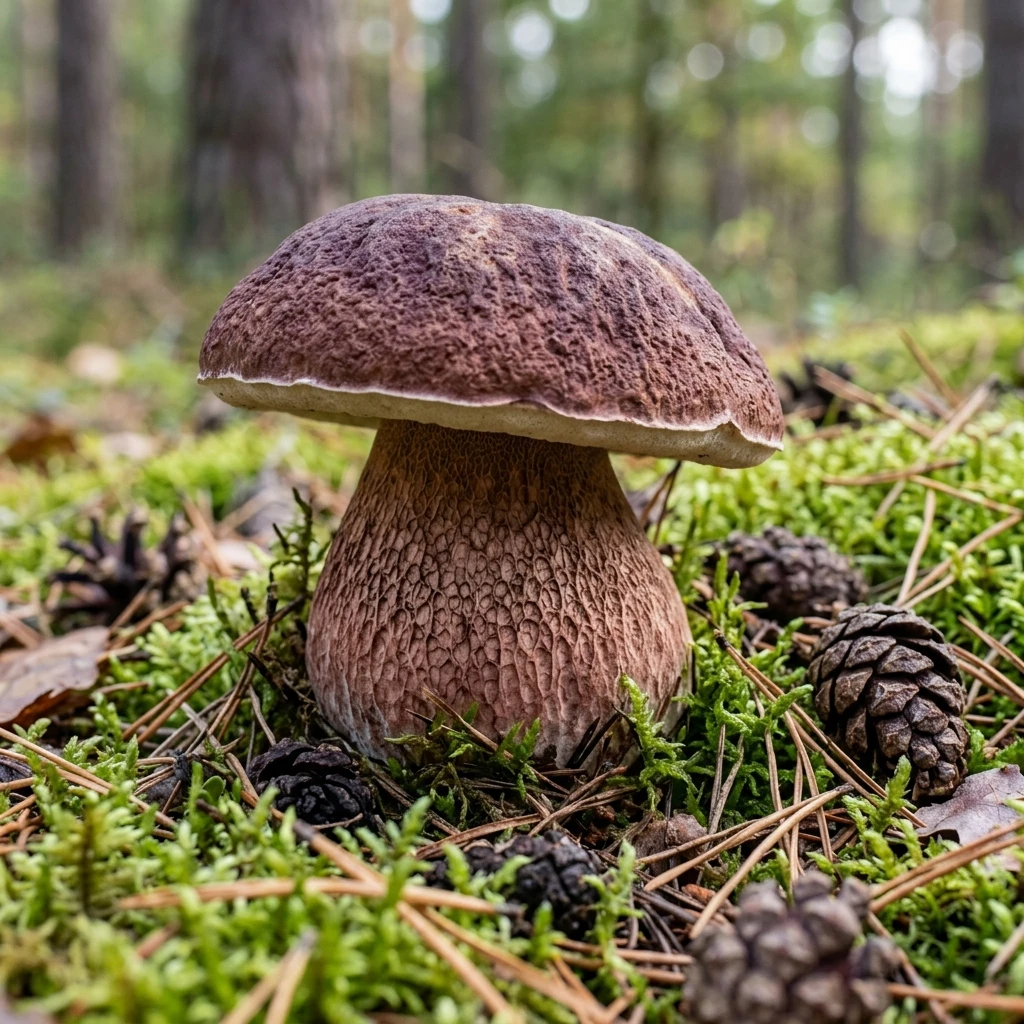
The Pine Bolete, also known as the Pinewood King Bolete, is an exceptionally highly prized, choice wild edible mushroom native to coniferous forests across Europe and temperate Asia. Growing in mycorrhizal symbiosis with Pine and Spruce, it represents a peak delicacy in the choice edible Porcini (Boletus) family. It features a massive, dry, reddish-brown to purple-brown cap with a slightly pale edge, and a very thick, bulbous pale brown-red stem covered in a highly detailed, fine reticulation pattern, boasting an incredibly rich, concentrated nutty umami flavor.




How to Identify Pine Bolete
A large, thick, reddish-brown to purple-brown convex cap with a slightly pale margin, and a very thick stem covered in fine net-like reticulation.
-
✔
Cap: Varies by species.
-
✔
Spore: Critical check.
Detailed Mycology Profile & Foraging Guide
Follow our detailed scientific field guide and environmental parameters to identify and study Pine Bolete safely.
Common Look-alikes & Foraging Danger
Soggy Softness (Aging)
Symptoms: The red-brown cap feels extremely soft, mushy, and holds water like a wet sponge.
Stem Gnat Tunneling
Symptoms: The thick bulbous stem base is riddled with tiny brown tunnels and feels soft.
Frequently Asked Questions
Why is it called 'Pine Bolete'?
It is named for its strict symbiotic relationship with Pine trees, where its underground mycelium partners with pine roots to exchange minerals for sugars.
Does the Pine Bolete turn blue when cut?
No. The pure white flesh of Boletus pinophilus remains completely white and never stains blue or changes color when cut, which is a key safety feature.
How do you tell it apart from the bitter Tylopilus felleus?
The Bitter Bolete (Tylopilus felleus) has a stem covered in very dark-brown coarse netting, its pores turn distinct pinkish when mature, and it has an extremely bitter taste. The Pine Bolete has fine stem reticulation, pores that turn olive-yellow, and a sweet, nutty taste.
Can you eat the stem of the Pine Bolete?
Yes, provided the stem is young and firm. Unlike some mushrooms with woody stems, the stem of a young Pine Bolete is solid, fleshy, and highly delicious.