Portobello Foraging & Identification Guide
The Portobello, or Giant Cremini, is the fully matured brown flat-capped variety of Agaricus bisporus. Native to European grasslands, this heavy commercial mushroom features a broad, open cap exposing deep chocolate-brown gills. Renowned globally for its exceptionally firm, meaty texture and deep savory, woodsy umami flavor, it serves as a legendary steak substitute in gourmet dining.





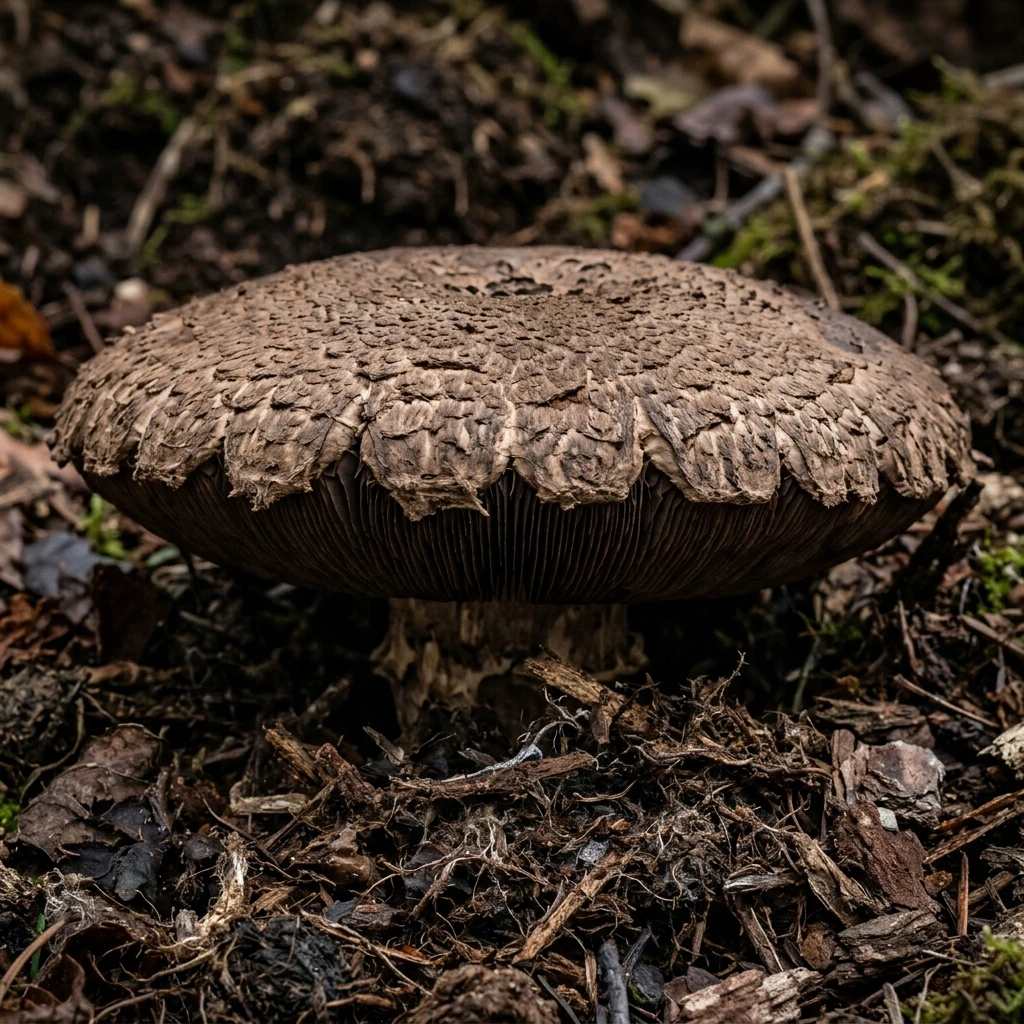
How to Identify Portobello
A massive, heavy, flat-capped brown mushroom with fully exposed dark chocolate-brown gills and a thick solid stem.
-
✔
Cap: Varies by species.
-
✔
Spore: Critical check.
Detailed Mycology Profile & Foraging Guide
Follow our detailed scientific field guide and environmental parameters to identify and study Portobello safely.
Common Look-alikes & Foraging Danger
Gill Decay
Symptoms: The dark chocolate gills turn soft, slimy, wet, and start dripping a black, foul-smelling liquid.
Bacterial Blotch
Symptoms: Wet, slimy brown spots developing on the top of the broad brown caps during storage.
Frequently Asked Questions
Why do Portobello mushrooms taste so meaty?
Portobellos contain high concentrations of glutamic acids and natural umami flavor compounds, which intensify as the cap expands, loses water, and matures, creating a dense, steak-like texture.
Should you remove Portobello gills before cooking?
It is not necessary, as the gills are edible and full of flavor. However, they will release a dark pigment when cooked, so you may want to scrape them off with a spoon if you want to keep your dish light-colored.
How do you clean Portobello mushrooms?
Wipe the top of the cap clean with a damp paper towel. Gently trim the dry bottom tip of the stem. Avoid washing under running water, as the exposed gills act like a sponge and absorb water.
How should Portobellos be stored?
Store them gills-side up on a plate lined with paper towels in the refrigerator, or in a paper bag. Keeping them gills-side up prevents moisture from pooling inside the cap cavity.