Identify Cinnabar Chanterelle (Cantharellus cinnabarinus) - Plant AI mycology guides
Home / Mushrooms / Cinnabar Chanterelle

Cinnabar Chanterelle

Scientific Name: Cantharellus cinnabarinus

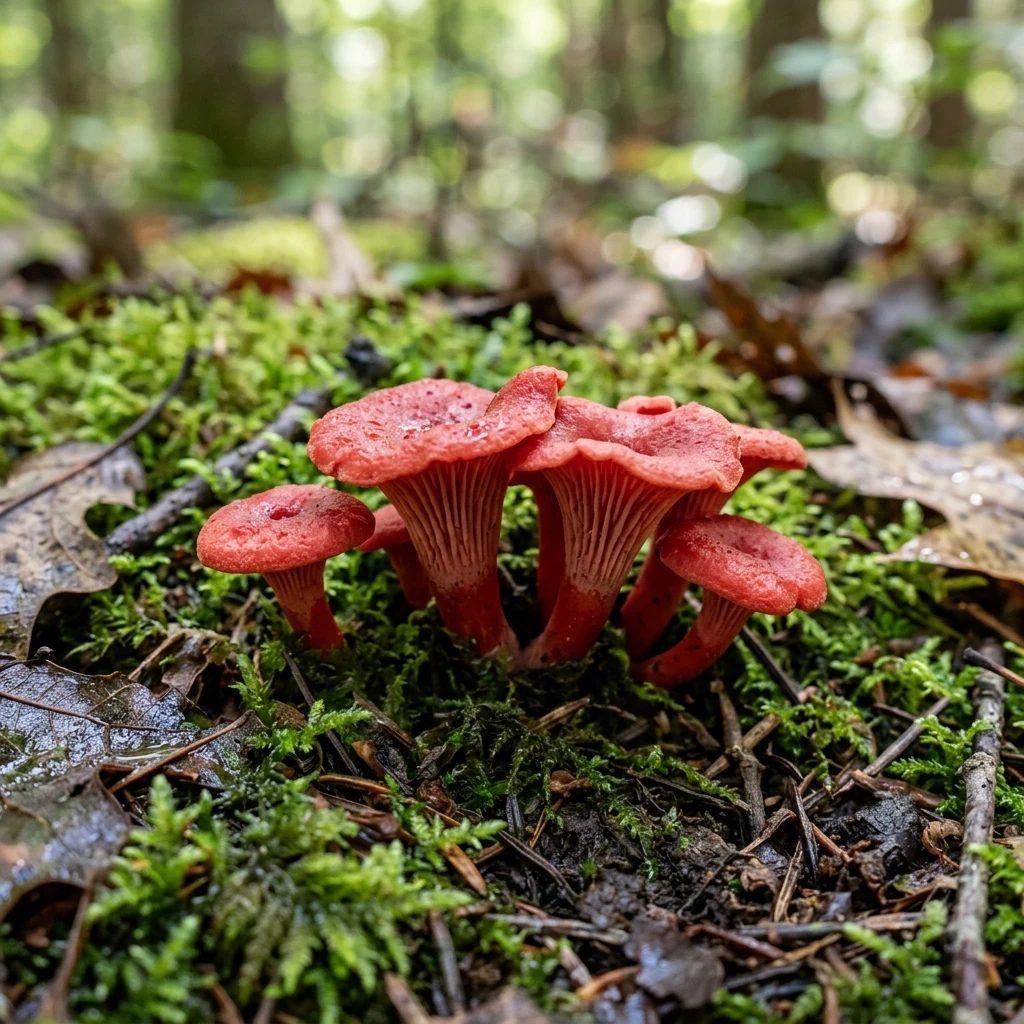
The Cinnabar Chanterelle, or Red Chanterelle, is an exceptionally highly prized, choice wild edible mushroom native to broadleaf forests across Eastern North America. Celebrated for its striking, highly colorful appearance, it features a small, elegant funnel-shaped cap of brilliant cinnabar-red, flaming coral pink, or flaming red. Beneath the cap, it features blunt, shallow, wavy, forked ridges instead of true gills, boasting an incredibly rich, sweet, apricot-like aroma.


🌍 Environment Broadleaf Oak & Beech Woods
💧 Humidity High Humidity (70-80%)
🪵 Substrate / Host Damp Soil / Oak Root Symbiosis
📏 Size 1cm - 4cm
🍄 Category Choice Edible
🔍

How to Identify

Small, funnel-shaped cinnabar-red caps with blunt, shallow, wavy ridges underneath, smelling like fresh apricots.

  • Cinnabar-Red Funnel: A small, elegant funnel cap, 1 to 4 cm, displaying a brilliant, striking cinnabar-red or flamingo pink color.
  • Blunt Forked Ridges: The underside features blunt, shallow, wavy, heavily branched ridges (not gills) that run down the stem.
  • Apricot-like Odor: When fresh, the firm white-pink flesh emits a powerful, unmistakable sweet scent of apricots.
🍲 Gourmet Preparation: Boasts a wonderfully sweet, nutty, apricot-like aroma and a firm, meaty texture. Sauté the small mushrooms whole in butter with garlic and white wine; they maintain their brilliant red color in the pan!

Detailed Mycology Profile & Safety Guide

Click on any dimension to expand detailed field guides, substrate requirements, and safety warnings.

Forms strict mycorrhizal relationships with Oak and Beech. Fruits in scattered groups or small patches on damp, mossy, acidic soils in mixed forests from summer to early autumn.
Requires warm, humid summer conditions (20-27°C) and high moisture. It sprouts abundantly in late summer after heavy rains.
Thrives in shaded broadleaf oak forests, nestled in green moss beds away from intense direct sun.
No gills. The cap is convex, 1 to 4 cm wide, smooth cinnabar-red. Underside consists of blunt, shallow, wavy, decurrent ridges that branch repeatedly, turning pinkish-red.
Produces a pinkish-cream to white spore print. The spores are smooth, large, and spindle-shaped, wind-dispersed from the ridges.
Flesh is solid, thick, white-pink, with a highly pleasant, sweet apricot smell. Stems are solid, smooth, red, lacking a ring.
Harvest young, firm rosettes. Brush off moss debris. The stems are solid and fleshy, so the entire mushroom is edible and suitable for cooking.
Choice edible. Famous for its mild, sweet, nutty, apricot-like aroma and firm, meaty texture. Excellent sautéed in butter, added to pasta, or dried for long-term storage.
Rich in essential dietary minerals, vitamin D, and unique carotenoid pigments (which give the gills their cinnabar-red color) showing strong antioxidant properties.
CRITICAL WARNING: Safe foraging! Its combination of a reddish-brown velvety cap, bright golden gills, and slow blueing reaction makes it extremely unique. Do not confuse with the toxic **Jack-O'-Lantern** (Omphalotus), which is **much larger, orange, grows in dense clusters on dead wood, and lacks the blueing reaction**, whereas Gilled Bolete is **small, grows on mossy soil under oak, and turns blue-green slowly**. When in doubt, verify the soil substrate!
AI Diagnoser

Is your Cinnabar Chanterelle growing moldy or decaying?

Take a photo with the Plant AI app to instantly diagnose fungal diseases, green mold, or wood decay, and get expert botanical recommendations in 1 second.

Scan Mushroom Now
🦠

Color Bleaching (Sun)

Symptoms: The brilliant cinnabar-red cap and ridges turn a pale yellowish-pink or white.

Action: Action: This is natural sun and rain bleaching. Old specimens rapidly lose their bright red pigments. The mushroom remains edible, provided the flesh is still firm.

🍂

Soggy Rot

Symptoms: The small funnel caps turn dark brown, mushy, soggy, and smell sour after heavy rain.

Action: Action: Past its prime. The sponge-like flesh absorbs water easily, leading to decay. Do not harvest; only collect firm, dry, active specimens.

Frequently Asked Questions

Why is it called 'Cinnabar Chanterelle'?

It is named for its brilliant, striking cinnabar-red color, which is a classic mineral red pigment. This color is unique among chanterelles, making it highly beautiful and easy to spot.

Does it really smell like apricots?

Yes. When fresh, the mushroom emits a highly distinctive, sweet, and fruity fragrance that is virtually identical to ripe apricots or peaches, which is a key identification mark.

Is it safe for beginner foragers?

Yes, it is exceptionally safe. Because of its small size, bright cinnabar-red color, and blunt wrinkled ridges (not sharp gills), it has virtually no dangerous look-alikes.

How do you cook it?

Sauté them whole in butter or olive oil. Because they are small and firm, they maintain their shape and beautiful coral-red color in the pan, making them a gorgeous addition to risottos and pasta dishes.

Understand nature safely. Identify mushrooms instantly!

Get Started for Free