Red Cracked Bolete Foraging & Identification Guide
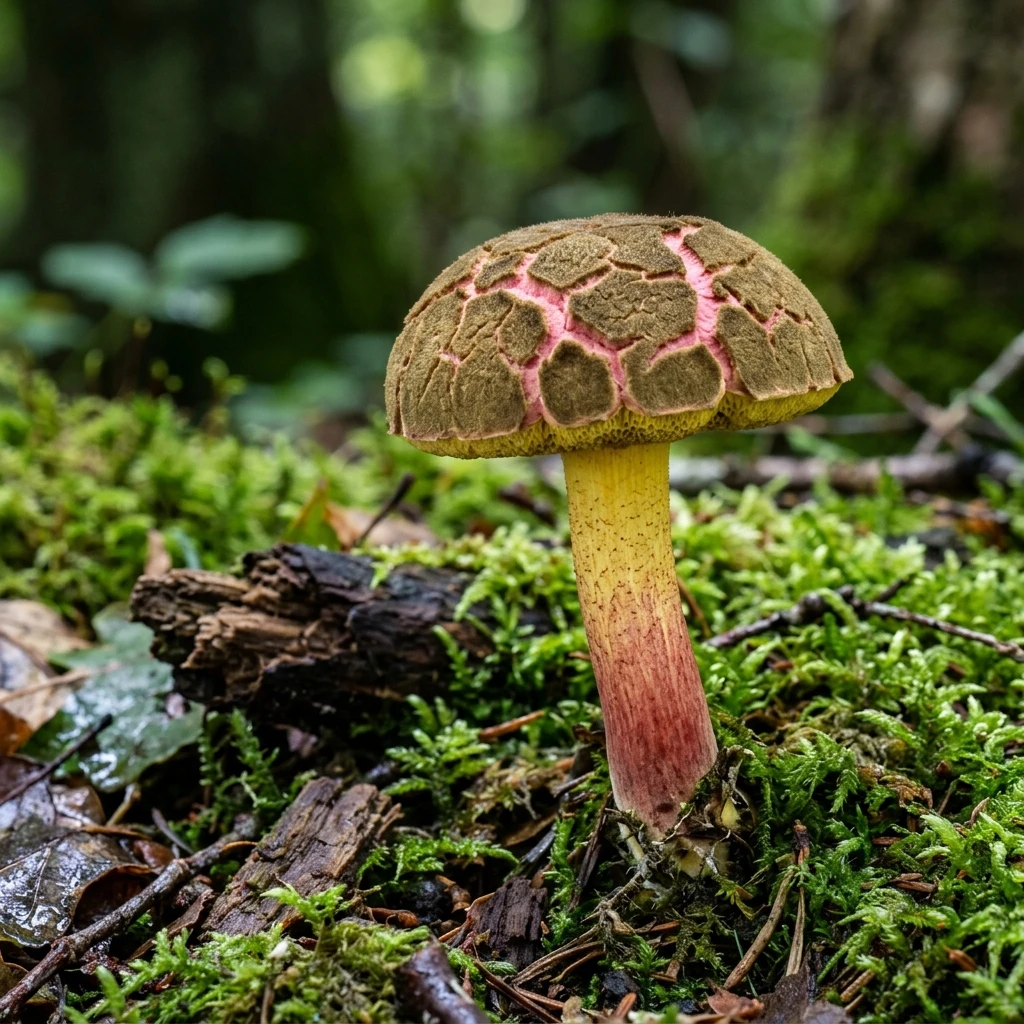
The Red Cracked Bolete is an exceptionally common, highly beautiful, and edible wild mushroom native to temperate coniferous and deciduous woodlands across Europe and North America. Growing in mossy forest soils, it is named for its highly unique, striking cap texture: its dry, velvety olive-brown cap skin splits and cracks open as it matures, revealing a gorgeous, vivid rose-pink to raspberry-red flesh layer underneath. Beneath the cap, it features large, yellow sponge-like pores that slowly turn blue-green when bruised.





How to Identify Red Cracked Bolete
A velvety olive-brown cap that cracks open to reveal brilliant rose-red flesh underneath, with yellow pores that bruise slow blue-green.
-
✔
Cap: Varies by species.
-
✔
Spore: Critical check.
Detailed Mycology Profile & Foraging Guide
Follow our detailed scientific field guide and environmental parameters to identify and study Red Cracked Bolete safely.
Common Look-alikes & Foraging Danger
White Cap Mold (Hypomyces)
Symptoms: The olive-brown cap and yellow pores develop a fuzzy, dense white-to-yellow mold coating.
Soggy Softness (Waterlogging)
Symptoms: The cap feels extremely soft, mushy, and holds water like a sponge after heavy autumn rains.
Frequently Asked Questions
Why does the cap split open?
The velvety cap skin is dry and non-elastic. When the mushroom grows rapidly after a rain, the expanding inner flesh pulls the skin apart, causing it to split and crack into a beautiful mosaic that reveals the red flesh underneath.
Why does the flesh inside the cracks look red?
The mushroom produces high concentrations of red anthocyanin-like pigments in the layer of flesh directly beneath the cap cuticle. When the outer olive-brown skin cracks, this pigmented red layer is exposed.
Is the Red Cracked Bolete good to eat?
It is edible and safe, but it has a relatively soft, mushy texture when cooked, which some foragers find unappealing. It is best enjoyed when mixed with firmer mushrooms, or dried first to improve texture.
How do you tell it apart from other cracked boletes?
The Red Cracked Bolete (Xerocomellus chrysenteron) is distinguished by its olive-brown cap with rose-red cracks, its slender stem that is bright red at the base, and its large, angular yellow pores that bruise slow blue-green.