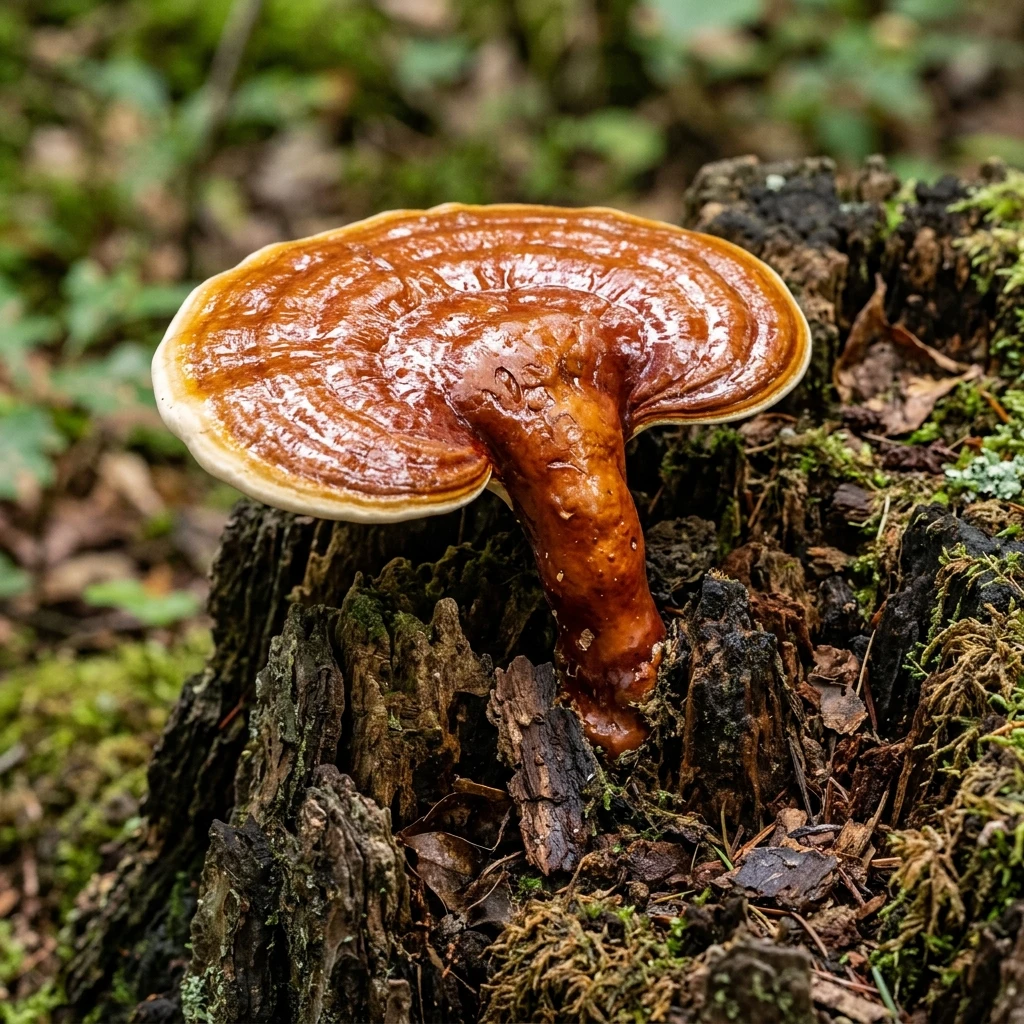
Ganoderma lucidum

Reishi Identification & Cultivation

Reishi, known as 'Lingzhi' in Asia, is a legendary wood-decaying medicinal polypore famous for its shiny, varnished reddish-brown fan-shaped cap and woody structure. Primarily growing on decaying oak and hardwood logs, this highly revered 'Mushroom of Immortality' has been a cornerstone of traditional herbal systems for over 2,000 years, heavily studied today for its powerful adaptogenic and immune-modulating properties.


Environment Icon
Environment Hardwood Forests / Oak Logs
Humidity Icon
Humidity High Humidity (85-95%)
Substrate Icon
Substrate Decaying Oak/Maple Wood
Cap Diameter Icon
Cap Diameter 5cm - 20cm
Edibility Icon
Edibility Medicinal
Botanical macro photography of Reishi (Ganoderma lucidum) - Plant AI care database

How to Identify Reishi

A woody, fan-shaped mushroom featuring a highly glossy, varnished reddish-brown cap and a tiny white pore underside.

  • Varnished Cap: Kidney-shaped or fan-shaped cap covered with a highly lustrous, shiny reddish-brown lacquer layer.
  • White Pore Underside: Gills are entirely absent. Underneath is a solid white pore surface that bruises yellow-brown.
  • Woody Stem: Typically grows with a robust, corky, dark brown-to-black lateral stem that attaches directly to wood.
💡 Usage Tip: Reishi is too tough and bitter to be eaten like culinary mushrooms. It must be sliced and simmered in boiling water for 1 to 2 hours to extract its therapeutic active compounds.

Complete Scientific Cultivation & Identification

Follow our professional mycological parameters and identification guidelines for safe foraging.

Grows naturally on decaying hardwood stumps, particularly Oak, Maple, and Plum trees. Highly cultivated on sterilized hardwood sawdust logs in shade houses.
Requires very high humidity (85-95%) and strict temperature controls (24-28°C) to induce fruiting body formation. Pinning blocks must be misted heavily.
Requires low indirect dappled light. Sunlight is necessary to trigger the expansion of the cap and synthesize the varnished reddish-brown lacquer.
The cap is 5 to 20 cm, flat, varnished red-brown with growth concentric bands. It has no gills, featuring millions of microscopic white tubes underneath.
Produces a massive, cocoa-brown spore print that often coats the top of the cap as it matures. Propagated using grain spawn inoculated into wood logs.
Flesh is tough, woody, fibrous, concentric, and light brown. The stem is lateral, solid, highly varnished dark brown, lacking any ring or cup.
Harvest by slicing the woody stem cleanly with pruning shears. Gather in late summer when the bright yellow-white growing margin fades into solid red-brown.
Too tough to eat. Intensely bitter due to triterpene compounds. Typically consumed as an adaptogenic tea broth, tincture, or extracted into soluble powders.
Extremely rich in **triterpenoids (ganoderic acids)**, high molecular weight **beta-glucans**, and peptidoglycans that regulate cardiovascular functions and reduce chronic fatigue.
CRITICAL WARNING: Extremely safe with no toxic look-alikes in temperate woods. Avoid confusing with poisonous conifer polypores by verifying host Oak tree substrate.
When growing Reishi indoors, adjusting carbon dioxide levels alters its shape: high CO2 induces long, branched 'antlers' shape, while high ventilation promotes broad 'caps' shape.

Is your Reishi growing moldy or losing its shiny luster?

Ensure proper ventilation, wipe caps clean, and dry completely for long-term wooden storage.

Identify My Mushroom

Common Diseases & Wild Contamination

Green Mold (Trichoderma)

Symptoms: Symptoms: Fuzzy emerald-green patches attacking the woody base of the mushroom.

Action: Action: Isolate blocks immediately. Spot treat with diluted food-grade hydrogen peroxide and reduce relative humidity slightly.

Luster Fading

Symptoms: Symptoms: The shiny lacquer on the cap turns dusty, pale brown, and loses its varnished beauty.

Action: Action: This is natural spore deposit. The mushroom has released brown spores which settled on its own cap. Gently wipe with a damp cloth to restore luster.

Frequently Asked Questions

Why is Reishi so bitter?

Reishi's intense bitterness is caused by a group of highly active medicinal compounds called triterpenes (specifically ganoderic acids). The bitterer the Reishi extraction, the higher its therapeutic quality.

What are the primary health benefits of Reishi?

Reishi is a powerful adaptogen that helps calm the central nervous system, reduces anxiety, improves sleep quality, balances blood pressure, and boosts the body's natural defense cells.

How do you prepare Reishi tea?

Slice dried Reishi thinly. Add 10-15 grams of Reishi slices to 1 liter of pure water. Bring to a boil and simmer on low heat for 1 to 2 hours. Strain the bitter tea and drink warm, or sweeten with raw honey.

Can you consume Reishi daily?

Yes, Reishi is highly safe for long-term daily adaptogenic supplementation. However, individuals taking blood thinners or preparing for surgery should consult a physician due to its mild anti-coagulant effects.

Understand nature safely. Identify mushrooms instantly!

Get Started for Free