Identify Saffron Milk Cap (Lactarius deliciosus) - Plant AI mycology guides
Home / Mushrooms / Saffron Milk Cap

Saffron Milk Cap

Scientific Name: Lactarius deliciosus

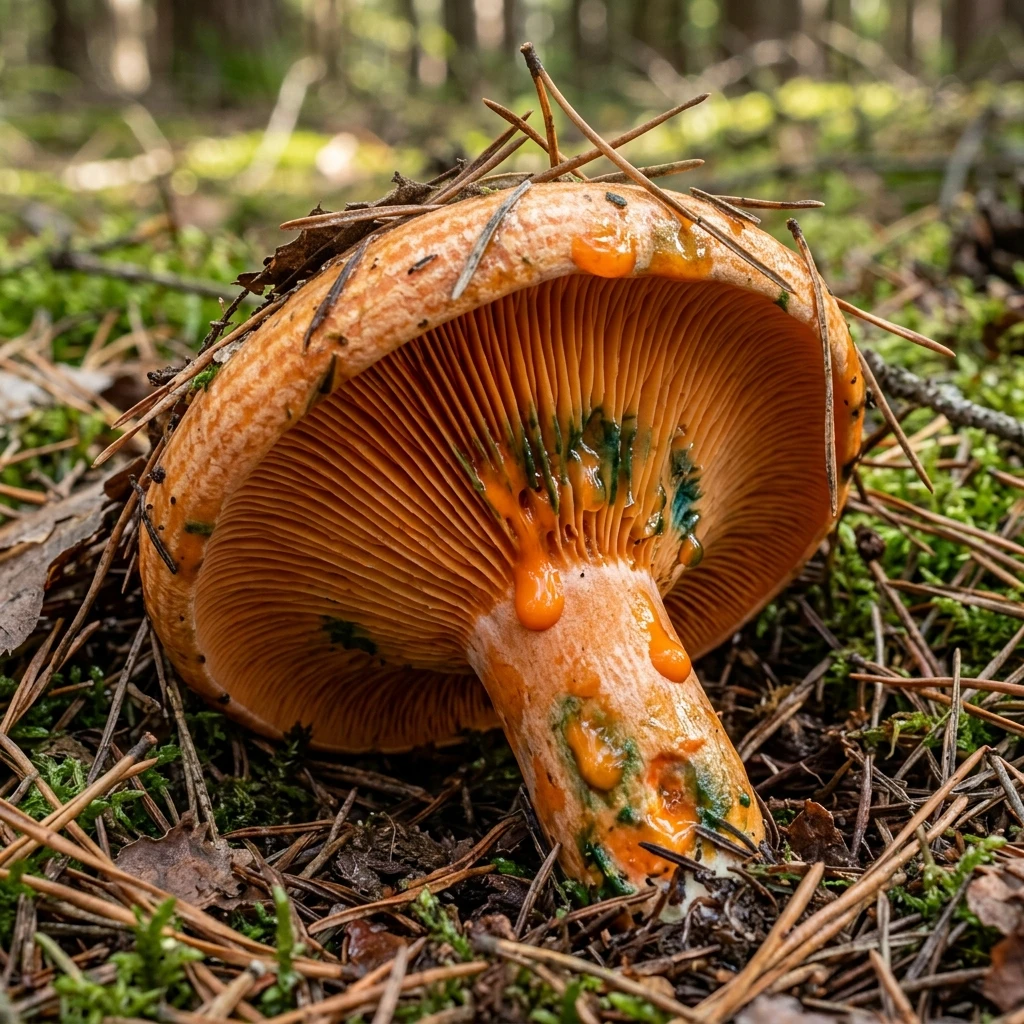
The Saffron Milk Cap, also known as the Red Pine Mushroom, is a choice, world-famous wild edible mushroom native to coniferous pine forests across Europe, North America, and Australia. Featuring a beautiful carrot-orange cap with distinct concentric ring zones, it belongs to the unique 'milk cap' family. When cut or bruised, its tissues instantly bleed a vibrant, saffron-orange latex or milk that slowly oxidizes to a green color, representing the ultimate diagnostic feature for autumn mushroom hunters.


๐ŸŒ Environment Pine Forests / Conifers
๐Ÿ’ง Humidity Moderate Humidity (65-75%)
๐Ÿชต Substrate / Host Acidic Soil / Pine Root Symbiosis
๐Ÿ“ Size 4cm - 14cm
๐Ÿ„ Category Edible
๐Ÿ”

How to Identify

A bright orange cap with circular ring zones, orange gills bleeding bright orange milk that turns green in the air.

  • Orange Zoned Cap: Fleshy cap (4 to 14 cm) with circular concentric orange bands, depressed center, and a rolled-in margin when young.
  • Saffron Milk Gills: Gills are bright orange, crowded, bleeding a vivid carrot-orange milky sap when bruised.
  • Green Oxidation: Bruised gills, cap skin, and cut stem tissues slowly turn a highly distinct blue-green color when exposed to air.
๐Ÿงก Vibrant Latex: The ultimate safety test! A true Saffron Milk Cap must bleed **bright carrot-orange milk** when its gills are cut. If the milk is white or yellow, discard immediately!

Detailed Mycology Profile & Safety Guide

Click on any dimension to expand detailed field guides, substrate requirements, and safety warnings.

Forms strict mycorrhizal relationships with Pine trees (especially Pinus sylvestris). Fruits on acidic, needle-covered pine forest soils from early autumn to early winter.
Requires moderate humidity and cool, damp autumn weather. Sprouting is heavily triggered by autumn rains and cool night temperatures.
Thrives in partial shade under pine tree branches, often hiding beneath falling pine needles and moss.
The cap is 4 to 14 cm, convex with a central depression, carrot-orange. Gills are crowded, bright orange, bleeding saffron-orange milk.
Produces a pale buff-to-pinkish spore print. Easily collected by placing the cap gills-down on dark paper.
Flesh is firm, pale orange, bleeding orange milk when cut. Stem is sturdy, hollow, orange, often showing small dark orange circular pits (scrobiculi), lacking a ring or volva.
Harvest by cutting the stem at ground level. Inspect the cut surface immediately; it should show a bright orange ring of bleeding milk that slowly turns green.
Choice edible. Fleshy cap has a rich, savory, slightly nutty and peppery flavor with a firm, crunchy texture. Highly popular in European cuisines, traditionally fried in butter, grilled, or pickled.
Rich in essential amino acids, vitamin B, and bioactive sesquiterpenoids with proven antioxidant, anti-inflammatory, and immunostimulating properties.
CRITICAL WARNING: Do not confuse with toxic look-alikes! Cut gills must be checked for orange milk. Never confuse this species with the toxic **Woolly Milk Cap** (Lactarius torminosus), which features a **very hairy, shaggy cap edge** and bleeds **strictly white, extremely acrid burning milk** that does not turn orange or green, causing severe gastrointestinal poisoning. True Saffron Milk Cap has a **smooth cap edge** and **strictly carrot-orange milk**.
The green staining on Saffron Milk Caps is a natural chemical oxidation process of the orange latex and is not a sign of mold or decay. Green-stained specimens are perfectly safe and highly delicious to eat.
AI Diagnoser

Is your Saffron Milk Cap growing moldy or decaying?

Take a photo with the Plant AI app to instantly diagnose fungal diseases, green mold, or wood decay, and get expert botanical recommendations in 1 second.

Scan Mushroom Now
๐Ÿฆ 

Green Spotting (Oxidation)

Symptoms: Large blue-green patches or spots appearing on the orange cap and gills where handled.

Action: Action: This is natural. The orange sap oxidizes to green when exposed to air. It is not mold and does not affect edibility. Proceed with cooking.

๐Ÿ‚

White Latex & Hairy Cap Edge

Symptoms: Gills bleed white milk, and the cap edge is covered in thick, woolly white hairs.

Action: Action: DISCARD IMMEDIATELY. This is the toxic Woolly Milk Cap (Lactarius torminosus). It will cause severe stomach cramps and gastrointestinal distress.

Frequently Asked Questions

Why does the Saffron Milk Cap turn green?

The mushroom contains a unique orange sap (latex). When the mushroom tissues are cut or bruised, the sap is exposed to oxygen in the air, undergoing a natural chemical oxidation process that turns the orange sap to a green color.

How do you distinguish it from the toxic Woolly Milk Cap?

The Saffron Milk Cap has a smooth cap edge and bleeds bright carrot-orange milk that turns green. The toxic Woolly Milk Cap has a highly shaggy, woolly hairy cap edge and bleeds pure white, extremely peppery-acrid milk.

Does the orange milk stain hands?

Yes. The saffron-orange latex will stain your fingers and knives a bright orange color during harvest, which slowly turns to green. The stain is harmless and can be washed off with soap and warm water.

What is the best way to cook Saffron Milk Caps?

Because they have a firm, slightly crunchy texture, they are excellent pan-fried in olive oil or butter with garlic and parsley until golden-brown, or preserved in vinegar and oil as a traditional European pickle.

Understand nature safely. Identify mushrooms instantly!

Get Started for Free