Satan's Bolete Foraging & Identification Guide
Satan's Bolete is a massive, strikingly beautiful but highly toxic species of the bolete family, native to broadleaf forests in Europe. Growing in mycorrhizal association with oak and beech trees, it features a heavy, silver-gray cap, blood-red tube pores, and a thick red-netted bulbous stem. Famously named after the devil due to its severe toxicity, raw ingestion triggers violent, persistent vomiting, making it a key safety subject.





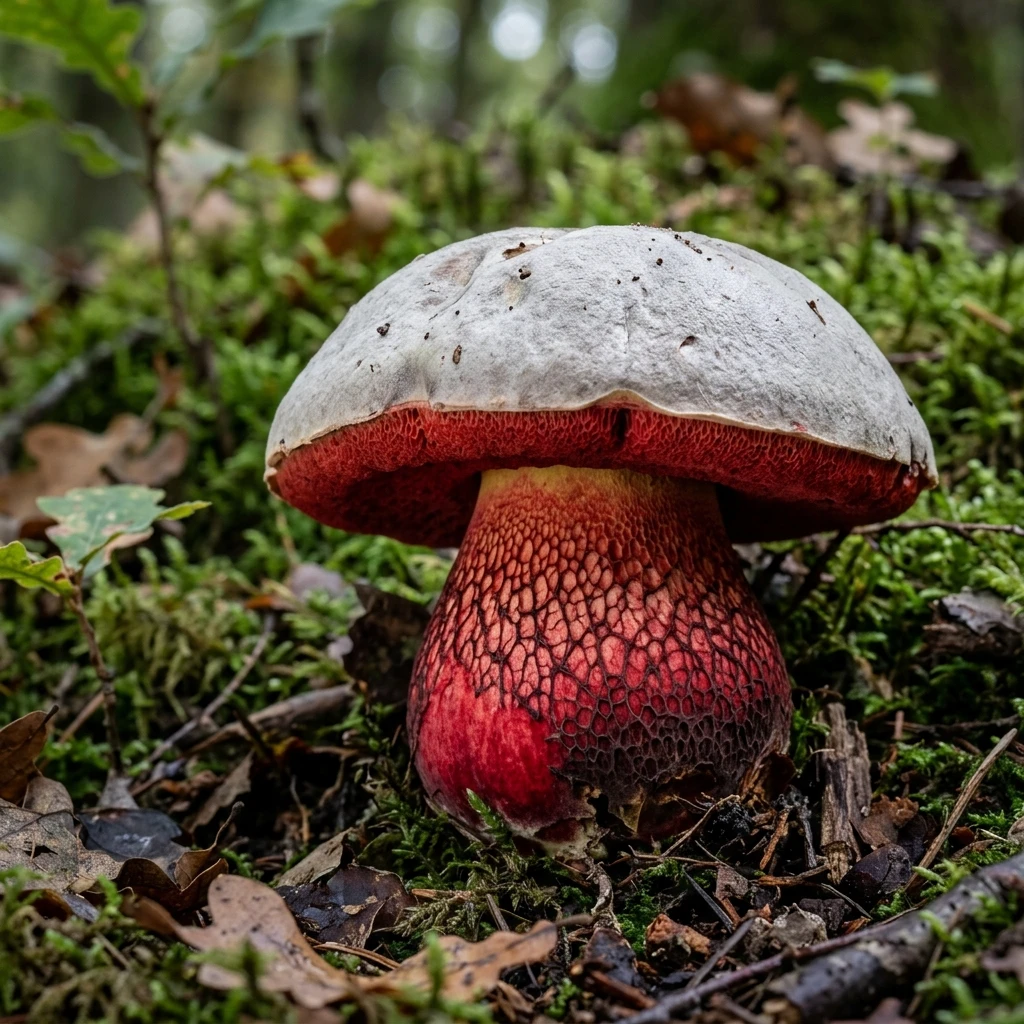
How to Identify Satan's Bolete
A heavy silvery-gray cap, blood-red tube pores underneath, and a bulbous red-netted stem that turns blue when cut.
-
✔
Cap: Varies by species.
-
✔
Spore: Critical check.
Detailed Mycology Profile & Foraging Guide
Follow our detailed scientific field guide and environmental parameters to identify and study Satan's Bolete safely.
Common Look-alikes & Foraging Danger
Fading Pores
Symptoms: The bright blood-red pores turn dull yellow-brown in old specimens.
Blue Staining Fading
Symptoms: The blue-staining reaction of cut flesh turns faint, slow, or disappears in dry weather.
Frequently Asked Questions
Why is it called 'Satan's Bolete'?
It is named 'Satan's Bolete' due to its devilish appearance (blood-red pores and stem contrast against a ghostly white cap) and its severe, agonizing gastrointestinal toxicity.
Is Satan's Bolete fatal if eaten?
Fatalities are extremely rare in healthy adults, as bolesatine is a gastrointestinal toxin rather than a liver cytotoxin. However, it causes exceptionally violent vomiting, severe dehydration, and extreme abdominal pain.
Does it have a bad smell?
Young specimens have a mild, pleasant earthy smell. However, as Satan's Bolete matures, it develops a highly unpleasant, nauseating odor resembling rotting organic matter.
How do you distinguish it from the Bicolored Bolete?
The edible Bicolored Bolete (Baorangia bicolor) has a bright rosy-red cap, bright yellow pores, and a slender yellow-red stem, whereas Satan's Bolete has a ghostly silver-gray cap, blood-red pores, and a thick bulbous red stem.