Shaggy Mane Foraging & Identification Guide
The Shaggy Mane, also known as the Lawyer's Wig, is a highly distinctive and excellent edible wild mushroom commonly found along roadsides, grassy lawns, and disturbed soils across North America and Europe. Featuring a tall, cylindrical, snow-white cap covered in shaggy, upturned fibrous scales, it belongs to the unique 'inky cap' family. As it matures, it undergoes a spectacular process called auto-digestion (deliquescence), melting itself into a thick black spore-bearing ink.





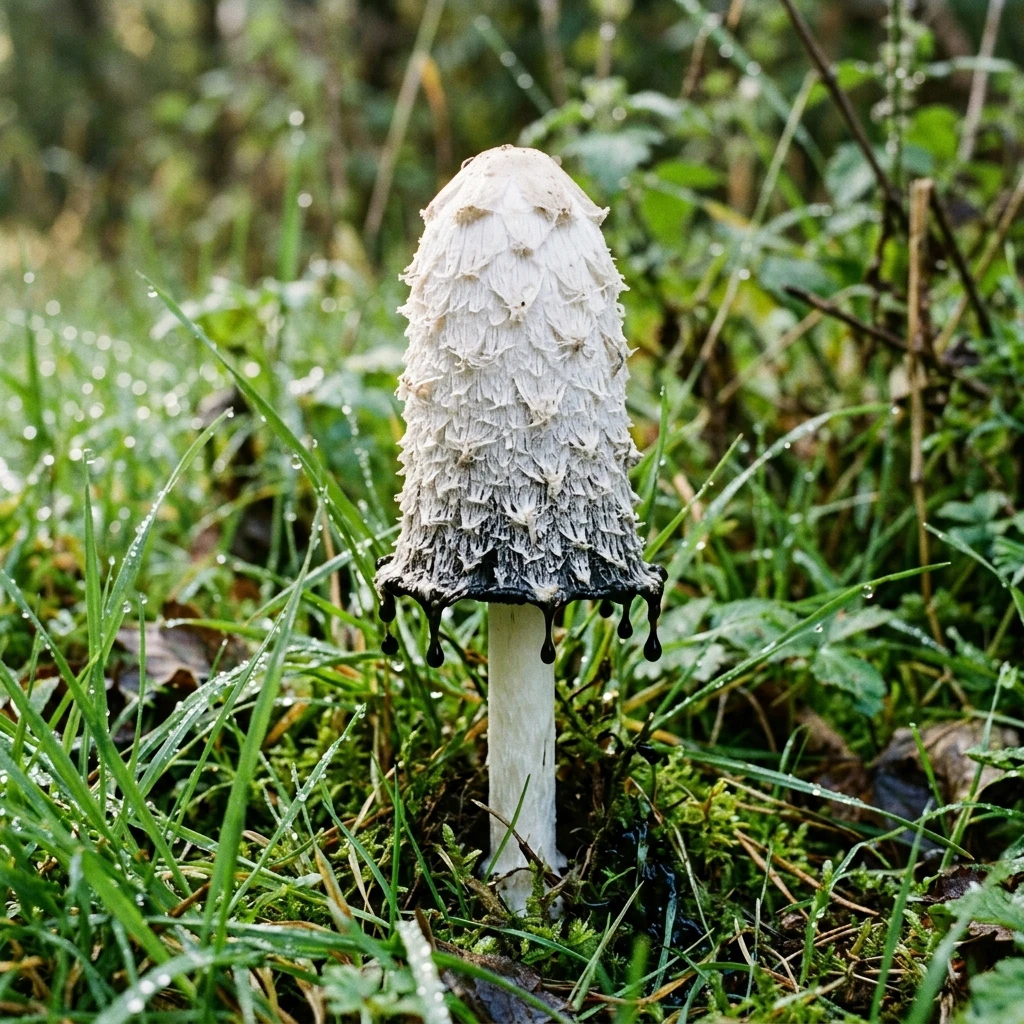
How to Identify Shaggy Mane
A tall, cylinder-like white shaggy cap that melts into black ink at the edges, white gills turning black, and a hollow stem.
-
✔
Cap: Varies by species.
-
✔
Spore: Critical check.
Detailed Mycology Profile & Foraging Guide
Follow our detailed scientific field guide and environmental parameters to identify and study Shaggy Mane safely.
Common Look-alikes & Foraging Danger
Auto-Digestion (Deliquescence)
Symptoms: The bottom edges of the white cap turn black and start dripping a thick black ink-like liquid.
Gray and Smooth Cap
Symptoms: Mushrooms are shorter, growing in dense clusters, with a completely smooth, gray-brown cap lacking shaggy white scales.
Frequently Asked Questions
Is Shaggy Mane safe to eat with alcohol?
Yes. Unlike its close relative the Common Inky Cap, the Shaggy Mane (Coprinus comatus) does not contain the toxin coprine, and it is perfectly safe to consume alongside alcoholic beverages.
Why does the Shaggy Mane melt into black ink?
This process is called auto-digestion or deliquescence. The mushroom produces enzymes that break down its own cell walls, melting the cap into liquid to help release and distribute its black spores in damp air.
Can you grow Shaggy Manes indoors?
Yes, but it is challenging commercially due to its extremely short shelf-life. Hobbyists cultivate them on pasteurized compost beds or straw, similar to white button mushrooms.
Where is the best place to forage for Shaggy Manes?
Look along gravelly roadsides, park lawns, golf courses, and areas with recently disturbed rich soil. They often emerge in large groups overnight after heavy rain in the autumn.