Lentinula edodes

Shiitake Identification & Cultivation

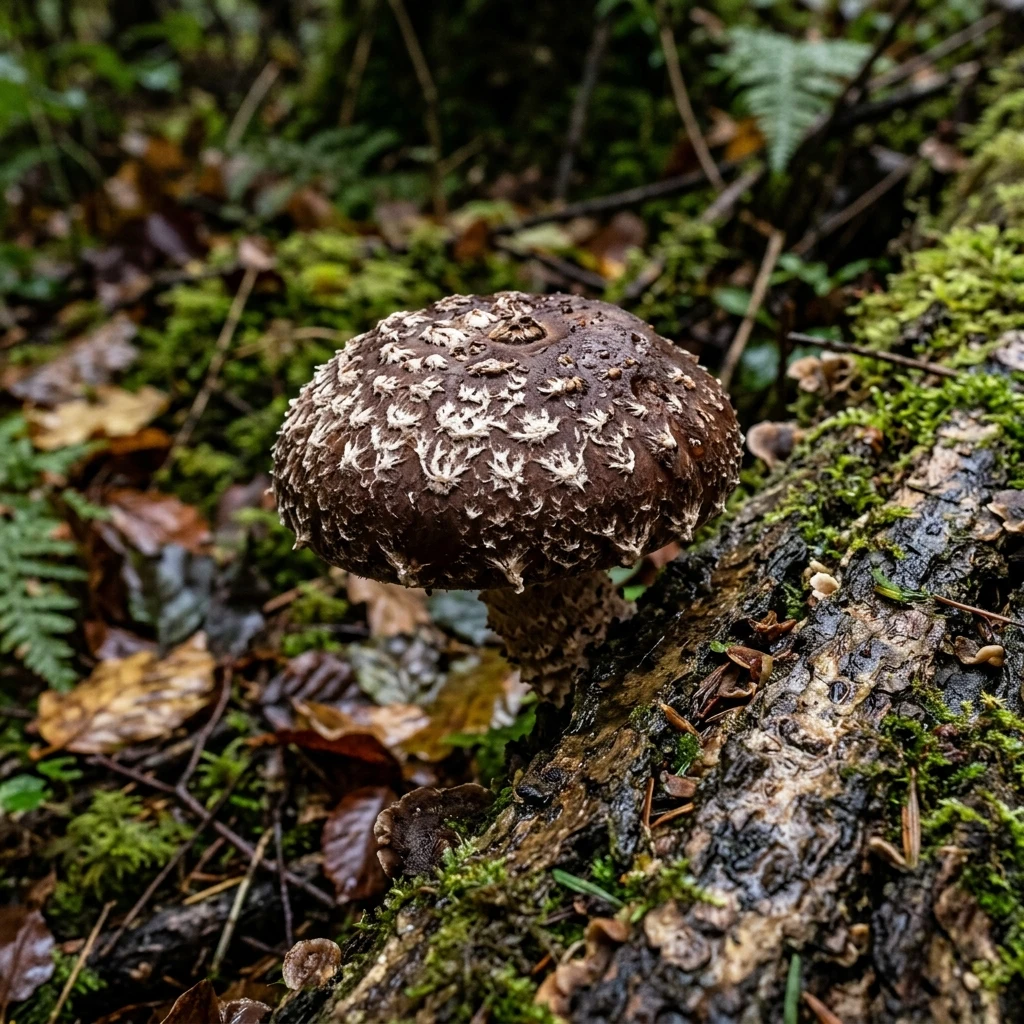
Shiitake is the king of Asian mushrooms and the second most cultivated edible fungus in the world. Native to East Asia, this wood-decay polypore grows on decaying oak and chestnut logs, producing broad, brown caps decorated with delicate white flocking scales, celebrated for its rich, smoky, and intensely savory umami flavor.


Environment Icon
Environment Hardwood Logs / Indoor Sawdust Blocks
Humidity Icon
Humidity High Humidity (85-90%)
Substrate Icon
Substrate Decaying Oak/Chestnut Logs
Cap Diameter Icon
Cap Diameter 5cm - 12cm
Edibility Icon
Edibility Choice Edible
Botanical macro photography of Shiitake (Lentinula edodes) - Plant AI care database

How to Identify Shiitake

A brown umbrella cap with white scales along the margins, cream-colored gills, and a tough fibrous stem.

  • Umbrella Brown Cap: Convex to flat brown cap, often showing beautiful white flocking scales or white cracks (flower shiitake).
  • Serrate Cream Gills: White-to-cream gills that are crowded and have slightly uneven or serrated edges.
  • Fibrous Tough Stem: A highly tough, fibrous, cream-colored stem that attaches centrally or slightly off-center to the cap.
💡 Cultivation Tip: Commercial growers 'shock' shiitake logs by soaking them in ice-cold water and tapping them with a hammer to stimulate massive fruiting.

Complete Scientific Cultivation & Identification

Follow our professional mycological parameters and identification guidelines for safe foraging.

Shiitake grows as a saprophyte on decaying hardwood logs (Oak, Chestnut, Beech). It causes white rot in the cellulose of the wood.
Requires moderate to high humidity (>80%). Mist logs daily during the fruiting phase, and soak the logs in cold water every 4 to 6 weeks to trigger a new flush.
Requires indirect ambient light to mature cap color and induce primordia formation. Direct sunlight will dry out the logs and kill the mycelium.
Caps are 5 to 12 cm, brown, umbrella-shaped. Underneath are crowded white gills that turn slightly brownish-spotted when bruised or aged.
Produces a pure white spore print. Cultivated globally using plug spawn hammered into pre-drilled holes in oak logs.
The flesh is white, dense, and firm. The stem is tough, woody, fibrous, covered in fine scales, and lacks a permanent ring or volva.
Harvest by cutting the stem close to the wood using sharp scissors or twisting gently. Clean off sawdust or wood bark before storage.
A choice edible of outstanding value. Known for its smoky, woody, and intensely savory umami flavor. Popular dried (which doubles the umami) or fresh in stir-fries, soups, and dashi.

Contains **lentinan**, a beta-glucan polysaccharide used clinically in cancer therapies, and **eritadenine**, which strongly lowers blood cholesterol.
CRITICAL WARNING: Highly safe. In the wild, avoid the toxic 'Sulfur Tuft' (Hypholoma fasciculare) which has greenish gills and is extremely bitter.
Always remove Shiitake stems before cooking as they are too woody to chew. Save the woody stems in the freezer and boil them to make highly aromatic mushroom stocks.

Are your Shiitake caps turning soggy, pale or moldy?

Avoid airtight plastic wrap, store in paper bags, and dry under the sun to boost Vitamin D.

Identify My Mushroom

Common Diseases & Wild Contamination

Green Trichoderma Mold

Symptoms: Symptoms: Powdery green mold appearing on the bark of shiitake logs or spawn holes.

Action: Action: Scrape off green mold immediately, wipe with weak hydrogen peroxide, and improve air circulation to keep logs healthy.

Soggy Gill Rot

Symptoms: Symptoms: Gills turn dark brown, soft, slimy, and leak moisture.

Action: Action: Discard immediately. The mushroom has waterlogged and started decomposing due to poor storage ventilation.

Frequently Asked Questions

Why does Dried Shiitake taste better than Fresh?

The drying process breaks down ribonucleotides and turns guanylic acid into highly potent flavor enhancers, concentrating and doubling the umami taste profile.

What is 'Flower Shiitake' (Donko)?

Donko is the highest grade of Shiitake. Grown in cold, dry winter conditions, the outer cap cracks into gorgeous white floral patterns, producing thick, dense, chewy flesh.

Is Shiitake safe to eat undercooked?

Never eat raw or undercooked Shiitake. underextracted lentinan can cause a rare toxic skin reaction called 'Shiitake Dermatitis', producing highly itchy red streaks. Always cook shiitake thoroughly.

How do you boost Vitamin D in Shiitake?

Place fresh shiitake mushrooms gills-up under direct sunlight for 2 to 4 hours. The ergosterol in the gills will absorb UV light and convert it into massive amounts of bioavailable Vitamin D.

Understand nature safely. Identify mushrooms instantly!

Get Started for Free