Shimeji Foraging & Identification Guide
Shimeji, or Beech Mushroom, is a highly popular edible fungus native to East Asia. Thriving in dense, beautiful clusters on decaying beech trees, this mushroom is cultivated commercially in sterilized bottles. Known as 'Buna-shimeji' (brown) and 'Bunapi-shimeji' (white), it is celebrated for its firm texture and rich, nutty flavor that emerges after thorough cooking.





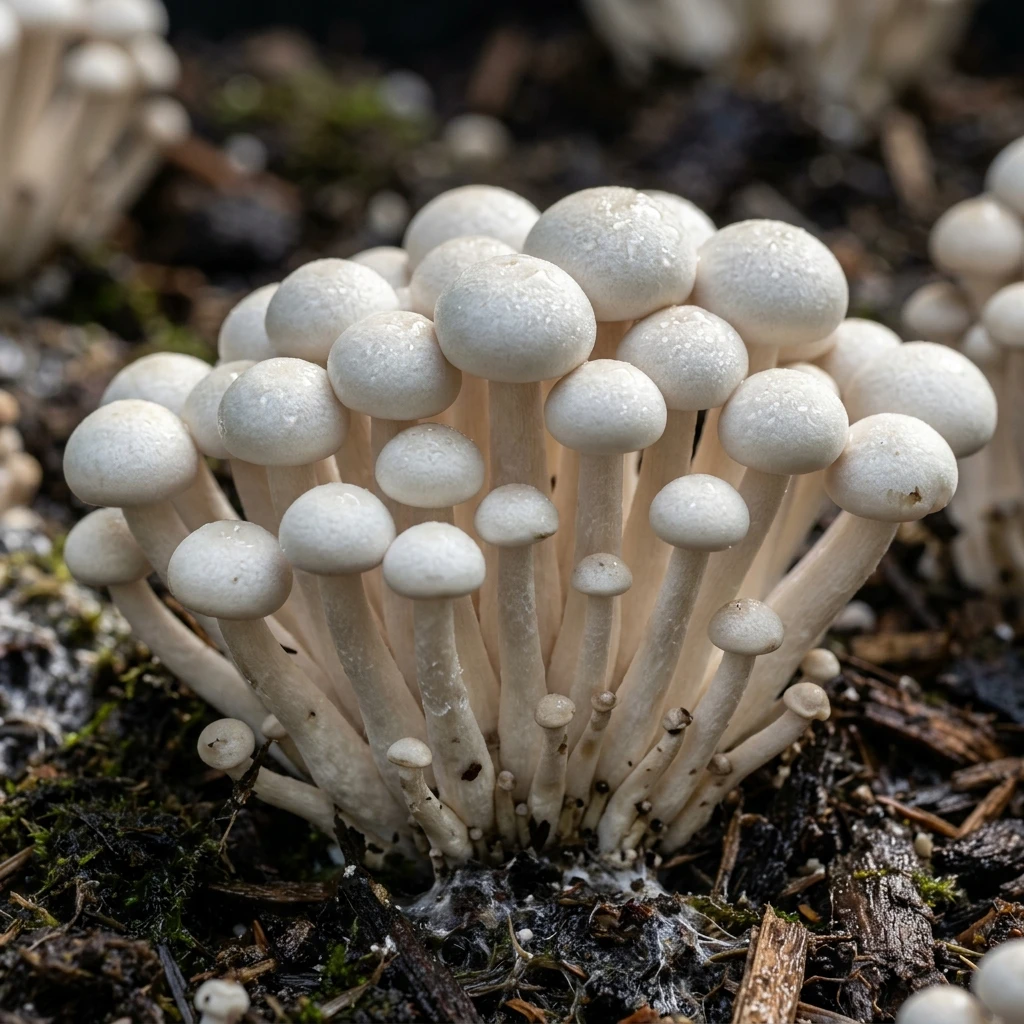
How to Identify Shimeji
A dense, spherical cluster of small, smooth-capped mushrooms with slender white stems and fine gills.
-
✔
Cap: Varies by species.
-
✔
Spore: Critical check.
Detailed Mycology Profile & Foraging Guide
Follow our detailed scientific field guide and environmental parameters to identify and study Shimeji safely.
Common Look-alikes & Foraging Danger
Bacterial Wet Rot
Symptoms: The dense base of the cluster turns soft, watery, dark brown, and smells sour.
Mycelial Overgrowth
Symptoms: Fine white fuzzy threads growing at the base of the stems, resembling mold.
Frequently Asked Questions
Why are Shimeji mushrooms so bitter when raw?
Raw Shimeji contains high levels of unique bitter compounds called terpenes and lectins. These compounds protect the mushroom in the wild. Cooking completely breaks down these bitter molecules, revealing a sweet, nutty taste.
What is the difference between Buna-shimeji and Bunapi-shimeji?
Buna-shimeji (Brown Beech) is the wild-type brown heirloom variety. Bunapi-shimeji (White Beech) is a UV-irradiated albino mutant selected by a Japanese mushroom company, prized for its snow-white color.
Do you need to wash Shimeji?
No. Commercial Shimeji is grown in sterile sawdust bottles and is very clean. Simply wipe off any sawdust clinging to the base stem with a dry paper towel before cooking.
How do you store a Shimeji cluster?
Keep the cluster intact. Wrap it in a dry paper towel, place it in a paper bag or a ventilated container, and store in the refrigerator. Consume within 7 to 10 days.