Slippery Jack Foraging & Identification Guide
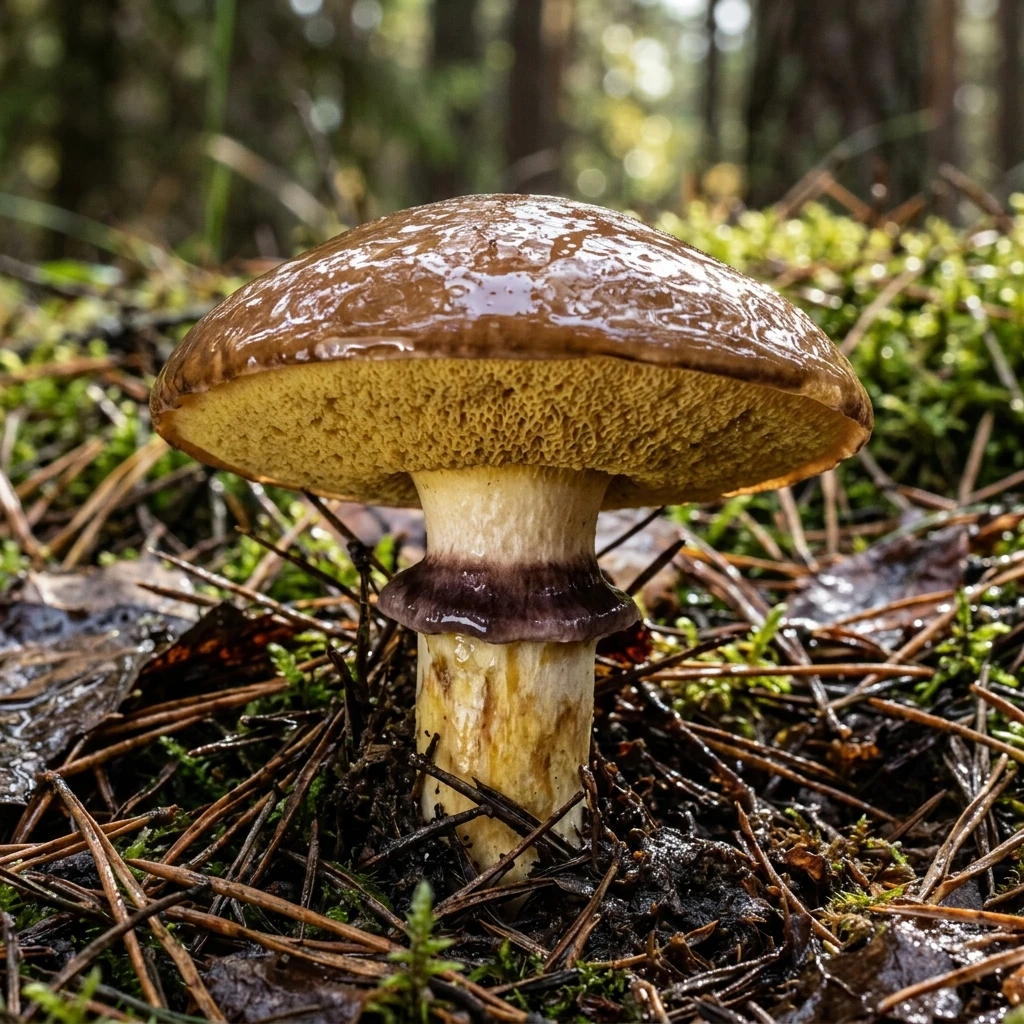
The Slippery Jack is a popular, highly common wild edible mushroom native to pine forests across Europe and North America. Growing in strict mycorrhizal association with pine trees, it is famous for its exceptionally sticky, slimy brown cap that glistens in damp weather. Lacking gills, it features a yellow, sponge-like pore layer underneath its cap and a prominent dark-purple ring on its stem, representing a highly prized autumn foraging subject.



How to Identify Slippery Jack
A sticky, slimy brown cap with a yellow pore layer underneath, a sturdy stem featuring a dark-purple ring.
-
✔
Cap: Varies by species.
-
✔
Spore: Critical check.
Detailed Mycology Profile & Foraging Guide
Follow our detailed scientific field guide and environmental parameters to identify and study Slippery Jack safely.
Common Look-alikes & Foraging Danger
Soggy Waterlogging
Symptoms: The mushroom cap becomes extremely soft, mushy, and waterlogged after heavy rains.
Worm Infestation
Symptoms: Small brown pinholes throughout the yellow pore layer and stem, indicating woodland larvae.
Frequently Asked Questions
Why must you peel the cap of the Slippery Jack?
The thick, gelatinous brown skin on the cap contains complex proteins and mucilage that the human digestive system cannot easily break down. Eating the skin will cause severe stomach cramps and watery diarrhea.
How do you distinguish Slippery Jack from a poisonous bolete?
Slippery Jack has a slimy brown cap, a yellow pore layer, does not stain blue when sliced, and features a prominent purple-white stem ring. Poisonous boletes like Satan's Bolete have blood-red pores, lack a stem ring, and stain dark blue immediately when cut.
Can you eat Slippery Jack raw?
No. Raw Slippery Jacks are extremely slimy, spongy, and difficult to digest, and can cause mild stomach poisoning. They should always be peeled and cooked thoroughly.
Why does it only grow near pine trees?
Slippery Jack is a mycorrhizal fungus that forms a mutually beneficial relationship with pine roots. The fungus provides the tree with water and minerals, while the tree provides the fungus with sugars.