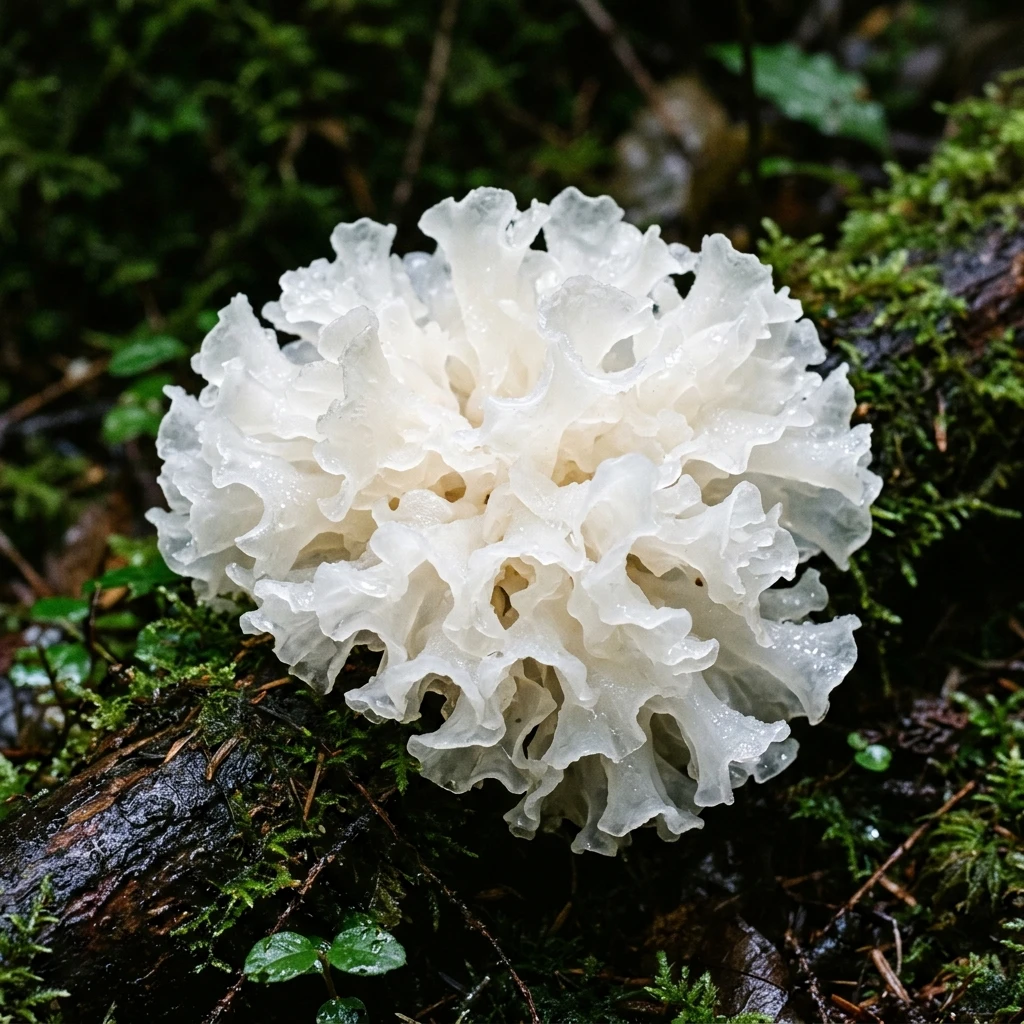
Tremella fuciformis

Snow Fungus Identification & Cultivation

Snow Fungus, or Silver Ear, is a highly prized gelatinous edible and medicinal mushroom native to tropical hardwood forests. Forming a gorgeous, rosette-like clump of snow-white, ruffled jelly lobes, this unique fungus is parasitic on wood-decaying pioneer fungi. Celebrated in Asian medicine as the ultimate skin-nourishing superfood, it is widely used in sweet dessert soups.


Environment Icon
Environment Tropical Hardwood / Parasitic Association
Humidity Icon
Humidity High Humidity (90-95%)
Substrate Icon
Substrate Parasitic on Annulohypoxylon Fungi
Cap Diameter Icon
Cap Diameter 5cm - 15cm
Edibility Icon
Edibility Choice Edible / Medicinal
Botanical macro photography of Snow Fungus (Tremella fuciformis) - Plant AI care database

How to Identify Snow Fungus

A snow-white, highly frilly rosette of delicate, translucent, gelatinous lobes growing on decaying logs.

  • Frilly White Rosette: Beautiful, flower-like rosette composed of highly folded, ruffled snow-white lobes.
  • Translucent Jelly: The entire structure is soft, gelatinous, and semi-translucent, resembling fine porcelain.
  • Lobe-like Texture: Lacks standard cap, gills, or stem, forming a cluster of interlocking gelatinous sheets.
💡 Beauty Tip: Snow Fungus contains rich polysaccharides that mimic hyaluronic acid. Simmering it into a thick soup creates a gelatinous collagen-like broth prized for skin hydration.

Complete Scientific Cultivation & Identification

Follow our professional mycological parameters and identification guidelines for safe foraging.

Grows in warm, humid forests. It is a mycoparasite, meaning it parasitizes the wood-decaying fungus *Annulohypoxylon archeri* in decaying hardwood logs.
Requires extreme humidity (90-95%) and strict climate control to fruit. Mist heavily and provide continuous damp air in the cultivation room.
Requires low indirect ambient light. Direct sun will dry the delicate lobes and turn the snow-white color to a dull yellow.
No cap or gills. Spores are produced on the entire surface of the frilly gelatinous white lobes.
Produces a white spore print. Commercial cultivation requires a co-culture inoculating both *Tremella* and its host wood-rot fungus together.
Flesh is delicate, soft, highly gelatinous, and pure white. Lacks stem, ring, or base volva, attaching directly to the host fungus on wood.
Harvest by slicing the central attachment base cleanly off the wood. Handle very gently, as the wet gelatinous lobes bruise and tear easily.
A highly valued choice edible. Delicate, slippery, and gelatinous texture. Simmered for hours with red dates, lotus seeds, and rock sugar to make sweet 'Silver Ear Soup'.
Packed with **Tremella polysaccharides**, which hold up to 500 times their weight in water, offering outstanding skin-hydrating, anti-aging, and lung-moistening benefits.
CRITICAL WARNING: Highly safe. There are no poisonous look-alikes. Ensure wild specimens are pure white and soft; avoid gathering dirty, rotting clumps.
When preparing dried Snow Fungus, cut away the hard, yellow-orange circular core at the bottom after rehydration. This core is tough and wood-bound, and won't soften during cooking.

Is your Snow Fungus turning yellow, melting or growing mold?

Cut away tough yellow bases, store dried in airtight jars, and avoid leaving wet clusters in stagnant air.

Identify My Mushroom

Common Diseases & Wild Contamination

Yellowing Discoloration

Symptoms: Symptoms: The snow-white lobes turn dull yellow-brown, dry, and lose their translucent beauty.

Action: Action: Cut off the yellowed sections. Yellowing is caused by low humidity, dry drafts, or over-exposure to ambient light.

Soggy Melt (Autolysis)

Symptoms: Symptoms: The delicate white lobes turn watery, slimy, and collapse into a white paste.

Action: Action: Harvest sooner. Stagnant, waterlogged air with zero ventilation triggers decomposition. Improve room air circulation.

Frequently Asked Questions

Why is Snow Fungus called the 'Vegetarian Bird's Nest'?

When simmered for hours, Snow Fungus releases dense natural gelatins that mimic the texture and skin-beautifying properties of expensive bird's nest soup, offering a sustainable, vegan alternative.

What are the medicinal benefits of Snow Fungus?

In traditional Asian medicine, it is highly valued for moisturizing the lungs, clearing internal heat, improving skin hydration, boosting immune cells, and supporting cardiovascular health.

How do you prepare dried Snow Fungus?

Soak the dried fungus in cold water for 20 to 30 minutes until it expands into a soft, fluffy white flower. Trim away the hard, yellow circular root base, tear the lobes into small bite-sized pieces, and simmer.

Can you use Snow Fungus on your face?

Yes! Pure Snow Fungus extract is a highly popular ingredient in premium organic skincare serums because its molecular structure is smaller than hyaluronic acid, allowing it to penetrate skin cells deeper.

Understand nature safely. Identify mushrooms instantly!

Get Started for Free