Stag's Horn Fungi Foraging & Identification Guide
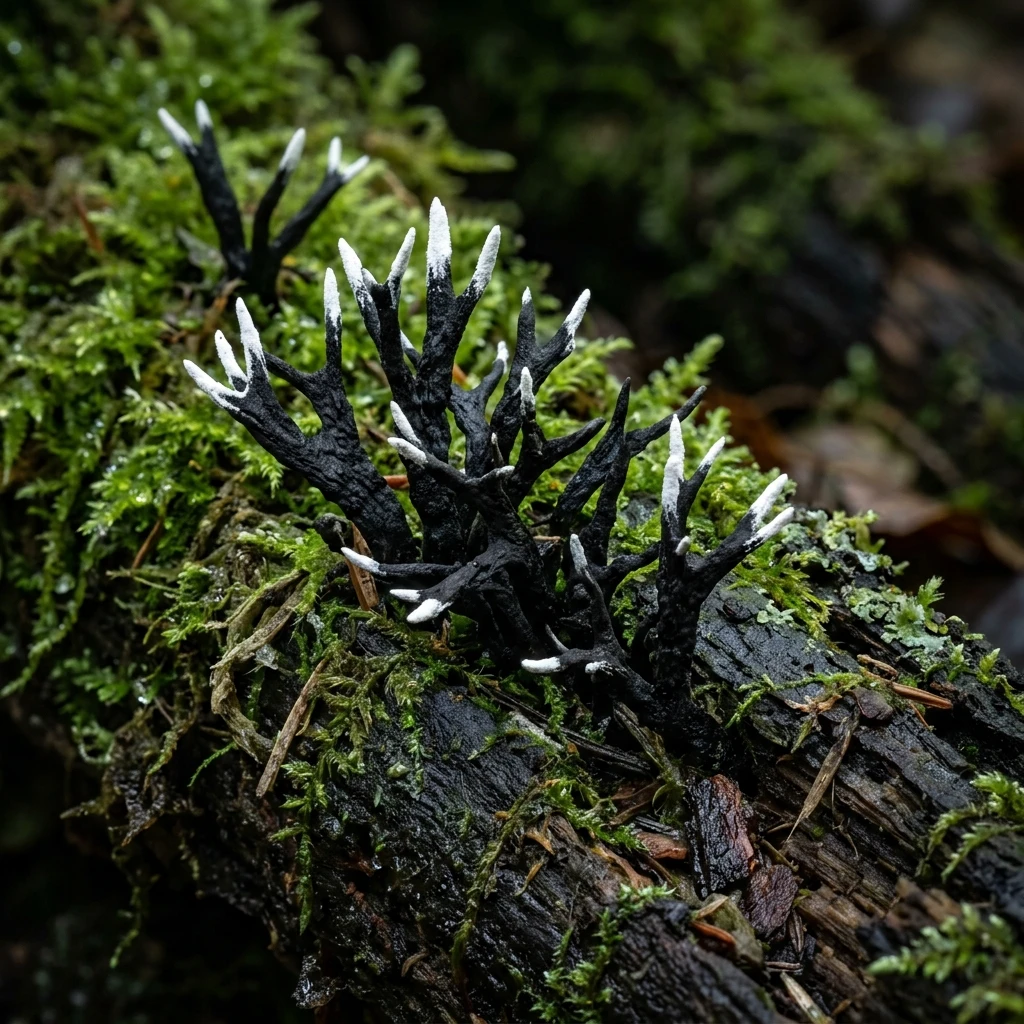
The Stag's Horn Fungi, also known as the Candle-Snuff Fungus or Carbon Antlers, is a highly common, tough, and inedible wild fungus native to temperate woodlands across Europe and North America. Growing in dense, elegant clusters on decaying deciduous hardwood logs and stumps, it is named for its striking, branched structure resembling tiny deer antlers. Initially black at the base and covered in a bright white powder at the branched tips, it is a magnificent example of wood-decaying saprophytic fungi.





How to Identify Stag's Horn Fungi
Tough, branched black stalks resembling tiny deer antlers, with tips covered in a fine white powdery dust.
-
✔
Cap: Varies by species.
-
✔
Spore: Critical check.
Detailed Mycology Profile & Foraging Guide
Follow our detailed scientific field guide and environmental parameters to identify and study Stag's Horn Fungi safely.
Common Look-alikes & Foraging Danger
Blackening Tips (Mature Stage)
Symptoms: The bright white powdery tips turn completely black, bumpy, and rough.
Dry Brittleness
Symptoms: The antler-like stalks feel extremely dry, woody, and brittle during dry summer spells.
Frequently Asked Questions
Why are the tips of Stag's Horn Fungi white?
The white powder on the branched tips consists of millions of asexual spores called conidia. This allows the fungus to reproduce rapidly during the spring and summer before developing its black sexual stage in the autumn.
Does Stag's Horn Fungus kill living trees?
No. Xylaria hypoxylon is strictly saprophytic, meaning it only feeds on dead, decaying wood. It does not infect or harm living trees, and is a vital decomposer in forest ecosystems.
How tough is this fungus?
It is extremely tough, leathery, and woody. It has a carbonaceous (charcoal-like) outer crust and a dense, corky white interior, making it completely impossible to chew or digest.
How do you tell it apart from Dead Man's Fingers?
Stag's Horn Fungi are very slender, grow in branched antler-like shapes, and have white tips. Dead Man's Fingers (Xylaria polymorpha) are thick, swollen, club-like, unbranched, and completely black, resembling fingers.