Summer Bolete Foraging & Identification Guide
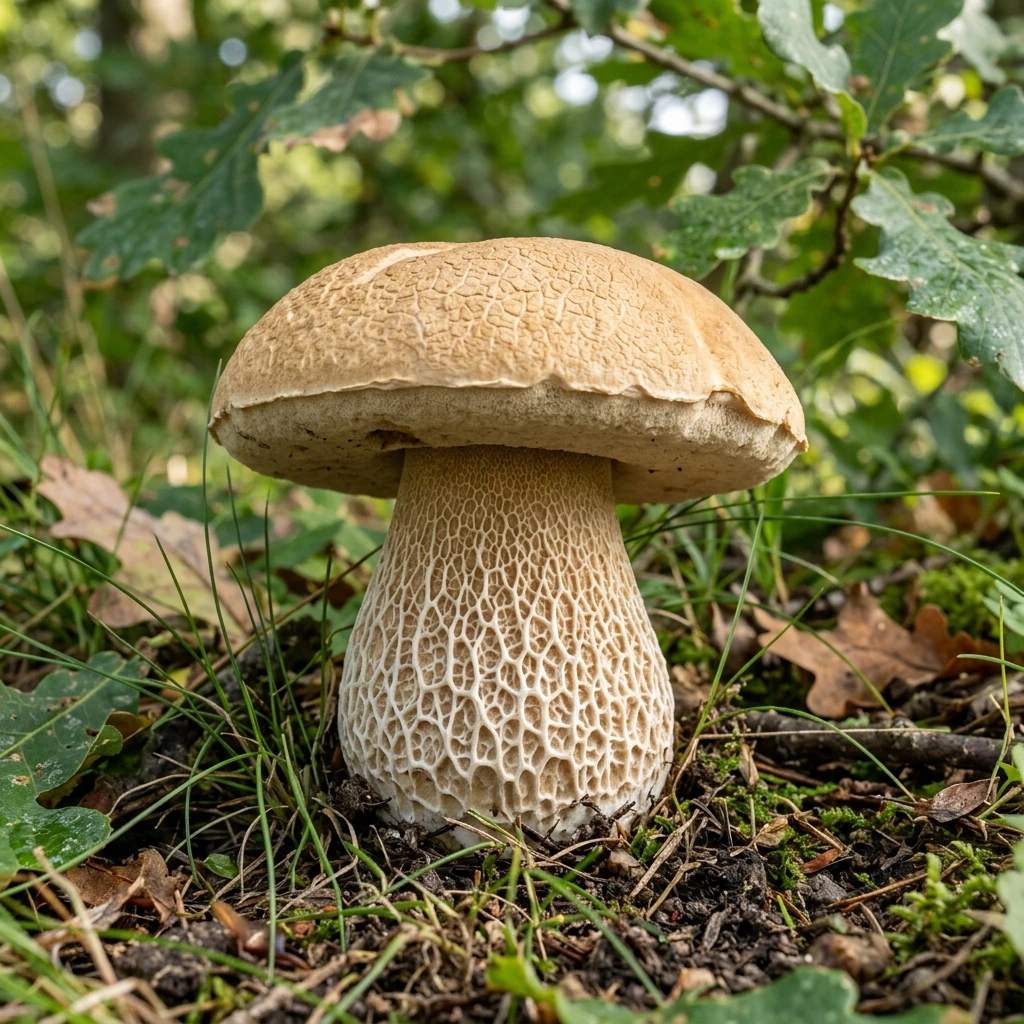
The Summer Bolete, also known as the Reticulated Bolete, is a highly celebrated, choice wild edible mushroom native to broadleaf forests across Europe and temperate Asia. Emerging in the warm moisture of early summer (much earlier than the standard autumn Porcini), it represents a premier treat for forest foragers. It features a pale tan-to-beige cap that frequently cracks in dry weather to form a beautiful mosaic pattern, and a thick stem that is covered from top to bottom in a highly prominent, raised white net-like pattern (reticulation).





How to Identify Summer Bolete
A pale tan-to-beige velvety cap that cracks in dry weather, with a thick stem completely covered in raised white reticulation.
-
✔
Cap: Varies by species.
-
✔
Spore: Critical check.
Detailed Mycology Profile & Foraging Guide
Follow our detailed scientific field guide and environmental parameters to identify and study Summer Bolete safely.
Common Look-alikes & Foraging Danger
Severe Cap Cracking (Drought)
Symptoms: The tan cap skin splits into deep, blocky cracks, exposing the white flesh underneath.
Soggy Softness (Aging)
Symptoms: The cap feels spongy-soft, and the pore layer is soggy, dark olive-yellow, and wet.
Frequently Asked Questions
How does Summer Bolete differ from standard Autumn Porcini?
The Summer Bolete (Boletus reticulatus) fruits much earlier (early summer vs autumn), has a velvety tan cap that cracks easily, and has a raised white net-like pattern that covers the entire stem, whereas Porcini has a smooth, dark cap and netting only on the upper stem.
Why does the cap skin crack?
Because it fruits in warm summer months. When hot, dry winds blow across the forest floor, the delicate velvety cap skin dries and shrinks rapidly, cracking into a beautiful mosaic pattern.
Is the Summer Bolete safe for beginners?
Yes. It has no deadly look-alikes. Its white non-blueing flesh and sponge-like pores make it very safe, provided you perform a taste-test to rule out the extremely bitter Tylopilus felleus.
How do you store fresh Summer Boletes?
Because they fruit in summer, they decay very quickly. Slice them thinly and dry them in a food dehydrator immediately, or sauté them in butter and freeze them in airtight bags.