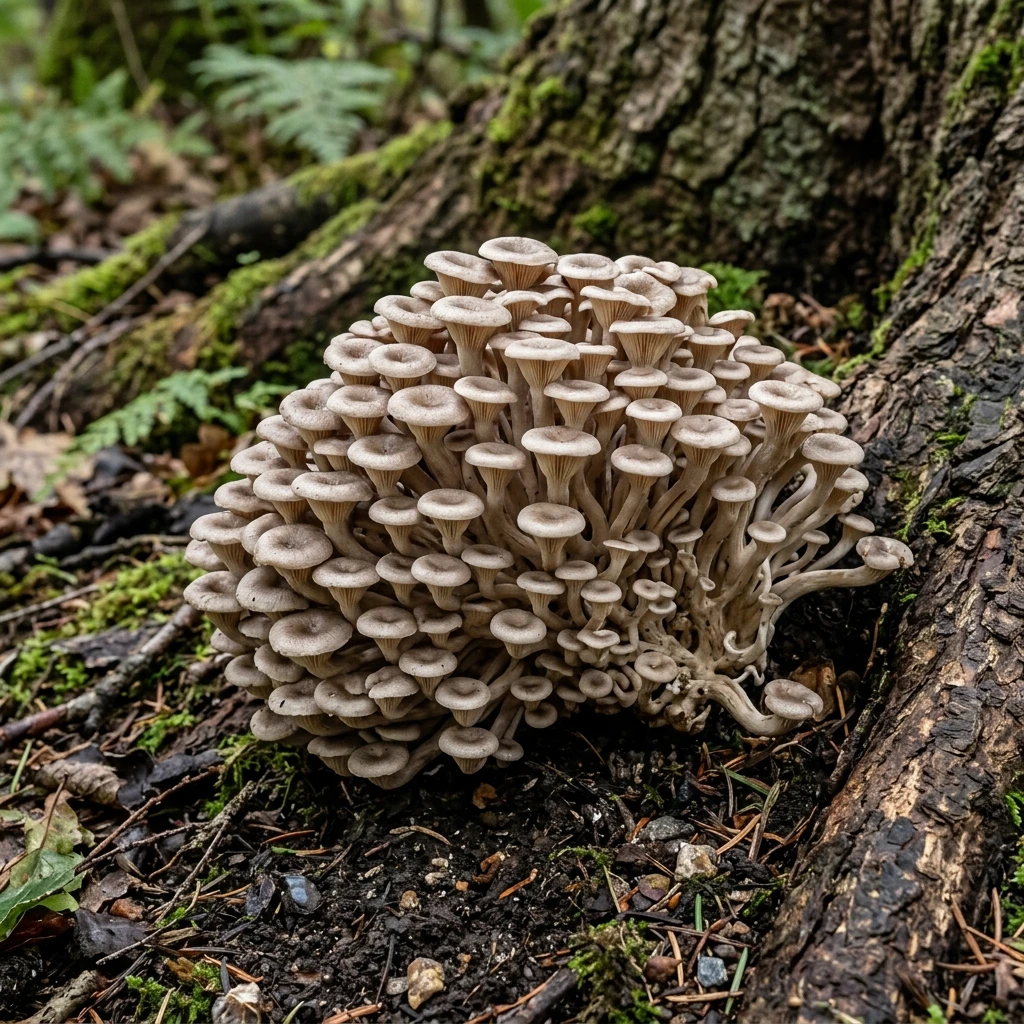
Polyporus umbellatus

Umbrella Polypore Foraging & Identification Guide

The Umbrella Polypore, or 'Zhulinger', is a highly unique and prized edible and medicinal fungus native to temperate beech and hardwood forests. It grows subterraneanly as a black potato-like sclerotium, from which emerges a massive, breathtaking rosette cluster comprising hundreds of small, brown funnel-shaped caps. Widely revered in Asian medicine, it is highly studied today for its powerful lymphatic and water-balancing properties.


Environment Icon
Environment Broadleaf Forests / Beech Woods
Humidity Icon
Humidity High Humidity (80-90%)
Substrate Icon
Substrate / Host Subterranean Oak/Beech Roots
Size Icon
Size 10cm - 35cm cluster
Category Icon
Category Choice Edible / Medicinal
Botanical macro photography of Umbrella Polypore (Polyporus umbellatus) - Plant AI care database

How to Identify Umbrella Polypore

A massive rosette cluster composed of hundreds of small, pale-brown funnel-shaped caps branching from a single stem base.

  • Cap: Varies by species.
  • Spore: Critical check.
💡 Plant AI Tip: Umbrella Polypore grows subterraneanly from a black potato-like sclerotium. Gently dig the soil under oak trees to find the subterranean black sclerotium.

Detailed Mycology Profile & Foraging Guide

Follow our detailed scientific field guide and environmental parameters to identify and study Umbrella Polypore safely.

Grows in symbiotic association with the roots of Oak, Beech, and Maple trees. Mycelium forms a subterranean black sclerotium in high-organic forest soils.
Requires high humidity (80-90%) and warm autumn temperatures to trigger fruiting. Emerge rapidly in forest leaf litter after heavy autumn rain.
Thrives in deep shade under forest canopies. Dappled light helps mature the pale tan-brown cap color, while the base remains shaded.
No gills. The caps are 2 to 4 cm wide, smooth, tan-brown. Underside of each cap features a dense white pore layer that runs down the branched stem.
Produces a pure white spore print. Easily cultivated on sawdust spawn mixed with sterilized oak woodchips in shade houses.
Flesh is thin, white, firm, and slightly brittle near the margins. The stem is highly branched, white, tough, and lacks a ring.
Harvest by slicing the branched stem at the soil base. Dig carefully to harvest the subterranean black sclerotium which is highly medicinal.
A choice edible of outstanding quality. Known for its firm, crunchy texture and mild woody flavor. Sauté in butter, or roast in hot pots.
Extremely famous for containing Polyporusterones, which boost kidney water drainage, treat chronic edema, and support natural lymphatic flow.
CRITICAL WARNING: Highly safe. Watch out for 'Maitake' (Grifola) which has overlapping fan-shaped fronds (not circular funnel caps) and grows at tree bases. Both are excellent edibles.
When preparing Umbrella Polypore, use the fresh branched cap clusters for culinary stir-fries, and dry the subterranean black sclerotium to brew medicinal diuretic teas.

Is your Umbrella Polypore showing signs of rot, decay or discoloration?

Ensure foraging safety and keep your specimens healthy. Take a photo with Plant AI to identify wild mushrooms and get instant toxicity warnings.

Diagnose Specimen Now

Common Look-alikes & Foraging Danger

Woodland Insect Infestation

Symptoms: Small woodland bugs crawling inside the highly branched white stem cavities.

Action: Soak the branched cluster in cold salted water for 10 minutes to flush out woodland insects, then dry thoroughly before cooking.

Autolysis Soft Rot

Symptoms: Caps turn soft, soggy, collapse, and melt into a foul-smelling dark liquid in stagnant air.

Action: Harvest sooner. Stagnant, wet air with zero ventilation triggers decomposition. Improve room ventilation immediately.

Frequently Asked Questions

Why is it called 'Umbrella Polypore'?

The giant cluster is composed of hundreds of small, circular tan-brown caps growing on curved branched stems, resembling a dense forest of tiny open umbrellas.

What are the medicinal benefits of Zhuling?

Zhuling (Umbrella Polypore) is a famous kidney and bladder tonic. It effectively promotes urination, treats chronic edema, reduces fluid retention, and assists in bladder cancer recovery.

Can you eat the subterranean sclerotium?

No. The subterranean black sclerotium is extremely tough, woody, and granular. It is strictly dried, sliced, and boiled in medicinal decoctions, while the branched cap rosette is eaten.

How do you store fresh Umbrella Polypores?

Tear into smaller clusters, wrap in dry paper towels, and store in a cardboard box in the fridge. Consume within 5 days, or sauté in butter and freeze.

Understand nature safely. Identify mushrooms instantly!

Get Started for Free