Velvet Bolete Foraging & Identification Guide
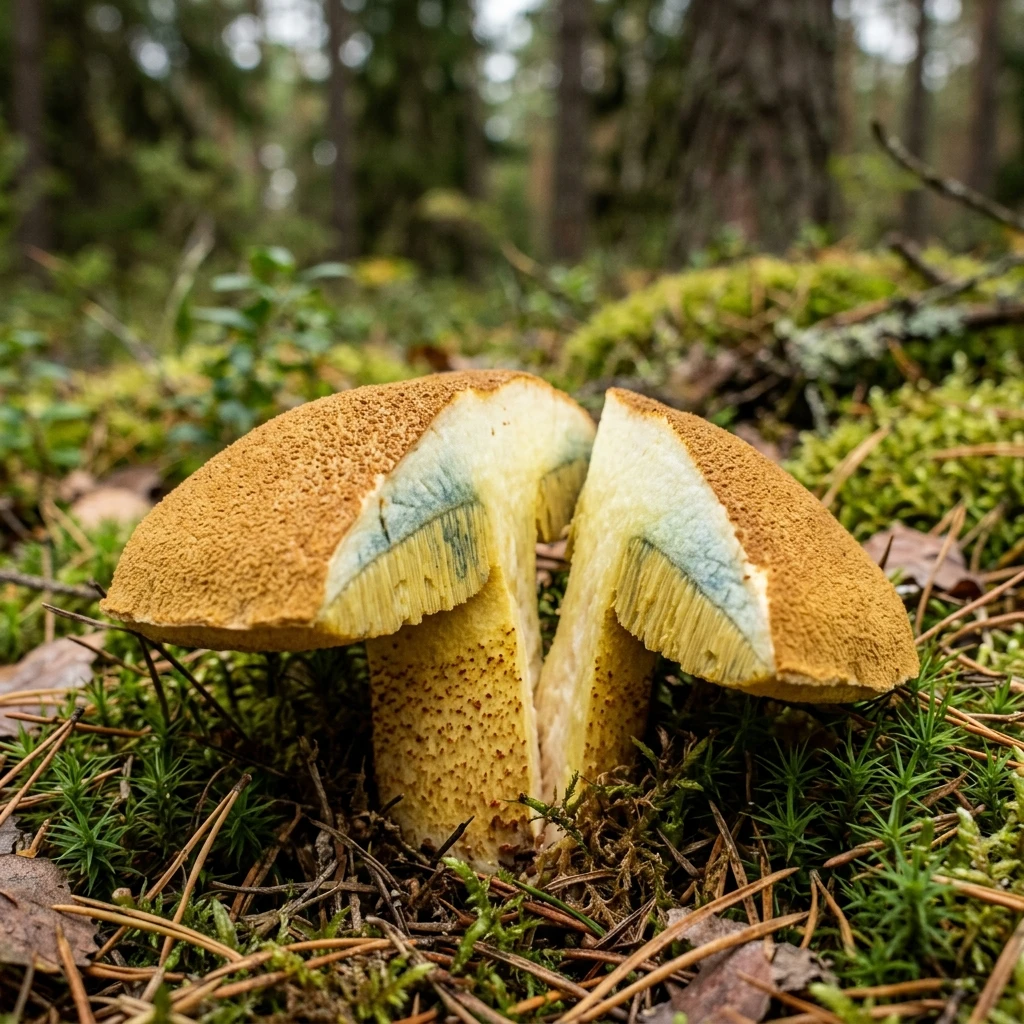
The Velvet Bolete, also known as the Variegated Bolete, is a highly common and edible wild mushroom native to coniferous forests across Europe and temperate Asia. Growing in mycorrhizal symbiosis with Pine trees, it is a classic autumn foraging target. It is instantly recognizable by its dull ochre-yellow to sandy-brown cap covered in a highly unique, fine, velvety or sand-textured coating of tiny scales, its dingy yellow stem, and its dense yellow pore layer that stains a slow, faint, but distinct blue-green when bruised or sliced.




How to Identify Velvet Bolete
A sandy-textured yellow-brown cap on a dingy stem with tiny pores underneath, staining slow faint blue-green when cut.
-
✔
Cap: Varies by species.
-
✔
Spore: Critical check.
Detailed Mycology Profile & Foraging Guide
Follow our detailed scientific field guide and environmental parameters to identify and study Velvet Bolete safely.
Common Look-alikes & Foraging Danger
Slimy Softness (Aging)
Symptoms: The sandy-velvety cap loses its dry texture, turning extremely slimy, soggy, and mushy.
Stem Gnat Tunneling
Symptoms: The stem base is riddled with tiny brown tunnels and feels soft.
Frequently Asked Questions
Why is it called 'Velvet Bolete'?
It is named the 'Velvet Bolete' because its cap surface is covered in a very fine, dense coating of tiny, velvety hair-like scales that give it a soft, sandy, or suede-like texture to the touch.
Why does it stain blue when cut?
It is a natural chemical oxidation. Slicing the yellow flesh exposes compounds to oxygen, triggering a slow enzymatic reaction that converts colorless precursors into a pale blue-green pigment.
Does it have a bad smell?
When raw, it can have a slightly strange, metallic, or faint chlorine-like odor. However, this is completely normal and safe. Slicing and cooking the mushroom thoroughly in a hot pan completely destroys these volatile compounds, leaving only a delicious, mild mushroom flavor.
Can you eat the stem?
Yes, provided the stem is young, solid, and free of insect tunnels. The stem has a firm, meaty texture that is excellent when sautéed.