White Truffle Foraging & Identification Guide
The Italian White Truffle, or 'Trifola d'Alba', is the most expensive and luxurious culinary ingredient in the world. Native to the damp, calcareous soils of Northern Italy, this subterranean mycorrhizal fungus grows exclusively under the roots of oak, hazel, and poplar trees. It is legendary for its intense, complex aroma of garlic, cheese, and honey.





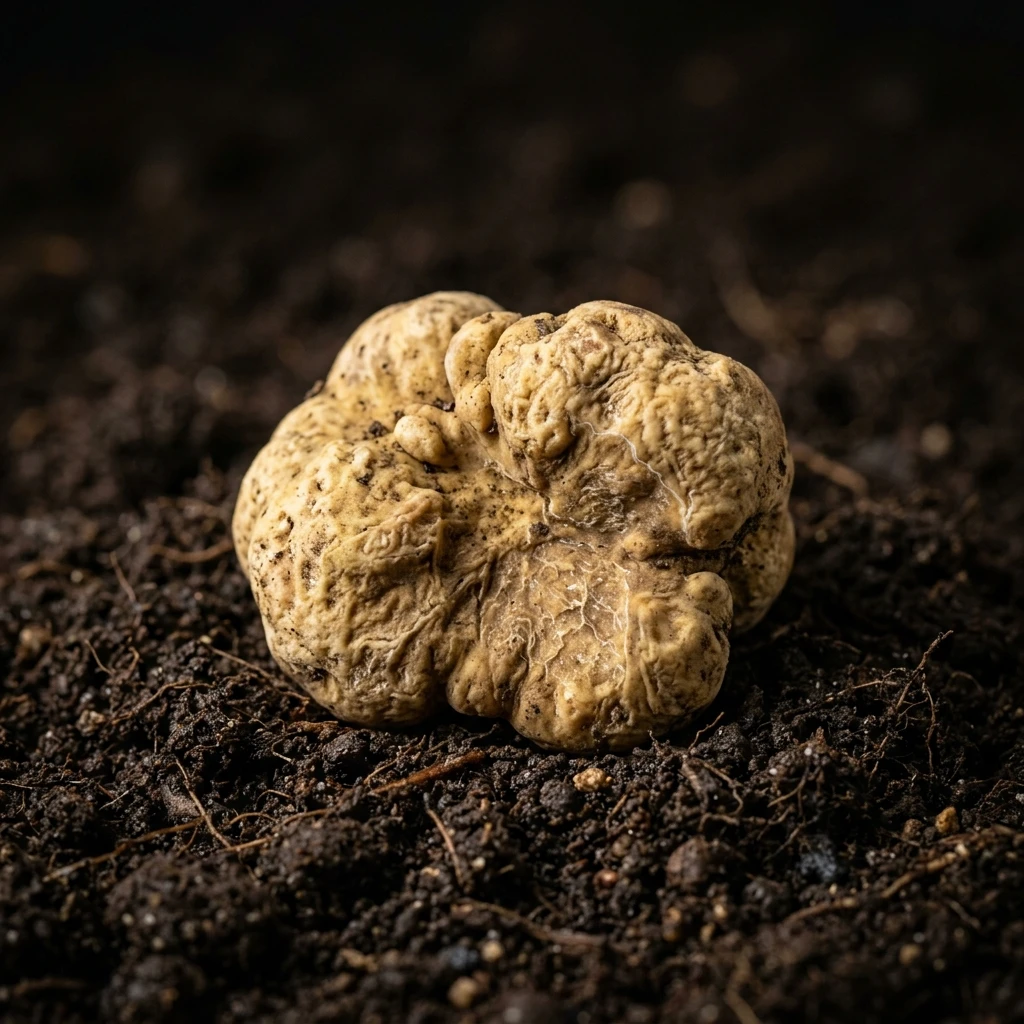
How to Identify White Truffle
A subterranean, potato-like cream-colored tuber with a smooth, velvety skin and highly intricate interior marbling.
-
✔
Cap: Varies by species.
-
✔
Spore: Critical check.
Detailed Mycology Profile & Foraging Guide
Follow our detailed scientific field guide and environmental parameters to identify and study White Truffle safely.
Common Look-alikes & Foraging Danger
Excessive Moisture Sweating
Symptoms: Velvet skin turns wet, slimy, and develops white mold fuzz.
Scent Dissipation
Symptoms: The truffle smells faint, dusty, or like ammonia.
Frequently Asked Questions
Why are White Truffles so expensive?
White truffles cannot be cultivated commercially. They only grow in specific regions in Northern Italy and Croatia, have a short autumn season, and must be dug up one by one by hand.
How do you store White Truffles correctly?
Wrap the truffle in a clean paper towel, place it in a hermetically sealed glass jar, and store in the refrigerator. Change the paper towel every day. You can add raw arborio rice to the jar to absorb moisture.
Can Truffle Oil replace real White Truffle?
No. Most commercial truffle oils are synthetic, made using lab-created 2,4-dithiapentane. They lack the complex, multi-layered depth of a genuine shaved white truffle.
How do you clean a fresh White Truffle?
Clean only right before eating. Brush off loose soil with a dry, soft-bristled toothbrush. Rinse very briefly under cold water if necessary, pat dry immediately with paper towels, and slice.