Velvet Shank Foraging & Identification Guide
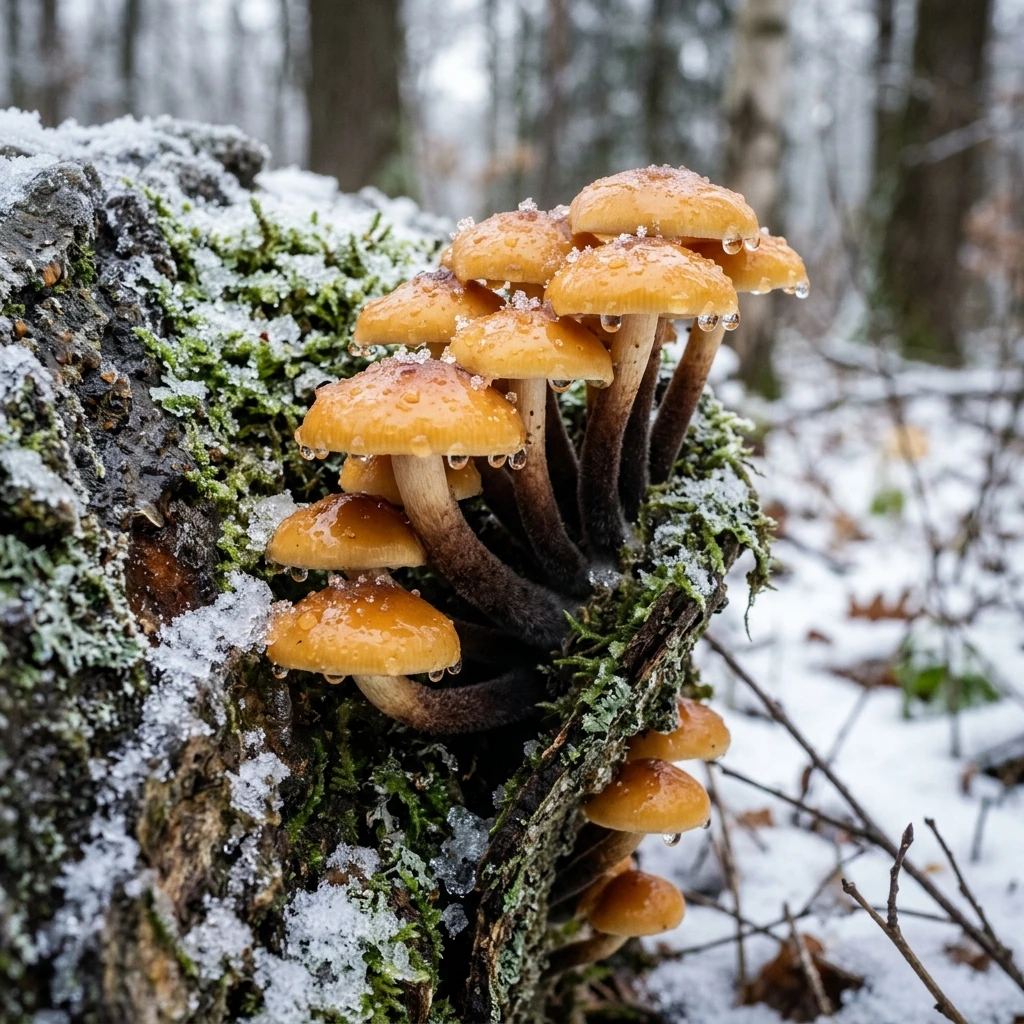
The Velvet Shank, also known as the Winter Mushroom or Wild Enoki, is a highly prized, choice wild edible mushroom native to temperate zones across the Northern Hemisphere. Growing in dense, glowing clusters of orange-yellow caps on decaying hardwood trees, it is a spectacular winter sight. Unlike its cultivated supermarket counterpart (which is grown in the dark to be long, thin, and white), the wild Velvet Shank features beautiful, sticky, golden-orange caps and a distinct, tough stem that is covered in dense, dark-brown velvet-like hairs near the base.





How to Identify Velvet Shank
Sticky orange-yellow caps growing in tight clusters on wood, with a stem that turns dark brown and velvety at the base.
-
✔
Cap: Varies by species.
-
✔
Spore: Critical check.
Detailed Mycology Profile & Foraging Guide
Follow our detailed scientific field guide and environmental parameters to identify and study Velvet Shank safely.
Common Look-alikes & Foraging Danger
Rust-Brown Spore Dust
Symptoms: The caps in your cluster are dusted with a distinct, rusty-brown powdery coating.
Cap Dryness and Fading
Symptoms: The golden cap loses its slippery, sticky gel layer, turning dry, pale yellow, and brittle.
Frequently Asked Questions
Why is it called 'Velvet Shank'?
It is named 'Velvet Shank' because its stem base is covered in a dense, beautiful layer of dark brown-to-black, velvety-soft hairs, which contrast sharply with the golden-orange cap.
How do you tell wild Velvet Shank apart from cultivated Enoki mushrooms?
They look like completely different species! Cultivated Enoki is grown in dark, high-CO2 jars, making it long, thin, stringy, and pure white. Wild Velvet Shank grows in open air and light, developing a wide, sticky orange-yellow cap, a thick stem, and dark velvety base hairs.
Can you forage it during freezing winter months?
Yes. It is one of the few mushrooms that thrives in freezing cold. Its cells contain natural antifreeze compounds, allowing the mushroom to freeze solid, thaw out when the sun shines, and continue releasing spores without damage.
Why is the spore print test mandatory for this mushroom?
Because it grows on the same logs and looks virtually identical to the lethal Galerina marginata (Funeral Bell). The only absolute way to tell them apart is the spore print: Galerina marginata has rust-brown spores, while Flammulina velutipes has white spores. Never skip this test!