Identify Wood Blewit (Clitocybe nuda) - Plant AI mycology guides
Home / Mushrooms / Wood Blewit

Wood Blewit

Scientific Name: Clitocybe nuda

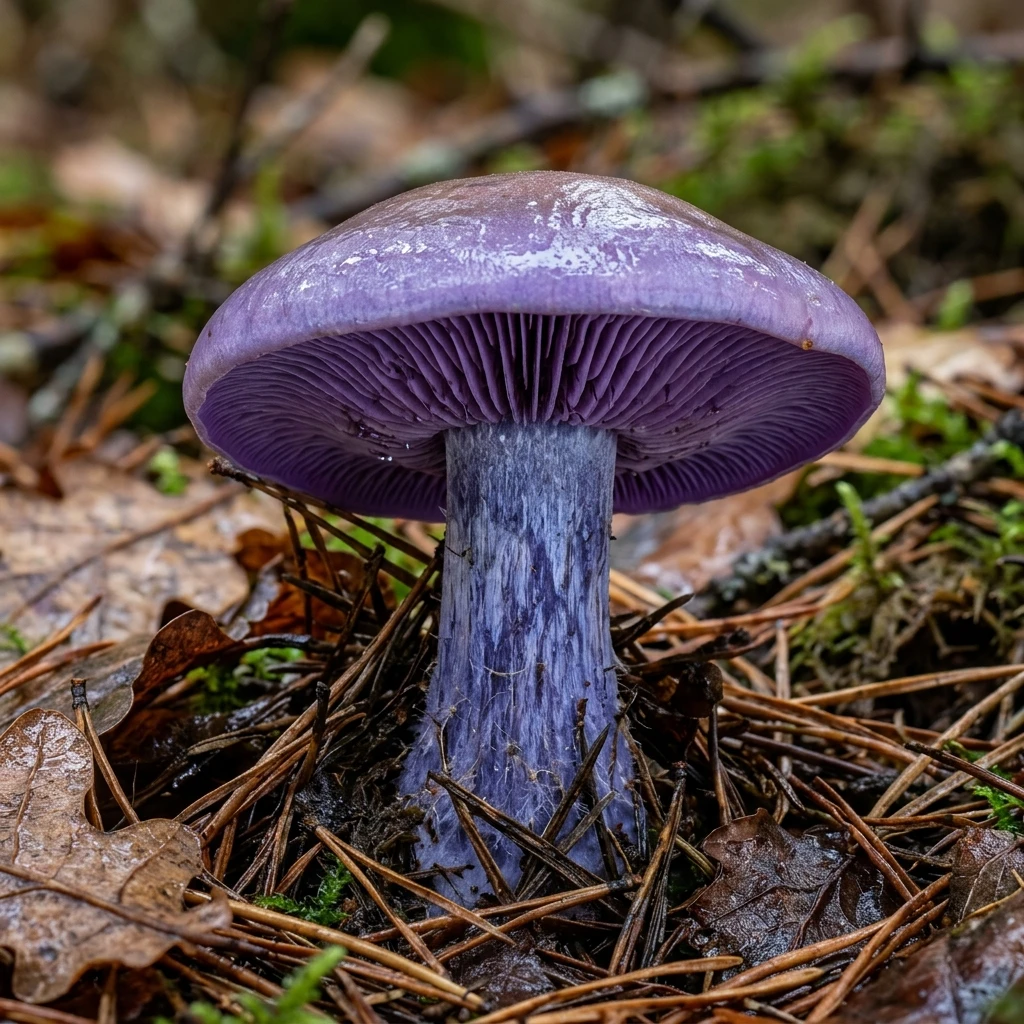
The Wood Blewit is a choice, highly popular wild edible mushroom famous for its striking violet-blue color and elegant floral, orange-like fragrance. Found growing in dense leaf litter and compost piles in temperate forests across Europe and North America during late autumn, it features a thick, fleshy purple cap and beautiful amethyst-violet gills. Highly prized by autumn mushroom hunters, it represents a crucial study in cap color changes and spore print verification.


🌍 Environment Deciduous & Conifer Woods
💧 Humidity Moderate Humidity (65-75%)
🪵 Substrate / Host Dense Leaf Litter / Compost
📏 Size 5cm - 12cm
🍄 Category Edible
🔍

How to Identify

A fleshy violet-to-brown cap with beautiful purple gills, and a thick, fibrous bluish-purple stem with no ring.

  • Fleshy Violet Cap: The cap is 5 to 12 cm, initial convex, turning flat or wavy, with a beautiful violet-blue color that turns brownish in the center with age.
  • Amethyst Gills: Gills are crowded, deep violet-purple, turning pale as spores mature, slightly attached to the stem.
  • Thick Purple Stem: Stem is thick, sturdy, fibrous-fleshy, bluish-purple, covered in fine white cottony fibers at the bulbous base.
🌸 Orange Scent: One of the easiest way to identify a true Wood Blewit is its unique fragrance. When fresh, the gills emit a highly pleasant, distinct scent resembling frozen orange juice or floral perfume.

Detailed Mycology Profile & Safety Guide

Click on any dimension to expand detailed field guides, substrate requirements, and safety warnings.

Grows in deciduous and coniferous forests, thriving on deep leaf litter, compost piles, pine needles, and woodchips. It is a saprophytic species that fruits in groups or rings in late autumn.
Requires cool autumn temperatures (5-12°C) and moderate humidity. It is one of the latest-fruiting mushrooms of the season, often surviving early winter frosts.
Thrives in shaded forest floors, under tree canopies. Shaded forest floor moisture helps maintain its beautiful purple cap color.
The cap is 5 to 12 cm, fleshy, violet-to-brown. Gills are crowded, deep violet-purple, producing a light pinkish spore print.
Produces a highly unique pale pinkish-to-cream spore print. This is the ultimate test to rule out toxic brown-spored look-alikes.
Flesh is thick, firm, pale purple, and lacks color change when cut. Stem is thick, sturdy, bluish-purple, lacking a ring or volva.
Harvest only firm, young purple specimens. Blewits must be cooked thoroughly; raw consumption can cause severe indigestion.
Choice edible. Fleshy cap has a rich, savory, slightly sweet flavor with a tender, meaty texture. Pairs exceptionally well with butter, garlic, cream, and wild game.
Rich in vitamin D, B vitamins, and bioactive compounds with proven antioxidant, antimicrobial, and immune-modulating properties.
CRITICAL WARNING: Extremely dangerous look-alike! Frequently confused with toxic, brown-spored **Purple Cortinarius** (Cortinarius) species. The toxic Cortinarius has **rusty-brown gills** in age, **rusty-brown spore print**, and a **web-like veil (cortina)** that leaves brown threads on the stem. True Wood Blewit has **pale pinkish spores**, **no veil**, and a pleasant **orange juice scent**. Always perform a spore print!
Because Blewits grow on compost and decaying leaves, they can easily accumulate heavy metals. Only forage for them in clean, unpolluted forests away from roadsides.
AI Diagnoser

Is your Wood Blewit growing moldy or decaying?

Take a photo with the Plant AI app to instantly diagnose fungal diseases, green mold, or wood decay, and get expert botanical recommendations in 1 second.

Scan Mushroom Now
🦠

Cap Browning (Aging)

Symptoms: The beautiful violet cap turns a dull, pale grayish-brown color starting from the center.

Action: Action: This is natural aging. As Blewits mature, their purple color fades to brown, but they remain edible if the gills are still clean. Always verify the pinkish spore print.

🍂

Rusty Brown Gills & Web Veil

Symptoms: Gills are rusty-brown, and the upper stem is covered in brown, sticky hair-like threads.

Action: Action: DISCARD IMMEDIATELY. This is a toxic Cortinarius species. True Wood Blewits never have a web-like veil and always produce a pale pinkish spore print.

Frequently Asked Questions

How do you distinguish Wood Blewit from a toxic Cortinarius?

Perform a spore print: Wood Blewit produces a pale pinkish spore print, whereas Cortinarius produces a rusty-brown spore print. Additionally, Cortinarius has a web-like veil (cortina) that leaves rusty-brown threads on the stem, which Blewits lack.

Why must Wood Blewits be cooked thoroughly?

Blewits contain hemolysins (compounds that can destroy red blood cells) which are completely broken down and deactivated by heat. Raw Blewits will cause severe stomach cramps and indigestion.

Can you cultivate Wood Blewits in your garden?

Yes. Because they are saprophytic (leaf-decaying) mushrooms, they can be cultivated in shaded garden corners using pasteurized leaf compost, straw, and hardwood woodchips.

What does a Wood Blewit smell like?

Freshly harvested Wood Blewits have a highly pleasant, unique fragrance that many compare to frozen orange juice concentrate, anise, or a sweet floral perfume, which helps confirm their identity.

Understand nature safely. Identify mushrooms instantly!

Get Started for Free