Yellow Stainer Foraging & Identification Guide
The Yellow Stainer, or Yellow-Staining Mushroom, is a highly common, toxic wild fungus native to lawns, pastures, and garden beds across Europe, North America, and Australia. Growing in massive fairy rings in grassy suburban areas, it is a frequent cause of wild mushroom poisoning. While it looks virtually identical to the popular edible Field Mushroom and Meadow Mushroom, it possesses two flawless, golden diagnostic checks: its stem base turns a brilliant, instant chrome-yellow when bruised, and it emits a repulsive chemical smell of phenol or ink when heated.





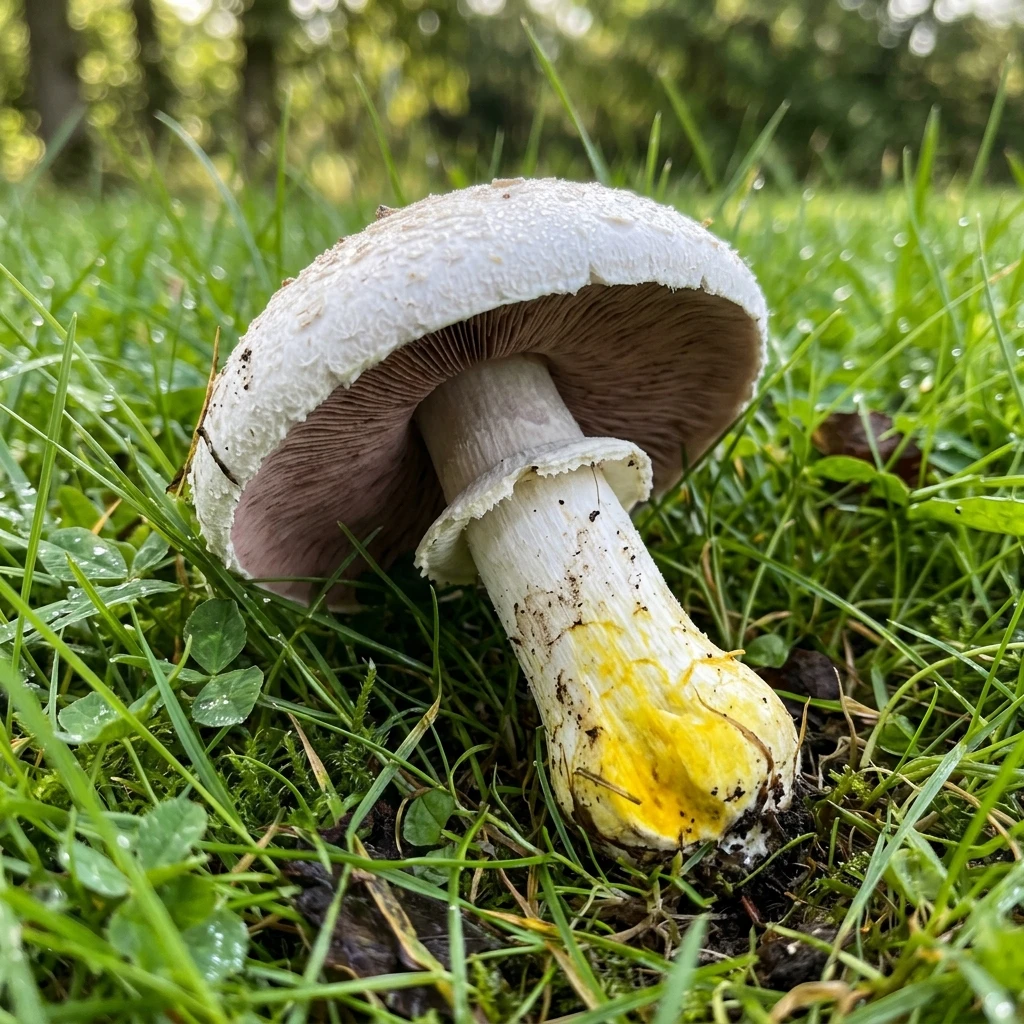
How to Identify Yellow Stainer
A white mushroom resembling a field mushroom, but its stem base stains bright chrome-yellow instantly when bruised, smelling like ink when cooked.
-
✔
Cap: Varies by species.
-
✔
Spore: Critical check.
Detailed Mycology Profile & Foraging Guide
Follow our detailed scientific field guide and environmental parameters to identify and study Yellow Stainer safely.
Common Look-alikes & Foraging Danger
Fading Staining (Old Age)
Symptoms: Old, dry specimens do not turn yellow when the stem base is scraped.
Cap Browning
Symptoms: The smooth white cap develops a dingy brownish-gray center, and the gills turn completely black-brown.
Frequently Asked Questions
Why is it called 'Yellow Stainer'?
It is named 'Yellow Stainer' because its white flesh—especially at the very base of the stem—turns a bright, intense, chrome-yellow color instantly when scratched, cut, or bruised.
What does it smell like?
It has a distinct, unpleasant chemical smell resembling phenol, ink, iodine, or coal tar. This smell is sometimes faint when the mushroom is cold, but it becomes extremely strong and repulsive when heated.
How do you tell it apart from the edible Meadow Mushroom?
The edible Meadow Mushroom (Agaricus campestris) never stains yellow when bruised, lacks a chemical smell (smells pleasantly mushroomy), and has gills that start bright pink. The toxic Yellow Stainer stains instant chrome-yellow at the stem base and smells like chemical ink when cooked.
Is the Yellow Stainer lethal?
It is rarely fatal, but it causes very severe gastrointestinal illness. Consuming it leads to rapid, violent vomiting, stomach cramps, and diarrhea, starting within 30 minutes to 2 hours of eating.