Bear's Paw Care & Identification Guide
Cotyledon tomentosa, affectionately known as Bear's Paw, is a delightful, fuzzy succulent native to the arid mountains. It features chubby, wedge-shaped, bright-green leaves covered in soft, velvety white hairs, complete with prominent red-brown 'teeth' claws at the tips that make it resemble miniature bear paws.





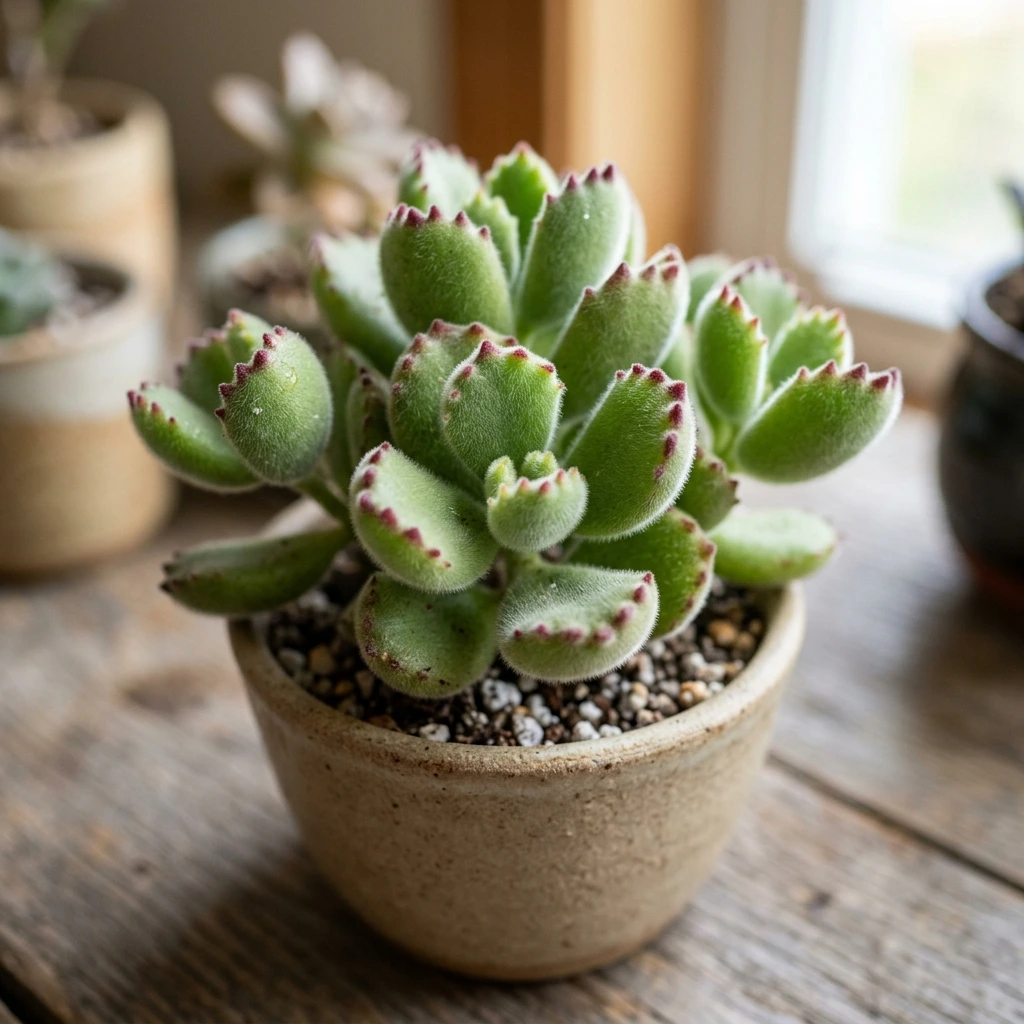
How to Identify Bear's Paw
-
✓
Distinctive Features: Plump vertical rosettes of fleshy leaves.
-
✓
Typical Coloration: Pastel green, blue-gray, turning pink or red under sun stress.
-
✓
Potential Confusions: Confused with other similar looking rosettes, but distinguished by leaf thickness.
11-Step Professional Care Guide
Bear's Paw requires a highly measured water supply. Typically, water thoroughly until it drains out of the bottom holes only when the top soil layer is 100% dry. Avoid spraying water directly onto the fuzzy leaves, as trapped moisture easily causes fungal leaf decay. Reduce watering significantly in winter.
Bear's Paw requires Bright, Filtered Direct Sunlight. Provide at least 4-6 hours of direct morning sun daily. Exposure to strong light combined with high temperature swings between day and night (sun stress) is the essential trigger that turns the fuzzy wedge-shaped leaf claws into brilliant red-brown 'teeth' nails.
The optimal substrate is a loose, gravelly, exceptionally fast-draining potting soil. A standard high-aeration mix consists of 60% mineral grit (pumice, perlite, grit) and 40% organic potting soil (pH 6.0-7.5).
Thrives in standard warm conditions: 16°C - 26°C (60°F - 78°F); protect from frost below 5°C. Keep safe from cold drafts and high indoor humidity.
Bear's Paw requires minimal pruning. Gently remove old, dried lower leaves at the stem base using sterilized shears. If the plant becomes too leggy or sparse, pinch back the growing tips in spring to encourage bushier branch growth.
Apply a balanced liquid organic succulent fertilizer diluted to half strength once a month during spring and summer active growing season. Do not fertilize in winter.
Propagate Bear's Paw easily using stem cuttings in spring. Cut a healthy stem section with 2 pairs of leaves, let it callus for 3 days, and plant it in moist cactus soil. Keep in bright indirect light. Roots form in 3 weeks.
Choose a heavy terracotta container with multiple bottom drainage holes. Terracotta allows excess soil moisture to breathe and evaporate safely. Repot every 1 to 2 years.
Inspect fuzzy foliage regularly for mealybugs hiding under the leaves or scale insects on woody stems. Treat immediately by dabbing with rubbing alcohol. Avoid spraying heavy oils on fuzzy leaves.
Fungal powdery mildew or root rot due to overwatering is the primary threat. Leaves turn mushy, blacken, and drop off. Keep foliage dry, improve air circulation, and spray with organic copper fungicide.
The secret to a gorgeous Bear's Paw is avoiding sudden moves. The chubby fuzzy leaves are relatively delicate and can fall off easily if bumped. Bright autumn direct sun and cool night temperatures (10°C - 15°C) will trigger its beautiful, vibrant red-brown claws. Avoid spraying water on leaves to protect their fuzzy velvet layer.
Frequently Asked Questions
Q: How do I care for Bear's Paw?
A: Bear's Paw requires sandy soil and very sparse watering to thrive.
Q: How often should I water Bear's Paw?
A: Water deeply only when the potting soil is 100% dry throughout the container.
Q: What is the ideal soil for Bear's Paw?
A: Use a grit-rich, porous cactus and succulent potting mix containing perlite and pumice.
Q: Can Bear's Paw survive freezing winter?
A: No. They are highly frost-sensitive. Bring them indoors if temperature drops below 10°C.