Chihuahuaensis Echeveria Care & Identification Guide
A beautiful tight rosette succulent with blue-gray leaves heavily decorated with bright pink pointed tips. Technically classified as Echeveria chihuahuaensis, this magnificent member of the echeveria succulent group is highly admired by botanists and indoor plant collectors globally. Native to arid habitats, it is incredibly adapted to survive low water levels and store massive amounts of moisture inside its thick, fleshy rosettes. To maintain its compact architectural form and vibrant leaf hues, it requires excellent sand-rich soil porosity, proper bright indirect light intensity, and strict seasonal watering intervals.





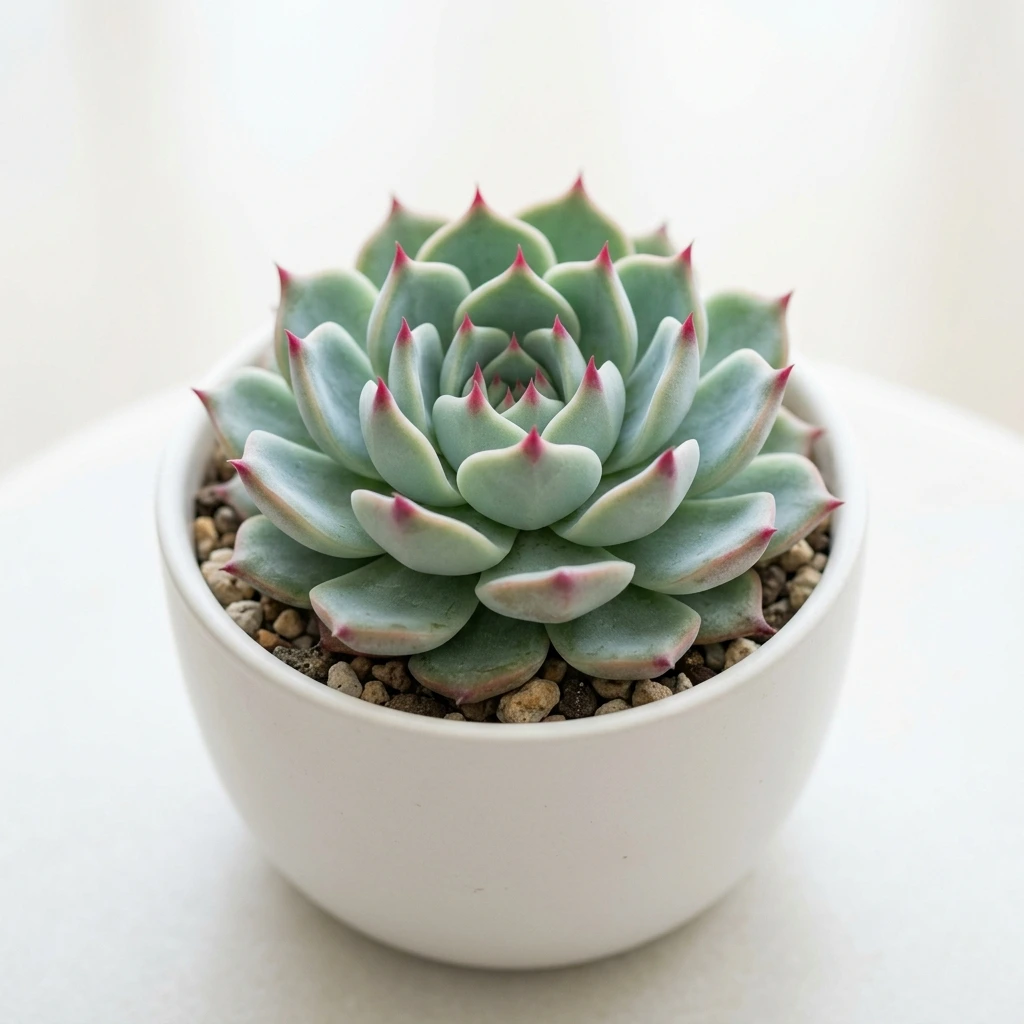
How to Identify Chihuahuaensis Echeveria
-
✓
Distinctive Features: Plump vertical rosettes of fleshy leaves.
-
✓
Typical Coloration: Pastel green, blue-gray, turning pink or red under sun stress.
-
✓
Potential Confusions: Confused with other similar looking rosettes, but distinguished by leaf thickness.
11-Step Professional Care Guide
Chihuahuaensis Echeveria demands a very sparse watering routine. Water thoroughly until it drains out of the bottom holes only when the potting mix is 100% dry throughout the container. Based on its characteristics: Low. Never allow the rosette or root system to sit in standing water, as stagnant moisture rapidly cuts off oxygen circulation and induces pythium root decay. Stop watering in winter dormant phases.
Chihuahuaensis Echeveria demands intense bright direct sunlight to maintain its magnificent color profile. Provide at least 6 to 8 hours of direct morning sun daily. Exposure to strong light combined with high temperature fluctuations between day and night (sun stress) is the essential trigger that turns leaf edges into brilliant pink, lavender, or deep blood-red margins (often celebrated as 'full color state' by collectors).
The optimal substrate for Chihuahuaensis Echeveria is an exceptionally porous, gritty, fast-draining potting soil. Based on requirements: Fast-draining mineral grit mix (pH 5.5-7.0). A perfect soil recipe consists of 60% mineral grit (pumice, coarse sand, perlite, gravel) and 40% organic peat moss or coco coir to support root oxygenation and prevent moisture trap.
Thrives in standard warm environmental conditions: 15°C - 28°C. It is highly sensitive to sudden cold drops, frost, and freezing temperatures. Ensure it is kept in rooms that stay above 10°C (50°F) during autumn and winter, as cold drafts will cause the fleshy leaves to turn soft, wrinkled, and watery.
Prune actively in spring. If kept in insufficient indoor light, Chihuahuaensis Echeveria stems will stretch out rapidly toward the nearest window (etiolation), resulting in weak, floppy, pale green leggy stems. To save an etiolated rosette, perform 'beheading': cut off the top rosette with sharp sterilized shears, let the cut stem callus dry for 3 days in shade, and replant in dry cactus soil to grow fresh, compact roots.
Feed Chihuahuaensis Echeveria very lightly. Apply a balanced cactus and succulent liquid organic fertilizer diluted to quarter strength once in late spring and once in mid-summer during active vegetative growth. Avoid nitrogen-heavy formulas, which cause bloated, weak growth. Do not fertilize in winter.
Propagate Chihuahuaensis Echeveria easily using leaf cuttings or offsets in spring. For leggy etiolated plants, 'beheading propagation' is the premier salvage method: cut the rosette head leaving 1 inch of stem, callus for 3 days, and insert in moist perlite and sand. Healthy leaf cuttings wiggled cleanly off the stem will sprout roots and tiny pink pups in 3 weeks under indirect filtered light.
Choose an unglazed clay or terracotta container with multiple large bottom drainage holes. Terracotta allows excess soil moisture to breathe and evaporate safely, preventing root rot. Repot every 2 years in spring using a container that is only 1 inch wider than the current root system.
Inspect Chihuahuaensis Echeveria regularly for mealybugs hiding in tight rosettes, spider mites spinning fine webs, or flat scale insects. Treat infestations immediately by wiping both sides of leaves with a cotton swab dipped in rubbing alcohol or spraying with organic neem oil solution every 7 days for 3 weeks.
The absolute deadliest disease is root and stem rot caused by overwatering and heavy soil. Prevent this entirely by allowing soil to dry completely. Fungal leaf spots or powdery mildew can also occur in high humidity. Prune affected parts, improve air ventilation, keep leaves dry, and spray with organic copper fungicide.
The secret to a gorgeous Chihuahuaensis Echeveria is bright light and strict neglect. Always place it in a bright south or east-facing window and let it dry completely. Wiping the waxy powder (farina) off Echeverias and Sedums can damage their natural sun protection, so avoid touching the fleshy leaves.
Frequently Asked Questions
Q: How do I care for Chihuahuaensis Echeveria?
A: Chihuahuaensis Echeveria requires sandy soil and very sparse watering to thrive.
Q: How often should I water Chihuahuaensis Echeveria?
A: Water deeply only when the potting soil is 100% dry throughout the container.
Q: What is the ideal soil for Chihuahuaensis Echeveria?
A: Use a grit-rich, porous cactus and succulent potting mix containing perlite and pumice.
Q: Can Chihuahuaensis Echeveria survive freezing winter?
A: No. They are highly frost-sensitive. Bring them indoors if temperature drops below 10°C.