Peach Eggs Care & Identification Guide
Graptopetalum amethystinum, universally loved as Peach Eggs, is an incredibly charming succulent native to western Mexico. Characterized by its chubby, oval, egg-shaped leaves that showcase a beautiful pastel lavender-pink hue under strong light, it is coated with a thick, powdery farina that gives it a soft, magical aesthetic. It is widely celebrated by botanists for its distinct environmental adaptability and structural appeal.





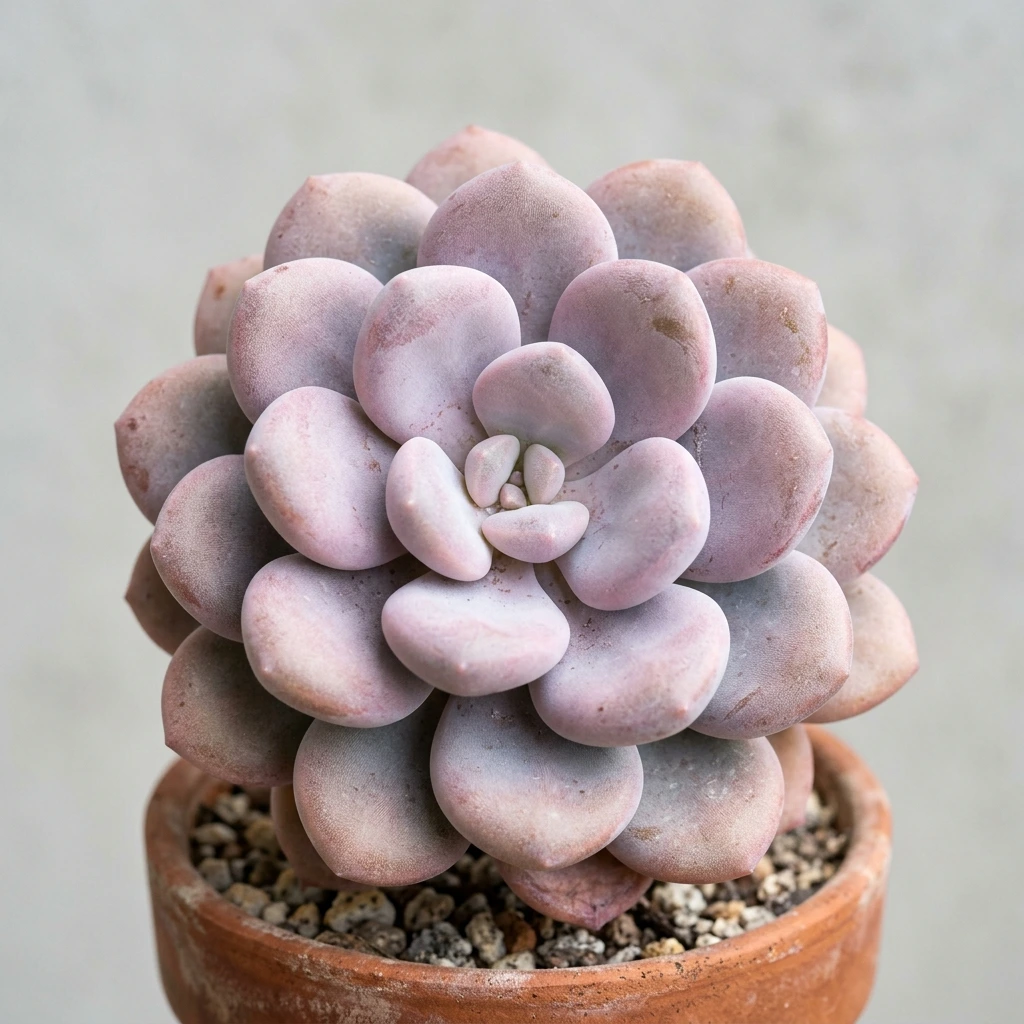
How to Identify Peach Eggs
-
✓
Distinctive Features: Plump vertical rosettes of fleshy leaves.
-
✓
Typical Coloration: Pastel green, blue-gray, turning pink or red under sun stress.
-
✓
Potential Confusions: Confused with other similar looking rosettes, but distinguished by leaf thickness.
11-Step Professional Care Guide
Apply the strict 'soak and dry' method: water thoroughly only when the entire container mix is 100% dry. Succulents are highly adapted to absorb sudden heavy rain and survive long, dry desert cycles. Reduce watering significantly in winter, as dormant roots rot rapidly in cold, damp soil.
Peach Eggs requires Bright Direct Sun to Bright Indirect Light (Needs strong light to develop signature pink-lavender tones). Avoid exposing foliage to harsh direct midday sun in extreme heat.
Use an exceptionally gritty, fast-draining substrate. A perfect succulent mix consists of 65% mineral grit (pumice, perlite, granite grit, coarse sand) and 35% organic peat moss or general loam (pH 6.0-7.2), enabling maximum root aeration and preventing moisture trap.
Thrives in standard warm conditions: 15°C - 26°C (59°F - 79°F); protect from heavy frost below 5°C. Ensure dry air and excellent ventilation.
Peach Eggs requires minimal pruning. Gently remove old, dried-out lower leaves at the base using sterile shears to keep the stem clean and prevent fungal rot. If the stem becomes leggy, behead and propagate.
Apply a balanced liquid organic succulent fertilizer diluted to half strength once in late spring and once in mid-summer. Do not fertilize in winter.
Propagate easily using leaf cuttings or offsets. Gently wiggle a healthy leaf off the stem, let it callus for 2 days, and lay it on moist cactus soil in indirect light. Roots will emerge in 3 weeks.
Choose a heavy unglazed clay or terracotta container with multiple bottom drainage holes. Terracotta allows excess soil moisture to breathe and evaporate safely. Repot every 1 to 2 years.
Inspect crevices and leaf joints for mealybugs or spider mites. Treat immediately by spraying with mild insecticidal soap or wiping with organic neem oil.
Fungal root rot due to overwatering is the primary threat. Leaves turn translucent, yellow, and drop easily. Improve air circulation, keep soil dry, and spray with organic copper fungicide.
The secret to a gorgeous Peach Eggs is careful handling. The thick powdery farina on the egg-shaped leaves is easily wiped off by touch, leaving permanent dark marks. Always handle the plant gently by its stem base.
Frequently Asked Questions
Q: How do I care for Peach Eggs?
A: Peach Eggs requires sandy soil and very sparse watering to thrive.
Q: How often should I water Peach Eggs?
A: Water deeply only when the potting soil is 100% dry throughout the container.
Q: What is the ideal soil for Peach Eggs?
A: Use a grit-rich, porous cactus and succulent potting mix containing perlite and pumice.
Q: Can Peach Eggs survive freezing winter?
A: No. They are highly frost-sensitive. Bring them indoors if temperature drops below 10°C.